
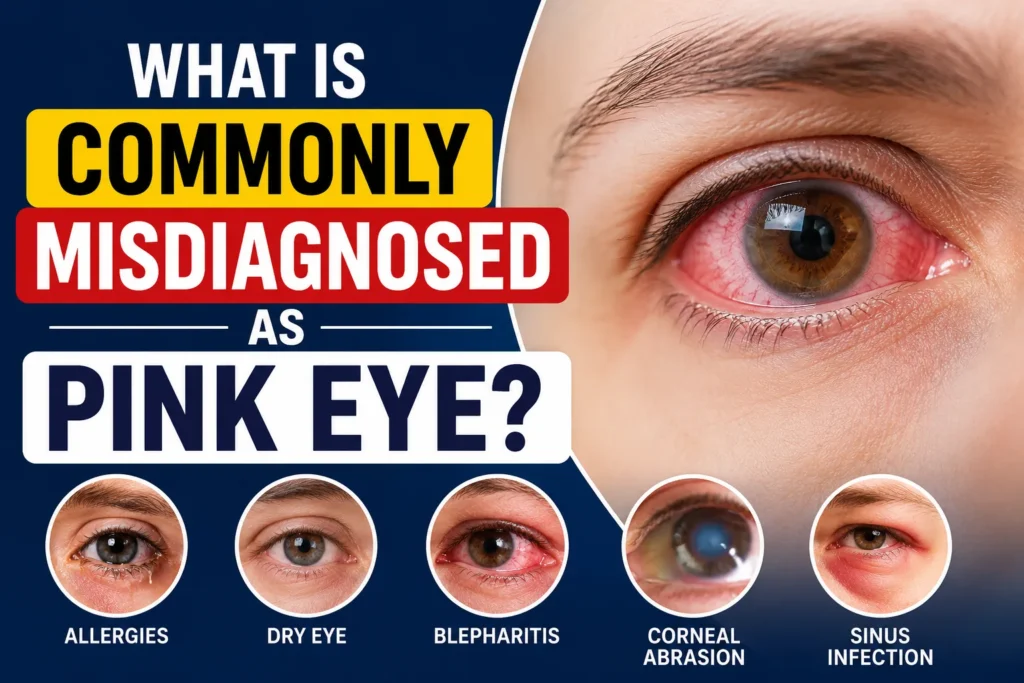
Red, irritated, watery eyes are often quickly labeled as “pink eye,” but that’s not always the real problem. Pink eye (conjunctivitis) is only one possible cause of eye redness, and several other eye conditions can look almost identical in the early stages.
Because many of these issues share similar symptoms like redness, tearing, discomfort, and discharge, misdiagnosis happens quite often. The result is delayed treatment and symptoms that keep coming back.
Understanding what else can look like pink eye helps you recognize when the issue may be something different.
During my research, I reviewed expert eye health resources and found that several conditions are frequently mistaken for pink eye because they produce nearly identical symptoms. According to ophthalmology experts, conditions such as dry eye syndrome, blepharitis, eye allergies, keratitis, and corneal abrasions can all cause redness, irritation, watering, and discomfort that closely resemble conjunctivitis. In some cases, these conditions may require very different treatments, which is why an accurate diagnosis is important when symptoms persist or worsen despite initial treatment.
What Is Pink Eye?
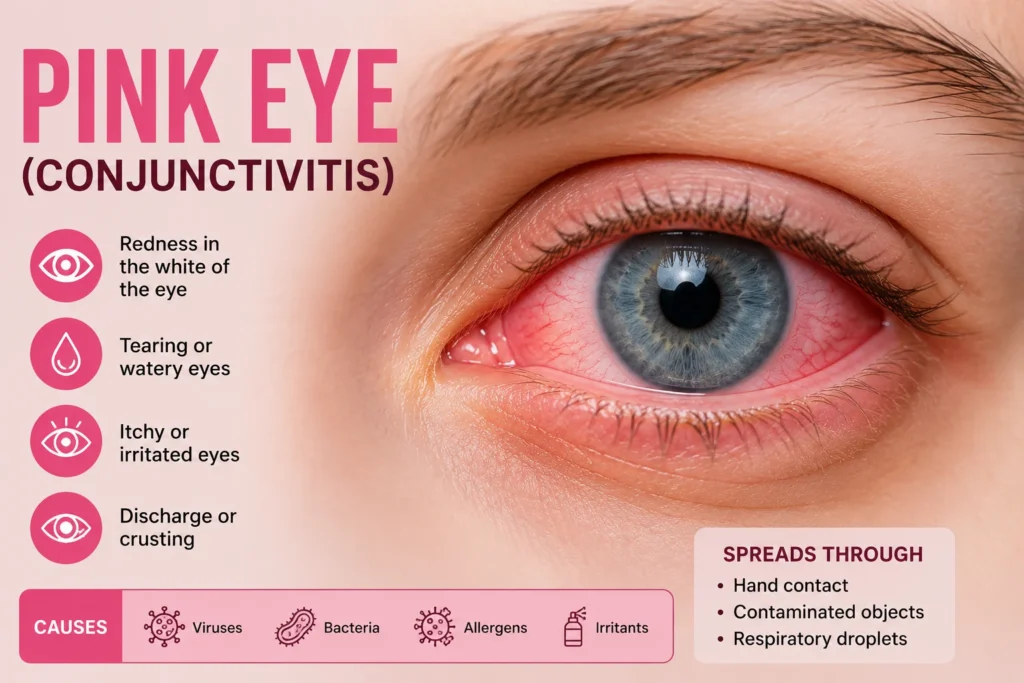
Pink eye is the common name for conjunctivitis. It is an eye condition caused by irritation and inflammation of the thin translucent layer that covers the white portion of the eye. This causes irritation and discomfort by making the little blood vessels in the eyes more prominent and giving the eyes a red or pink look
It can be caused by viral infections, bacterial infections, allergies, or irritants like smoke, dust, and chemicals. The eye may be red and irritated, with a watery or sticky discharge, and the eyelids may stay together in the morning. It is a pretty common issue, yet many of the symptoms are similar to several other eye problems, and most people become confused.
What Conditions Can Be Mistaken for Pink Eye?
Pink eye is not always easy to understand at first. Several eye conditions can cause redness, irritation, discomfort, and watering in the eye, confusing them with conjunctivitis.
Certain eye conditions like dry eye syndrome, blepharitis, keratitis, and uveitis look similar at first but are caused by different causes and require different treatments.
One of the main symptoms that can help in identifying conjunctivitis is the type of discharge and the redness caused in the eye.
- Viral pink eye: watery eyes, and there is a thin discharge that leaves crust around the eyelashes after sleep.
- Bacterial pink eye: produces thick yellow or green discharge that makes the eyelids stick together, especially in the morning.
There are some symptoms that only an eye doctor can pick up during an eye examination. Like in viral pink eye, there are small bumps formed under the eyelids, while bacterial pink eye can cause raised, inflamed bumps that are linked to blood vessels.
Common Eye Conditions Misdiagnosed as Pink Eye
1. Eye Allergies (Allergic Conjunctivitis)
Eye allergies? Yes, you heard it right. This is the most common condition that is usually mistaken for pink eye. It is normally caused when allergens get into the eyes, like pollen, dust, pet dander, or smoke; sometimes it can even be a seasonal allergy. Allergies can affect both eyes, leaving them red and causing itching, irritation, and watery eyes. There can be fluid retention, too, if the allergy continues.
Allergic conjunctivitis is not contagious like bacterial or pink eye. One of the main signs that helps differentiate it from infectious pink eye is constant itching, which is usually more noticeable than pain or thick discharge.
2. Dry Eye Syndrome
You can usually understand this condition just by its name. This eye condition happens due to reduced tear production or rapid tear evaporation. Both conditions can lead to dryness, irritation, inflammation, redness, and watery discharge, which may make you constantly rub or scratch your eyes and can often be confused with pink eye.
In contrast with infectious conjunctivitis, dry eye does not develop rapidly and usually lasts longer. In addition, it is frequently connected to things such as the use of a computer screen, age, medications, hormonal variations, or environmental factors, and usually does not produce heavy discharge like pink eye
3. Blepharitis
Inflammation of the eyelids is called blepharitis and occurs when oil glands along the lashes become clogged with debris or bacteria. Symptoms include redness, irritation, crusted lashes, and sometimes a discharge from the eye, causing the eyelids to stick together.
Blepharitis may look similar to pink eye, but it is an ongoing infection that typically presents with swelling and crusting. One of the most common symptoms of blepharitis is styes and dry eyes. Regular care of the eyelid area is generally required to manage the symptoms.
4. Contact Lens Irritation
This eye condition normally happens when contact lenses are worn for too long or not cleaned and stored properly. Wearing contact lenses incorrectly can reduce oxygen supply to the eye and lead to redness, dryness, discomfort, and, in some cases, there may be mild discharge.
These symptoms can easily be mistaken for pink eye, especially if there is redness in the eyes. If you also wear contact lenses and notice some irritation in the eyes, then it would be better to remove them, as continuing to use them can make the condition worse and increase the risk of eye infection.
5. Corneal Abrasion
Corneal abrasion is a scratch on the clear surface of the eye. It can be caused by dust, sand particles, or a fingernail, or when you rub your eyes too hard. As this causes irritation in the eyes and can lead to redness, watering, pain, and an irritating feeling like something is stuck in the eye.
All these symptoms can look similar to pink eye, which makes it confusing to distinguish between the infections. However, during corneal abrasions, there is sharp pain in the eye and sensitivity to light. With proper care, it can heal within a few days, and the symptoms, including any discharge, usually clear up as the eye recovers.
6. Stye
A stye, or hordeolum in medical terminology, is caused by an infected or obstructed oil-producing gland at the eyelash base, resulting in a painful, swollen bump along the eyelid margin. The bump may also be reddish and tender, and may leak fluid and cause crusting around the eye.
Because of the surrounding redness and pain, styes can be confused with conjunctivitis (commonly referred to as pink eye). However, a stye is localized to a specific spot on the eye and has a distinct, large lump on the eyelid.
7. Keratitis
Keratitis is normally a type of inflammation of the cornea; it is mainly caused by infections from bacteria, viruses, or fungi. In this infection, the eyes become watery, releasing white or yellow discharge; there is redness, pain, and a tearing-like feeling in the eyes. These symptoms can look similar to pink eye.
Keratitis is more serious and painful and can even affect vision. It may worsen if neglected; therefore, eye pain or blurred vision should be examined by an eye professional immediately.
8. Uveitis
Uveitis is an inflammation of the uvea, the central layer of the eye that contains the iris, ciliary body, and choroid. Important blood arteries that feed the eye are located in this area, thus inflammation can quickly damage vision and eye comfort.
Unlike pink eye, redness from uveitis is usually more specific around the iris and is followed by pain, light sensitivity, and blurred vision. It’s a serious condition that can get worse if ignored and may lead to vision loss; therefore, it should be examined by an eye doctor without delay.”
9. Subconjunctival Hemorrhage
A subconjunctival hemorrhage is bleeding beneath the surface of the eye. It generates a bright red patch on the white part of the eye, which can look scary but is generally harmless.
It is not itchy, painful, irritating, or discharging like pink eye. It is often associated with straining, coughing, sneezing, or rubbing of the eye, or occasionally has no obvious cause. It appears fierce, but it is not an infection and normally clears up on its own.
10. Blocked Tear Duct
Blocked tear duct eye infection occurs when tears are not draining properly from the eyes into the nose. This is an eye infection, which is more frequent in babies but can also be observed in adults, and can arise from infection, edema, damage, or sometimes due to age-related changes.
The symptoms of redness, watery eyes, and sticky or crusty discharge can resemble pink eye. But the major problem is not infection but a blockage of the tear drainage system, which can occasionally produce recurring irritation or eye infections.
What Is Commonly Misdiagnosed As Pink Eye In Toddlers?
If a toddler is having any irritation or redness in the eyes, it is not always pink eye. Several other reasons can cause similar symptoms. Toddlers don’t complain as adults do, so it becomes very important to observe them closely if the redness in the eye does not improve.
1. Injury
Toddlers are very curious, and this makes them walk here and there. They often bump into objects while playing or rub their eyes when they are tired, which can cause small blood vessels to break, causing redness in the eyes.
In more serious cases, it can even show symptoms like pain, heavy liquid discharge, or blurred vision that can be caused by scratching the eye, or might be from exposure to a harmful substance. If there are signs like this, then immediately get it checked by the doctor.
2. Allergies Or Irritation
Exposure to dust, smoke, pollen, pet dander, or other irritants can make a toddler’s eyes red, watery, and itchy. These symptoms can look a lot like pink eye, but they are not caused by an infection. In most cases, the discomfort eases once the irritant is removed or the exposure is avoided.
When To See A Doctor For Pink Eye
If you have redness, irritation, or discharge from your eyes, it is important to keep track of how severe these symptoms are. Mild cases will often resolve on their own, but there are many red eyes that are not just an episode of conjunctivitis or “pink eye.”
You need to seek a medical evaluation from your eye physician if you are experiencing any eye pain, abnormal or thick discharge, blurring, or sensitivity to light. These could indicate something deeper or that more than just conjunctival inflammation is happening with your eyes.
In fact, dry eye, keratitis, or inflammatory diseases of the eye often produce similar-looking symptoms initially. Because of this symptom overlap, it is not possible to determine the actual cause from history or a basic examination.
A timely check-up helps ensure the right diagnosis and prevents complications that can affect vision.
Faq’s
1. How does pink eye spread?
Pink eye spreads through direct contact with the infected tears, eye discharge, contaminated hands, towels, makeup, or surfaces, as it is contagious in nature. It can even spread from person to person by touching the eyes after coming in contact with the infected items.
2. Can conjunctivitis spread to both eyes?
Yes, there are high chances of spreading conjunctivitis from one eye to the other if you are continuously rubbing or touching the infected eye. Due to this, the other eye also comes in contact with infected discharge and can easily get infected.
3. How long does pink eye last?
Pink eye or conjunctivitis can last from 3 to 14 days, depending on the source of illness. If you are having bacterial pink eye, then it will take only 2 to 5 days after using the prescribed eye drops. Moreover, viral pink eye can take 1 to 2 weeks to clear up.
4. Can screen time worsen eye irritation?
When you spend long hours looking at the screen, you naturally blink less, about 50% less than usual. It dries your eyes and can lead to redness, a burning sensation, discomfort, and tired eyes. These are commonly known as symptoms of digital eye strain or computer vision syndrome.
5. What are the symptoms of pink eye?
Conjunctivitis or pink eye can cause either or both eyes to become red. Other symptoms can include :
watery eyes
a sticky discharge
itchiness
swollen eyelids
increased sensitivity to light
sticking together due to discharge from the eyes
Takeaway
1. You can have inflammation in both eyes without having conjunctivitis. Discharge, redness, and irritation in the eye are symptoms that can help determine the type of infection.
2. Practice good hygiene, as it will help in preventing the spread of conjunctivitis. Wash your hands properly, don’t touch or rub your eyes.
3. Irritation and redness do not usually indicate pink eye. The symptoms of other eye infections may be similar, but they need to be treated differently.