
Introduction
Kale smoothies and lemon water won’t change your blood chemistry — but they might still change your health for the better. That contradiction sits at the heart of the alkaline diet, one of the most searched nutrition trends of the last decade. Understanding alkaline diet food isn’t about chasing a magic pH number; it’s about knowing which foods genuinely support your body and which claims don’t hold up under scrutiny.
This guide breaks down the real evidence behind alkaline diet food, gives you a practical food chart, covers vegan-friendly options, and explains where nuts, supplements, and recipes fit in — all without the exaggerated claims that dominate wellness blogs.
Featured Snippet Answer
Alkaline diet food refers to fruits, vegetables, nuts, and legumes believed to leave an alkaline residue after digestion. While these foods don’t change your blood pH — which your lungs and kidneys tightly regulate — they do lower dietary acid load and are linked to better bone, muscle, and kidney health when they replace processed and animal-heavy foods.
Key Takeaways
- The alkaline diet emphasizes fruits, vegetables, nuts, legumes, and plant-based proteins over meat, dairy, grains, and processed foods.
- Your blood pH stays within a narrow 7.35–7.45 range regardless of diet; the lungs and kidneys manage this automatically.
- What diet can influence is dietary acid load, often measured as Potential Renal Acid Load (PRAL).
- Lower dietary acid load is associated with better bone density, reduced muscle loss with age, and lower kidney stone risk in observational research.
- There is no credible clinical evidence that alkaline foods prevent or cure cancer.
- Many alkaline diet foods are simply nutrient-dense whole foods — the benefit often comes from crowding out processed food, not from pH.
- Vegans and vegetarians naturally eat a more alkaline-forming diet due to higher plant food intake.
- People with kidney disease should consult a doctor before increasing potassium-rich alkaline foods.
- Alkaline supplements are not a substitute for whole-food nutrition and carry limited long-term safety data.
What Is Alkaline Diet Food?
Alkaline diet food is any food believed to leave an alkaline (base-forming) residue in the body after digestion, as opposed to an acid-forming residue. The theory, sometimes called the “acid-ash hypothesis,” groups foods into three categories:
| Category | Examples | Effect on Diet |
|---|---|---|
| Alkaline-forming | Leafy greens, most vegetables, fruits, nuts, legumes, herbs | Emphasized |
| Neutral | Natural fats, oils, unrefined starches | Eaten in moderation |
| Acid-forming | Meat, poultry, fish, eggs, dairy, grains, processed foods, alcohol | Limited |
According to a review published in the Journal of Environmental and Public Health (PubMed Central, NIH), researchers have studied whether shifting toward alkaline-forming foods affects markers like bone turnover and muscle mass, even though it does not change blood pH itself.
The Science: Can Food Really Change Your pH?
This is the most misunderstood part of the alkaline diet, so let’s be precise.
Blood pH is non-negotiable. Your blood stays within 7.35–7.45 no matter what you eat. The lungs adjust carbon dioxide levels within minutes, and the kidneys excrete or retain acid over hours to days. A significant swing outside this range is a medical emergency, not a dietary outcome — a point echoed by nutrition experts at MD Anderson Cancer Center and the Mayo Clinic.
Urine pH does shift with diet. This is real and measurable. When you eat more alkaline-forming foods, your kidneys excrete more base, which raises urine pH. This is one reason home pH-strip testing gives people a misleading sense that their “body pH” has changed.
Dietary acid load is the real variable. Researchers use a score called Potential Renal Acid Load (PRAL) to estimate whether a food is likely to be acid-forming or base-forming based on its protein, phosphorus, potassium, calcium, and magnesium content. Diets with a lower (more negative) PRAL — meaning more fruits, vegetables, and plant foods — have been associated in observational and some interventional studies with:
- Reduced urinary calcium loss
- Better preservation of muscle mass with aging
- Lower risk of calcium oxalate kidney stones
- Improved markers of bone turnover in some trials
However, according to a systematic review and meta-analysis published in Nutrition Reviews, results across bone-health trials remain mixed, and more rigorous, long-term studies are still needed before strong recommendations can be made.
What the diet does not do: cure or prevent cancer. The American Institute for Cancer Research and MD Anderson both state plainly that no diet can alter blood pH enough to affect cancer cells, and no clinical trial supports that claim.
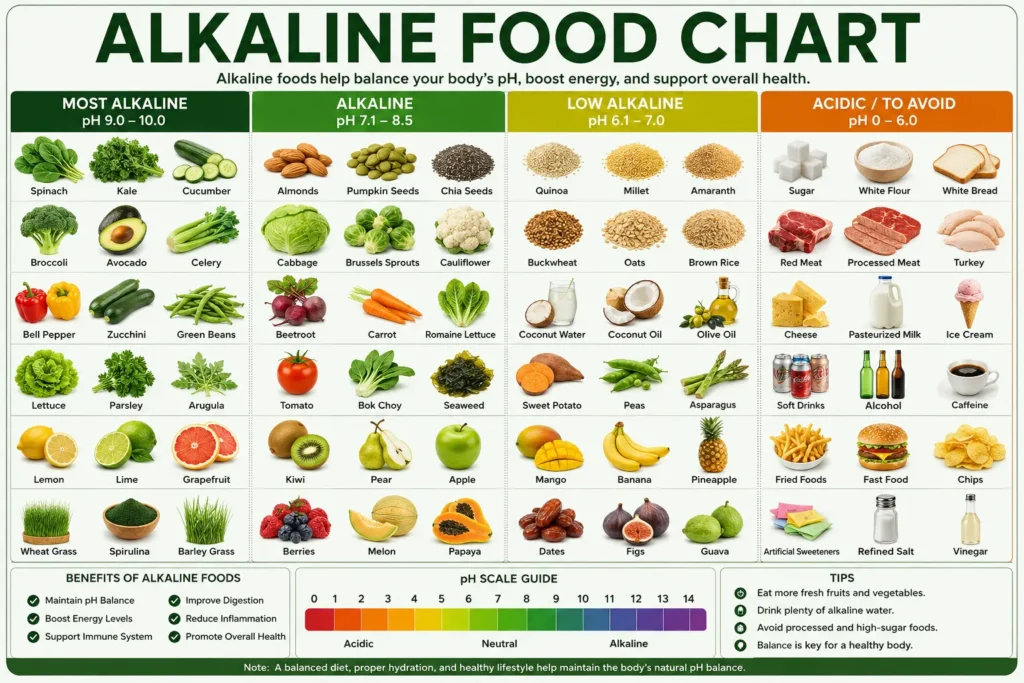
Alkaline Diet Food Chart
| Alkaline-Forming (Eat More) | Neutral (Eat in Moderation) | Acid-Forming (Limit) |
|---|---|---|
| Spinach, kale, broccoli | Natural oils (olive, avocado) | Red and processed meat |
| Cucumber, celery, zucchini | Butter, ghee | Shellfish |
| Avocado | Unrefined starches (sweet potato) | Cheese and dairy |
| Bananas, berries, apples | Herbal teas | Refined grains, white bread |
| Almonds | Coffee (in moderation) | Alcohol |
| Lentils, chickpeas | Soda and sugary drinks | |
| Quinoa | Processed snacks | |
| Garlic, ginger | Artificial sweeteners |
How to read this chart: foods on the alkaline side tend to be nutrient-dense and lower in phosphorus and animal protein; foods on the acidic side tend to be higher in protein, phosphorus, or processing. The chart is a general estimate, not a lab measurement — individual food pH after digestion depends on multiple nutrients, not one property.
How to Eat Alkaline Foods Daily
You don’t need to overhaul every meal. A practical approach:
- Fill half your plate with vegetables at lunch and dinner — this alone shifts dietary acid load significantly.
- Swap one processed snack per day for fruit, nuts, or raw vegetables.
- Choose plant proteins several times a week — lentils, chickpeas, tofu, and beans are naturally alkaline-forming and high in fiber.
- Season with herbs and garlic instead of salt-heavy sauces.
- Moderate red meat and processed meat rather than eliminating protein entirely.
- Stay hydrated — plain water supports kidney function, which matters more than “alkaline water” claims.
- Read labels — many packaged “alkaline” snacks are still high in sodium and sugar, which offsets any benefit.
Alkaline Diet Benefits — What’s Actually Supported
| Claimed Benefit | Evidence Level | Notes |
|---|---|---|
| Better bone health | Moderate | Lower PRAL diets linked to reduced calcium loss in several trials; results not unanimous |
| Reduced muscle loss with age | Moderate | Higher potassium/magnesium intake associated with preserved lean mass in older adults |
| Lower kidney stone risk | Moderate | Plant-forward, low-PRAL diets associated with reduced calcium oxalate stone formation |
| Weight loss | Weak | No direct mechanism; benefit comes from displacing processed foods, not pH |
| Cancer prevention/cure | Not supported | No clinical evidence; blood pH cannot be altered by diet |
| Improved energy and inflammation markers | Weak-to-moderate | Likely driven by increased fruit and vegetable intake generally, not alkalinity specifically |
Alkaline Foods for Vegans
Vegan diets are naturally lower in dietary acid load because they exclude meat, dairy, and eggs — the primary acid-forming food groups. Vegans following an alkaline-friendly pattern should prioritize:
- Leafy greens (spinach, kale, Swiss chard) for calcium and magnesium
- Legumes (lentils, black beans, chickpeas) for protein and fiber
- Nuts and seeds for healthy fats and minerals
- Whole grains in moderation — quinoa and millet are relatively neutral compared to refined wheat
- Fortified plant milks to cover calcium and vitamin D, since these nutrients matter for bone health regardless of dietary acid load
One caution: vegans should still track protein and calcium intake carefully, since under-eating protein can itself weaken bone and muscle health even on a low-acid-load diet.
Nuts and the Alkaline Diet
Not all nuts are treated equally in alkaline diet frameworks:
- Almonds are generally considered alkaline-forming and are one of the most recommended nuts on the diet.
- Walnuts, cashews, and peanuts tend to be classified as more acid-forming due to their protein and phosphorus content, though they remain nutritionally valuable.
- Chestnuts are often listed among the most alkaline nuts available.
Nuts overall are calorie-dense, so portion control (roughly a small handful, 1 oz/28g) matters more than which specific nut you choose.
Easy Eating Alkaline Recipes
Alkaline Green Breakfast Bowl Blend spinach, cucumber, half an avocado, a banana, and almond milk. Top with chia seeds and a handful of berries.
Lentil and Vegetable Stew Simmer lentils with carrots, celery, zucchini, garlic, and ginger in vegetable broth. Season with turmeric and herbs instead of salt.
Roasted Vegetable and Quinoa Bowl Roast broccoli, sweet potato, and bell peppers; serve over quinoa with a lemon-olive oil dressing and toasted almonds.
Cucumber-Avocado Salad Combine cucumber, avocado, celery, and fresh herbs with a light olive oil and lemon dressing.

Alkaline Supplements: Do You Need Them?
Alkaline supplements — typically potassium citrate, magnesium citrate, or calcium citrate blends — are marketed to lower dietary acid load without changing eating habits. Research published in reviews of citrate-based alkali supplements shows they can measurably reduce PRAL and may support bone and kidney health in specific clinical contexts, such as for people with certain kidney stone types.
However, for most healthy adults:
- Whole foods provide the same alkalizing minerals along with fiber, antioxidants, and phytonutrients supplements lack.
- Long-term safety data on high-dose alkaline supplements in healthy populations is limited.
- People with kidney disease should never start potassium- or citrate-based supplements without medical supervision, since impaired kidneys cannot always clear excess minerals safely.
Bottom line: food first, supplements only under a clinician’s guidance.
Pros and Cons of the Alkaline Diet
- Encourages whole, minimally processed foods
- Naturally reduces sodium, added sugar, and processed meat intake
- Aligns with general dietary guidance from the WHO and American Cancer Society for reducing chronic disease risk
- Flexible — no strict calorie counting or elimination of entire macronutrient groups
- Based on a scientifically inaccurate premise (that food changes blood pH)
- Can be complex to follow due to detailed food categorization
- Some commercial "alkaline" products are ultra-processed despite the branding
- Not appropriate without modification for people with kidney disease
Who Should Be Cautious
- People with chronic kidney disease should avoid high-potassium alkaline foods and alkaline supplements without medical guidance, since damaged kidneys struggle to regulate potassium.
- People on certain blood pressure or heart medications (e.g., potassium-sparing diuretics) should check with a doctor before significantly increasing potassium intake.
- Pregnant or breastfeeding individuals should ensure adequate protein and calcium rather than restricting food groups based on acid/alkaline labels.
- Athletes and older adults may benefit most from the muscle- and bone-related aspects of a lower dietary acid load, but should still meet total protein needs.
When to See a Doctor
If you experience recurrent kidney stones, unexplained bone pain, muscle weakness, or are managing chronic kidney disease, consult a physician or registered dietitian before making significant dietary changes, including adopting an alkaline eating pattern.
Conclusion
Alkaline diet food won’t change your blood chemistry — your body simply won’t allow that. But the pattern of eating it promotes — more vegetables, fruit, legumes, and nuts, less processed food and excess animal protein — is genuinely linked to better bone, muscle, and kidney outcomes through its effect on dietary acid load. Treat “alkaline” as a helpful shorthand for a more plant-forward, whole-food diet rather than a literal chemistry claim, and you’ll get the real benefits without falling for the exaggerated ones.
FAQ
1. What is the alkaline diet in simple terms?
The alkaline diet is an eating pattern that favors fruits, vegetables, nuts, and legumes over meat, dairy, and processed foods, based on the idea that these foods leave an alkaline residue after digestion. While it doesn’t change blood pH, it does lower dietary acid load and encourages nutrient-dense whole foods.
2. Can alkaline foods really change my body’s pH?
No. Blood pH is tightly controlled between 7.35 and 7.45 by your lungs and kidneys regardless of diet. What alkaline foods can influence is urine pH and overall dietary acid load, not blood chemistry.
3. What foods are considered most alkaline?
Leafy greens like spinach and kale, cucumbers, celery, avocados, bananas, almonds, and most fresh vegetables are commonly listed as the most alkaline-forming foods.
4. Is the alkaline diet good for weight loss?
Evidence for weight loss specifically is weak. Any weight loss typically comes from replacing processed, calorie-dense foods with vegetables and fruit, not from a pH effect.
5. Can the alkaline diet cure cancer?
No. Major cancer institutions, including MD Anderson and the American Institute for Cancer Research, state there is no clinical evidence that diet can alter blood pH enough to affect cancer, and no diet has been shown to cure it.
6. Are nuts alkaline or acidic?
It depends on the nut. Almonds and chestnuts are generally considered alkaline-forming, while walnuts, cashews, and peanuts tend to be more acid-forming due to their protein and phosphorus content.
7. Is coffee allowed on an alkaline diet?
Most alkaline diet plans allow coffee in moderation, though some strict versions discourage it due to its acid-forming properties.
8. Do I need alkaline supplements?
Most healthy adults don’t need them — whole foods provide the same minerals plus fiber and antioxidants. Supplements may have a role in specific medical contexts, such as certain kidney stone prevention plans, but only under medical supervision.
9. Is alkaline water worth drinking?
Current research does not show added health benefits from alkaline water for the general population beyond normal hydration. People with kidney disease should avoid high-alkaline water unless a clinician advises it.
10. Who should avoid a high-alkaline, high-potassium diet?
People with chronic kidney disease or those on potassium-sparing medications should consult a doctor before significantly increasing potassium-rich alkaline foods.
11. Is the alkaline diet safe for vegans?
Yes, and vegan diets are naturally more alkaline-forming. Vegans should still monitor protein and calcium intake to support bone and muscle health.
12. What’s the difference between an alkaline diet and a plant-based diet?
They overlap heavily. A plant-based diet is defined by food source (mostly plants), while the alkaline diet is defined by a food’s theoretical acid/base effect — in practice, most alkaline-forming foods are plant-based.
References
- Schwalfenberg, G.K. “The Alkaline Diet: Is There Evidence That an Alkaline pH Diet Benefits Health?” Journal of Environmental and Public Health, NIH/PMC, 2012.
- MD Anderson Cancer Center — “The Alkaline Diet: What You Need to Know.”
- American Institute for Cancer Research — “Does the Alkaline Diet Cure Cancer?”
- Mayo Clinic — Alkaline diet and food pH overview.
- PMC/NIH — “Citrate-Based Dietary Alkali Supplements Available in Germany: An Overview.”
- World Health Organization — Healthy diet recommendations for chronic disease prevention.