
A chemical pregnancy, also known as a biochemical pregnancy, is a very early pregnancy loss that occurs shortly after implantation, usually before the 5th week of pregnancy. It happens when a fertilized egg implants in the uterus and produces enough human chorionic gonadotropin (hCG) (government medical resource) to cause a positive pregnancy test, but the pregnancy does not continue developing.
Because it occurs so early, a chemical pregnancy is typically not visible on an ultrasound. Many people notice a positive pregnancy test followed by a negative test days or weeks later as hCG levels naturally decline. The bleeding may appear similar to a late, heavier-than-usual menstrual period, which is why some chemical pregnancies go unnoticed.
According to medical research, early pregnancy losses are often linked to chromosomal abnormalities in the embryo, which can prevent normal development. A chemical pregnancy is common and usually does not indicate problems with future fertility or the ability to have a healthy pregnancy.
A chemical pregnancy is an early miscarriage that ends before the fifth week. It occurs after the fertilized egg attaches to the lining of the uterus even before the pregnancy can be seen on an ultrasound. It happens so early that most of the women don’t even realize that they are pregnant.
Once the fertilized egg attaches to the uterus, it starts producing hCG, the hormone that home pregnancy tests detect. If the embryo doesn’t keep developing, hCG levels begin to drop soon after. As those levels fall, the uterine lining breaks down and sheds, causing bleeding that often looks like a period that’s simply late or heavier than usual.
Chemical Pregnancy vs. Clinical Pregnancy: What’s the Difference?
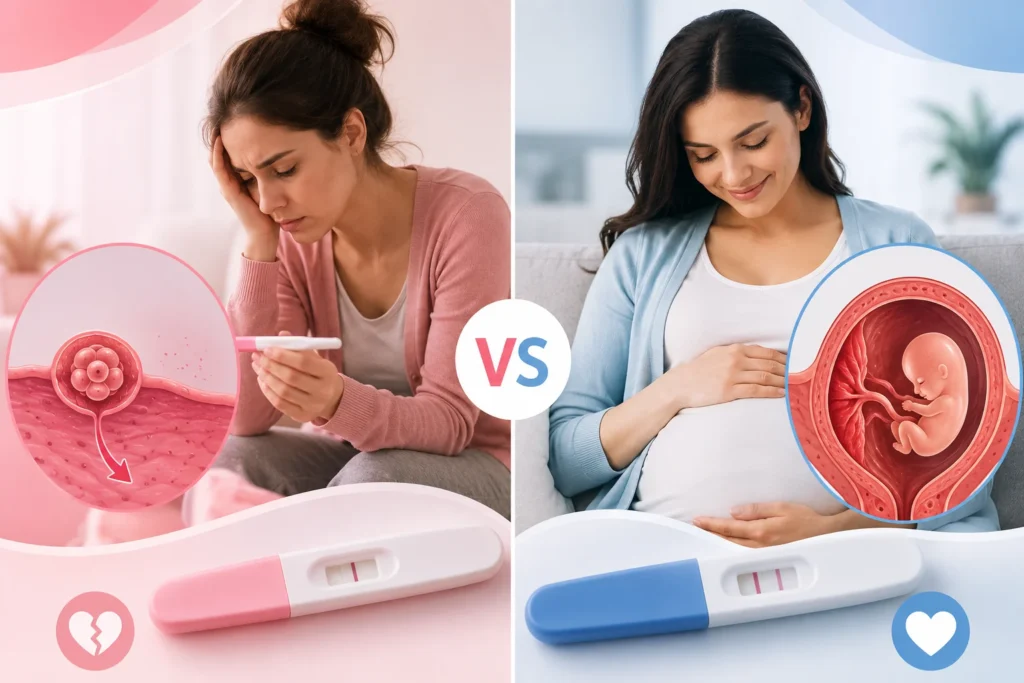
The name “chemical pregnancy” can be misleading. It doesn’t mean the pregnancy was any less real. It means pregnancy was there and was detected through pregnancy hormones before it could be seen on an ultrasound.
- Chemical pregnancy: This type of pregnancy usually gets diagnosed via hCG levels in a blood test or a urine test. At the time of the miscarriage, around week five, it does not appear on an ultrasound.
- Clinical pregnancy: It is detected by a positive hormone test confirming the pregnancy as well as visible on ultrasound, beginning from week six.
Is a Chemical Pregnancy a Real Pregnancy?
Yes, chemical pregnancy is a real pregnancy. The only difference is that this pregnancy terminates very early, before it can be seen on ultrasound. Even if for a short time, implantation has taken place and the body has already started reacting to the pregnancy. That’s why it’s considered a real pregnancy that just ended early. The body has already started responding to the pregnancy.
How Common Are Chemical Pregnancies?
Chemical pregnancies are more common than most people realize. According to experts, around 50% to 75% of all miscarriages are thought to be chemical pregnancies. Because they happen so early, many women mistake them for a slightly late or heavier-than-usual period and may never realize they were pregnant.
Early pregnancy tests have made it easier to detect chemical pregnancies. Before these tests became widely available, many women simply thought they were having a late or heavier-than-usual period.
What Are the Signs of a Chemical Pregnancy?
The signs of having a chemical pregnancy can be different for every woman. Some women may notice obvious changes in their bodies, while others may mistake the experience for a late or heavier period. Some common signs that can relate to every woman during chemical pregnancy:
- A positive pregnancy test: an early home pregnancy test comes out positive.
- A declining or negative pregnancy test: after a few days, a pregnancy test becomes negative, and the hCG levels in the body lower rapidly.
- A late period: the period gets late and comes a few days to one week later than the expected date.
- More intense bleeding: bleeding is heavier than usual and, due to tissue breakdown, includes small clots in the bleeding.
- Stronger menstrual cramps: menstrual cramping is more painful than normal period cramps.
- No signs of pregnancy: in some cases women experience no symptoms other than a positive pregnancy test followed by heavy bleeding.
What Does Chemical Pregnancy Bleeding Look Like?
Chemical pregnancy can result in bleeding that is often mistaken for a period, as the two are very similar. Bleeding starts around the time a menstrual period is due and is usually heavier than normal. When the blood is bleeding it can be bright red, dark red or brown. There could be some little clots. Pain may also be mild to somewhat more severe. Experiences may vary but the duration of the bleeding is typically similar to a period.
How Long Does a Chemical Pregnancy Last?
A Biochemical Pregnancy ends between the fourth and fifth week of pregnancy. This usually happens around the time your period is expected or just a few days later. Most of the time, women don’t even realize they are pregnant because it happens so early, often mistaking it for a late or heavier period.
The pregnancy tissue breaks down in the uterine lining and is passed along with the blood clots. The bleeding usually lasts 4 to 7 days, much like a menstrual period.
What Causes a Chemical Pregnancy?
The exact cause of a chemical pregnancy isn’t always known, but there are some common factors that may trigger it.
- Hormonal imbalance: low levels of progesterone (hormone that supports pregnancy) cause complications in the uterine lining.
- Thyroid disorders: Thyroid imbalance is an underlying health condition that can disrupt the early development of the embryo.
- Uterus Issues: The unusual shape of the uterus, such as fibroids, polyps, or structural abnormalities, interferes with the normal, proper implantation of the eggs.
- Blood Clots: Blood clots affect the blood flow while reaching the embryo.
- Infections: Uterine infections cause the inflammation affecting the placement of the fertilized eggs in the uterine lining.
- Advanced Maternal Age: With increasing age, egg quality naturally declines, which increases the chances of chromosomal errors.
Who Is More Likely to Experience a Chemical Pregnancy?
Anyone who can become pregnant can experience a Biochemical Pregnancy. It tends to be noticed more often by women going through IVF, simply because hormone levels are monitored so closely during that process – not because IVF itself increases the risk.
A few factors are associated with a higher likelihood of early pregnancy loss in general:
- Being 35 or older
- Having an irregularly shaped uterus
- Hormone levels that are too high or too low
- Having a sexually transmitted infection
- Having a thyroid disorder, diabetes, or a condition like polyendocrine metabolic ovarian syndrome
How Is a Chemical Pregnancy Diagnosed?
Normally, a chemical pregnancy also looks like a heavy menstrual period. A healthcare provider starts by reviewing your cycle history. He may ask you about your period cycle, when you got your last period, and if the pain was normal or severe cramps. After finding out the small details, the diagnosis will start:
- A pregnancy test: a positive pregnancy test, but later on turns out to be negative after a few days.
- Blood tests to measure hCG: Blood tests are usually repeated after 48 to 72 hours to see whether your hCG levels are going up or down. In a Biochemical Pregnancy, hCG levels usually start to fall instead of continuing to rise.
- An ultrasound: In a chemical pregnancy, an ultrasound usually does not show a developing pregnancy because the loss happens very early, often before anything is visible on the scan. In some cases, your healthcare provider may recommend an ultrasound to rule out other possible causes of bleeding.
Can You Prevent a Chemical Pregnancy?
Since chemical pregnancies result from chromosomal abnormalities occurring at fertilization, it is impossible to avoid their occurrence. These are changes in your genes occurring inside your body that are out of your control.
But you may lower your risk of having a chemical pregnancy by staying healthy. Add a 20-30 minute walk in your daily routine and eat more green vegetables, fruits, and healthy nuts. Avoid smoking and drinking alcohol.
How Is a Chemical Pregnancy Treated?
Chemical pregnancy does not require special treatment. A Biochemical Pregnancy usually resolves on its own, and the body naturally passes the pregnancy tissue through bleeding, similar to a menstrual period.
If the bleeding is heavy, or there is severe pain, or the tissues do not pass completely, then further evaluation and treatment are required.
If you’ve had recurrent chemical pregnancies, then you can talk to your gynecologist to look for underlying causes and discuss the further treatment options.
Can You Get Pregnant After a Chemical Pregnancy?
Having a chemical pregnancy does not mean that you won’t be able to get pregnant in the future. This does not affect the ability to get pregnant; it is just a chromosomal abnormality that happens during fertilization. In most cases, the body recovers quickly, with ovulation following within a period of 2 to 4 weeks.
Once the bleeding stops and your body recovers, then you can again try for pregnancy if you want to. But if your chemical pregnancy is recurring, then it is best to take advice from your health care provider to know what condition is causing miscarriages and how to prevent them.
Chemical Pregnancy: What Should You Ask Your Doctor?
A single chemical pregnancy is not a cause of concern, but it is a good idea to talk to your health care provider if you have any questions or ongoing symptoms.
- What most likely caused my chemical pregnancy?
- Do I need to undergo any kinds of tests or treatments?
- How long should I wait to get pregnant again?
- Could an undiagnosed health problem lead to the chemical pregnancy?
- Should I be taking medication or dietary supplements before trying again?
- What symptoms should make me call a doctor immediately?
Frequently Asked Questions
What causes a chemical pregnancy?
It is caused by the chromosomal abnormality in the embryo. Other factors like thyroid issues, low progesterone, uterine abnormalities, and even the advancing maternal age can also affect the hormonal changes resulting in chemical pregnancy.
How can you identify a chemical pregnancy?
Early miscarriage in the first five weeks of pregnancy, heavier periods than normal, and intense cramping are some of the early signs of chemical pregnancy.
How is a chemical pregnancy different from a regular miscarriage?
A chemical pregnancy is a loss of pregnancy that happens before the fifth week, before an ultrasound could detect anything. Whereas the regular miscarriage usually occurs after the pregnancy has already been confirmed through a scan, usually from week six onwards.
Can stress cause a chemical pregnancy?
There is no strong evidence that chemical pregnancy can be caused by everyday stress. This is normally caused by the random chromosomal abnormalities in the embryo.
Can I have more than one chemical pregnancy?
Yes, some women experience more than one chemical pregnancy. If it happens repeatedly, your doctor may recommend tests to check for possible underlying causes before you try again.
The Bottom Line
A chemical pregnancy is a very early pregnancy loss, though many women have experienced this emotional loss. In most cases, it happens because of random chromosomal changes that couldn’t have been prevented and usually doesn’t affect your chances of having a healthy pregnancy in the future. If you have experienced Biochemical Pregnancy more than once, then it is better to consult your healthcare provider for healthy pregnancy and better reproductive health.
Article Reference:
https://www.ncbi.nlm.nih.gov/books/NBK532950/
https://my.clevelandclinic.org/health/diseases/22188-chemical-pregnancy