
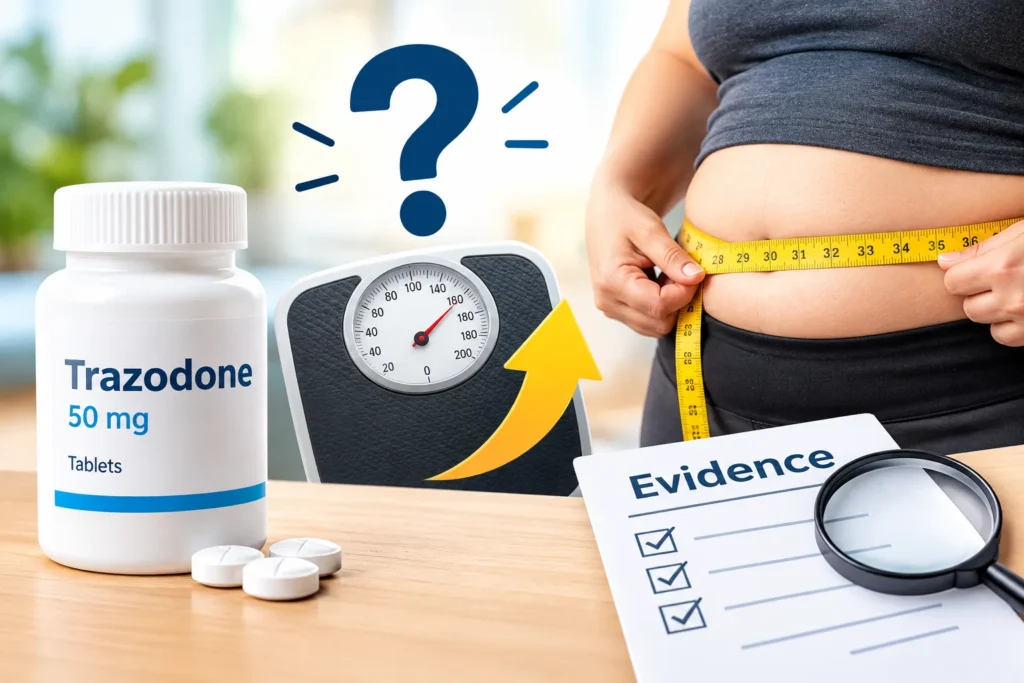
Trazodone can be associated with weight changes, including weight gain, but significant weight gain does not happen to everyone who takes it. Individual responses can vary, and changes in appetite, activity, sleep, mood, and other medications or health conditions can also influence body weight.
Trazodone is a prescription antidepressant that is also sometimes used when sleep problems occur. Like other antidepressants, it can cause side effects, but the likelihood and severity vary from person to person. The NHS lists sleepiness, dizziness, nausea, constipation, and dry mouth among common side effects.
So, if you’re asking, “Does trazodone cause weight gain?”, the short answer is: it can, but weight gain is not inevitable.
Can Trazodone Make You Gain Weight?
Weight gain has been reported in clinical data involving trazodone. In one FDA labeling dataset, weight gain was reported by 4.5% of outpatient trazodone-treated patients compared with 1.9% of placebo-treated patients. Weight loss was also reported, illustrating that people can respond differently to the medication.
These numbers should not be interpreted as a prediction of how much weight an individual will gain. Clinical trial populations and real-world patients can differ, and several factors can contribute to changes in weight.
Factors that may influence weight include:
- Changes in appetite
- Changes in physical activity
- Improved mood and appetite after depression improves
- Sleep patterns
- Other medications
- Age and metabolism
- Eating habits
- Underlying medical conditions
Mayo Clinic notes that antidepressant-associated weight changes do not always mean the medication itself is the only cause. Improved appetite after depression symptoms improve, reduced activity, and other factors can contribute as well.
Why Might Weight Change While Taking Trazodone?
There isn’t one simple explanation for weight changes during trazodone treatment.
1. Changes in appetite
Changes in appetite can affect calorie intake and, consequently, body weight. However, appetite responses to antidepressants differ between individuals.
It’s also possible for someone recovering from depression to regain a previously reduced appetite. That can result in weight gain even when the medication isn’t directly increasing body fat.
2. Sleep and activity levels
Trazodone can cause sleepiness, and drowsiness is a commonly reported side effect.
For some people, feeling tired during the day could reduce physical activity. Less activity combined with increased calorie intake can contribute to gradual weight gain.
3. Changes in mood
Depression itself can affect eating habits, exercise, sleep, and body weight. If treatment improves mood and appetite, a person may eat more normally again.
Therefore, a change in weight after starting trazodone doesn’t necessarily prove that trazodone alone caused the change.
Is Trazodone Considered a High-Risk Antidepressant for Weight Gain?
Not necessarily.
Antidepressants differ in their potential effects on weight. Mayo Clinic notes that some antidepressants are more strongly associated with weight gain than others, while individual responses can vary considerably.
Trazodone is classified as an atypical antidepressant, and its possible side effects differ from those of other antidepressants.
Therefore, it is better to consider your individual response rather than assuming that taking trazodone will automatically lead to weight gain.
How Much Weight Can You Gain From Trazodone?
There isn’t a single amount of weight that can be expected from trazodone.
Some people may experience no noticeable weight change. Others may gain or lose weight during treatment. The available clinical data reports weight changes but does not provide a reliable amount that applies to every patient.
If your weight has changed noticeably after starting trazodone, consider tracking your weight over several weeks rather than focusing on day-to-day fluctuations.
What Can You Do If You Gain Weight While Taking Trazodone?
If you think trazodone is contributing to weight gain, don’t stop taking it suddenly on your own.
Instead, talk with your doctor or pharmacist. They can consider:
- How much your weight has changed
- When the weight change started
- Changes in appetite
- Your activity level
- Other medications you take
- Your sleep and mood
- Whether another health issue could be contributing
The NHS advises patients not to suddenly stop trazodone because withdrawal symptoms can occur; a doctor may gradually reduce the dose when discontinuation is appropriate.
Healthy habits may also help
Depending on your health situation, basic lifestyle measures can help manage unwanted weight changes:
- Choose nutrient-dense foods.
- Limit frequent sugary drinks and highly processed snacks.
- Maintain regular physical activity when appropriate.
- Keep track of changes in your weight and eating habits.
- Maintain a consistent sleep schedule.
If you’re concerned about weight gain, Mayo Clinic recommends discussing diet, physical activity, and possible medication adjustments with your healthcare professional rather than changing treatment yourself.
Does Trazodone Cause Weight Gain or Weight Loss?
Either is possible.
Interestingly, clinical data has reported both weight gain and weight loss among people taking trazodone. In the FDA labeling data, weight gain was reported in some patients, while weight loss was also reported.
This is one reason why it isn’t accurate to say that trazodone always causes weight gain.
Your response may depend on your dosage, treatment duration, appetite, activity level, sleep, mood, and other individual factors.
When Should You Talk to Your Doctor?
Talk with your healthcare professional if you experience:
- Noticeable or rapid weight gain
- Significant appetite changes
- Persistent daytime sleepiness
- Severe dizziness
- Other troublesome side effects
- Concerns about whether trazodone is appropriate for you
Your doctor can determine whether the weight change may be related to trazodone or another factor.
Do not change your dose or stop trazodone without medical advice.
Frequently Asked Questions
Does trazodone cause weight gain?
Trazodone can be associated with weight gain, but not everyone experiences it. Clinical data has reported both weight gain and weight loss among people taking trazodone.
Does trazodone make you hungry?
Individual appetite responses can vary. Changes in appetite can influence weight, but trazodone should not be assumed to increase hunger in everyone.
Is weight gain a common side effect of trazodone?
Weight gain has been reported with trazodone, but the frequency varies depending on the study and patient population. The NHS lists sleepiness, dizziness, nausea, constipation, and dry mouth among common side effects rather than weight gain.
Can you lose weight while taking trazodone?
Yes. Weight loss has also been reported in clinical data, so individual responses can differ.
Should I stop trazodone if I’m gaining weight?
No. Don’t stop trazodone suddenly without talking to your doctor. Your healthcare professional can assess the possible cause of the weight change and discuss appropriate options.
What should I do about weight gain while taking trazodone?
Track the change, review your diet and activity levels, and discuss it with your doctor or pharmacist. They can determine whether trazodone, another medication, lifestyle factors, or another health issue may be contributing.
Bottom Line
Does trazodone cause weight gain? It can, but it doesn’t necessarily cause weight gain in everyone. Clinical data has documented both weight gain and weight loss, while individual factors such as appetite, activity, mood, sleep, and other medications can influence body weight.
If you’ve noticed meaningful weight gain after starting trazodone, discuss the change with your healthcare professional before making any changes to your medication.
Medical Disclaimer: This article is for educational purposes only and is not a substitute for professional medical advice, diagnosis, or treatment. Always speak with a qualified healthcare professional about prescription medicines and personal health concerns.
Scientific References
- Alonso-Pedrero L, Bes-Rastrollo M, Marti A. Effects of antidepressant and antipsychotic use on weight gain: A systematic review. Obesity Reviews. 2019;20(12):1680–1690.
This systematic review evaluated evidence on antidepressant-associated weight gain across 27 cohort studies.
View the study on PubMed - Hecht Orzack M, Cole JO, Friedman L, et al. Weight changes in antidepressants: a comparison of amitriptyline and trazodone. Neuropsychobiology. 1986;15(Suppl 1):28–30.
This randomized double-blind study compared weight changes among patients receiving trazodone, amitriptyline, or placebo.
View the study on PubMed - Comparison of bupropion and trazodone for the treatment of major depression.
In this clinical comparison, the trazodone group had a mean weight increase of approximately 1.2 lb by the end of treatment; increased appetite was also reported more frequently with trazodone.
View the study on PubMed - Fagiolini A, et al. Clinical guidance for the use of trazodone in major depressive disorder and concomitant conditions: pharmacology and clinical practice.
This review describes trazodone as generally having a relatively low risk of weight gain compared with several other antidepressant options.
View the study on PubMed - FDA Prescribing Information for Trazodone
The FDA prescribing information provides clinical-trial adverse-event data and is a useful primary regulatory reference when discussing trazodone’s potential adverse effects.
FDA Trazodone Prescribing Information