

You are fully prepared and ready to go. Everything is falling into perfect order when suddenly, a migraine develops. Starting as a mild headache, within minutes, you are left with a severe throbbing headache and nausea, ruining the whole day. In such moments, resting in a dark, quiet room, staying hydrated, applying a cold compress, and taking slow, deep breaths may help ease the pain.
At USA General Health, we regularly review trusted medical resources to provide readers with evidence-based wellness information. The guidance mentioned above is based on information published by Mayo Clinic regarding migraine self-care strategies that may help some people manage symptoms at home.
A migraine headache is not simply a “bad headache” but rather a neurological disorder that affects not only your ability to participate in various everyday activities, but also your overall quality of life. While some people may experience one or more migraine headaches over time, others suffer from frequent migraine episodes.
Some take medicine to relieve pain, and others look for tips for instant migraine relief when symptoms begin because the pain can become intense within a short period.
What Causes Migraine?
Migraine can be caused by:
- Hormones: Estrogen fluctuations (periods, pregnancy, menopause).
- Sleep: Not getting enough sleep or sleeping too much.
- Diet: Skipped meals, aged cheeses, processed foods, MSG, and aspartame.
- Drinks: Alcohol (especially red wine) and too much or too little caffeine.
- Stress: High stress levels or the sudden relaxation right after stress ends.
- Environment: Bright lights, flashing screens, strong smells, and sudden weather changes.
What are the symptoms of a Migraine?
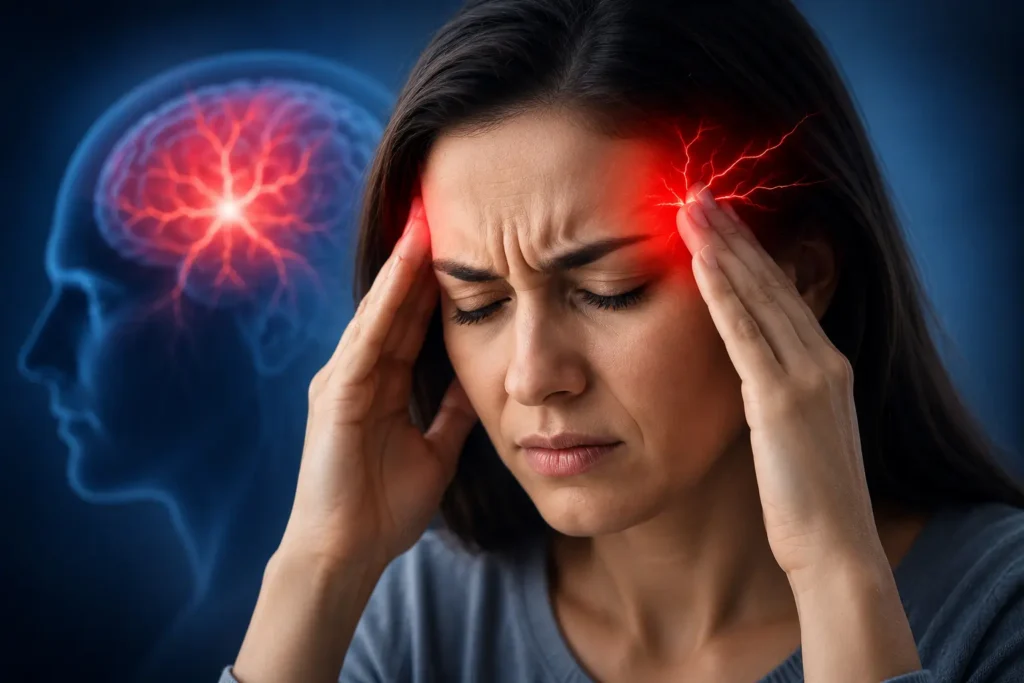
Some common symptoms of migraine are:
- Changes in emotions
- Desire to eat certain foods
- Pain in the neck (stiffness)
- Dehydration
- Yawning often
- Throbbing pain in the head
- Headache on only one side of the head
- Nausea or vomiting
- Sensitive to light, noise, smells, and touch
- Dizziness, blurred vision
- Fatigue
- Can’t think clearly
- Mental tiredness or sluggishness
Get more article
5 Tips for Instant Migraine Relief
These are 5 tips for instant migraine relief that you can do easily at home:
1. Rest in a Dark and Quiet Room

When you are having a migraine, it is better to find a place that is quiet, as it will help calm down your nerves and make you feel better. Just,
- Go to the darkest and quietest room you can find in your home.
- Close all the curtains of the windows, dim the light, and turn off your screens, such as your phone or TV.
- Lie down on the bed and keep your surroundings calm, as noise will only make it worse.
This will help you reduce the effect of light and noise sensitivity, which normally becomes worse during a migraine.
2. Use Ice Pack on Head or Neck
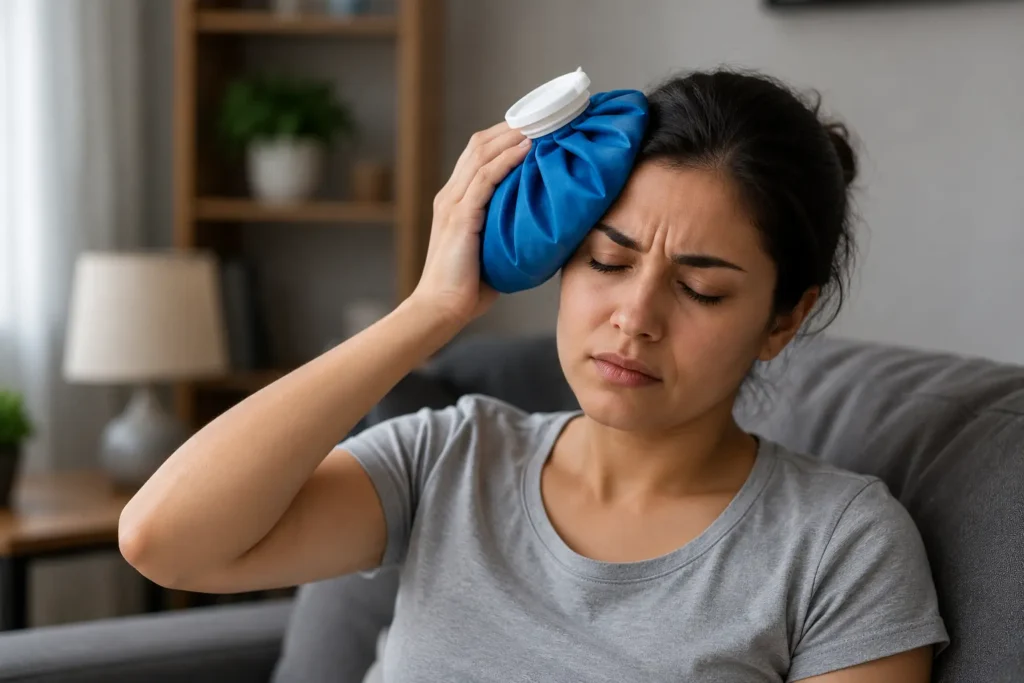
Placing a cold pack or ice on the neck or head helps numb down the pain. This is one of the easiest methods to get instant relief from migraine pain.
- Place a frozen pea bag or ice pack on your forehead, temples, or the back of your neck.
- Don’t forget to wrap the ice pack in a towel; it will help protect your skin from irritation and discomfort.
- Leave it for at least 15-20 minutes, and if needed, then reapply again.
Cold therapy is one of the instant tips for migraine relief that helps in lessening the throbbing pain and reducing swelling.
3. Sip Water or Coffee for Relief
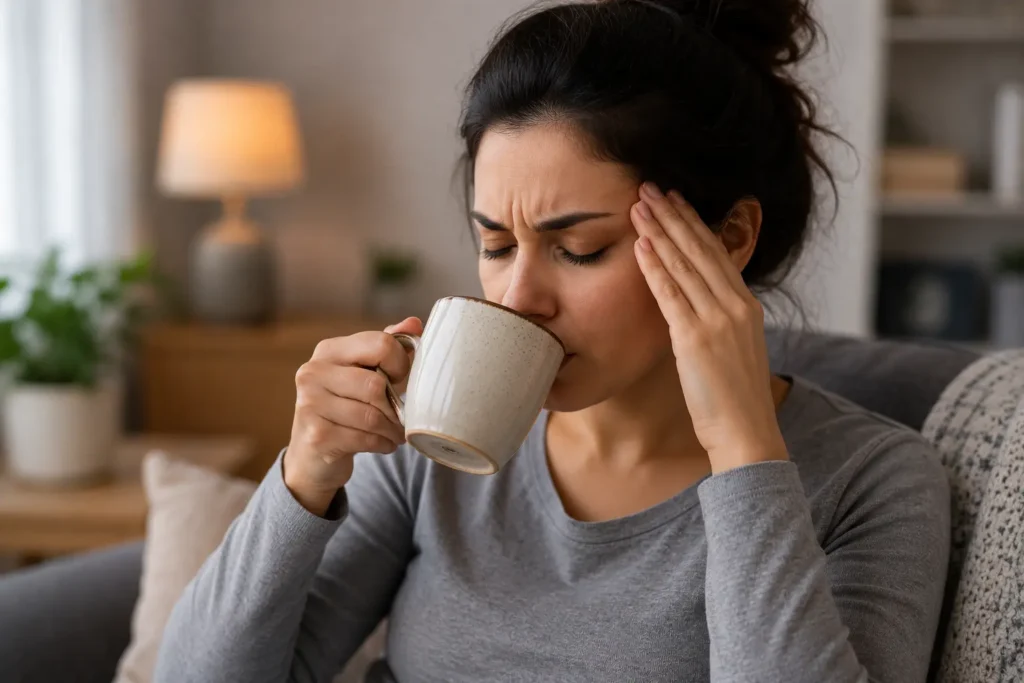
Water keeps your body hydrated, which helps in preventing dehydration, a common trigger that often makes headaches worse. On the other hand, the caffeine content of coffee helps narrow widened blood vessels in the brain, block pain signals, and also makes common pain medicines like acetaminophen and ibuprofen work a bit better. During migraine:
- Continue sipping water to avoid dehydration, as it can trigger headache intensity and discomfort.
- At least try to drink 6-8 glasses of water daily to stay hydrated and support brain function.
- You can even take a small cup of coffee, which helps in easing migraine symptoms when taken early during the attack.
In some cases, coffee helps by narrowing blood vessels and reducing pain signals. However, if you are a heavy coffee drinker, then avoid this.
4. Practice Slow, Deep Breathing

Slow, deep breathing activates the parasympathetic nervous system, which has an antagonistic effect on the stress response that can induce or worsen a migraine. It encourages relaxation, helps to relieve physical tension, and may minimize the severity of perceived pain during an attack.
- Breathe in slowly for 4 seconds, filling your belly, not your chest.
- Hold your breath for 7- 8 seconds.
- Then slowly exhale it from your mouth for 8 seconds.
The simple breathing pattern relaxes your nervous system and makes your body more relaxed.
5. Avoid Common Migraine Triggers
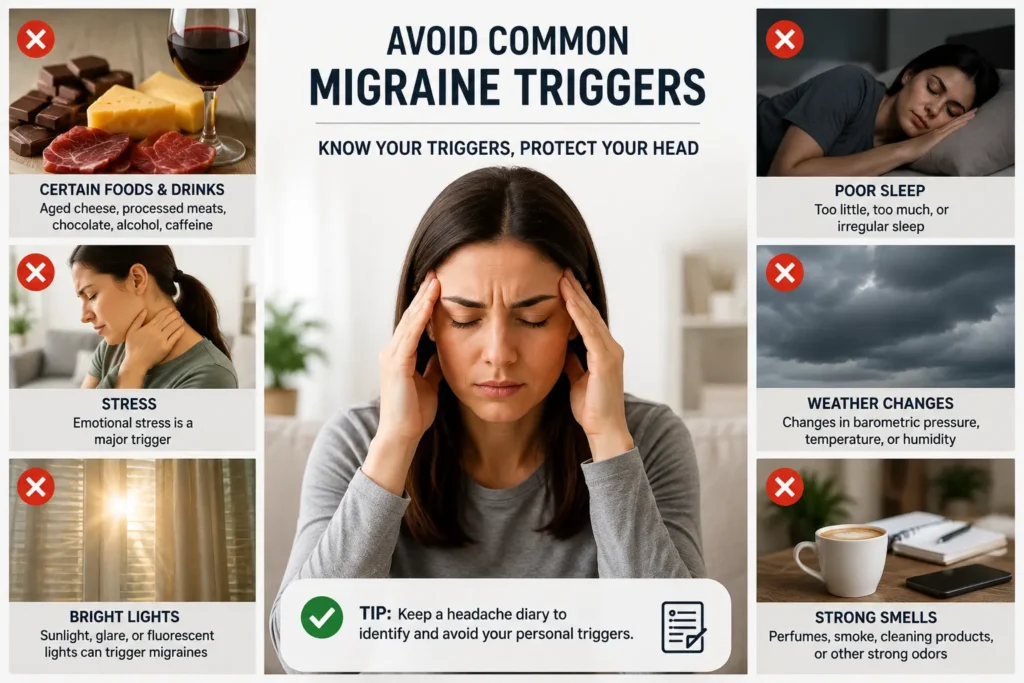
Stay away from meals or things that can set off a migraine episode. This is one of the reasons why it is important to treat episodes early to prevent them from becoming more severe or worsening of the symptoms. It may not necessarily stop the attack altogether, but it can minimize the symptoms and make you feel more comfortable and at ease.
- Avoid bright lighting, loud sounds, and strong scents during an attack.
- Don’t do any task or activity that requires mental work or excessive physical effort.
- Give your body time to recover and rest.
Reducing exposure to frequent triggers may help prevent symptoms from getting worse.
How Common Are Migraines?
- According to the World Health Organization, “more than one billion people” worldwide are affected by some type of headache disorder like migraines.
- Mayo Clinic stats indicate that those with migraines are roughly 20% of women and around 7% of men.
- Some common headache triggers include stress and dehydration.
- Research also shows that people who adhere to a healthy lifestyle will have fewer headaches, as well as lower levels of severity with each headache they do experience.
Conclusion
Migraine can hit without warning and can make it difficult for you to perform even simple daily tasks. Though many manage their pain using medication, some try to control it by being more aware of the triggers.
When symptoms such as vision changes, numbness, weakness, or speech problems appear, a migraine can sometimes resemble a stroke, which is why medical attention may be needed in such cases.
Frequently Asked Questions
1. What is the fastest way to relieve a migraine?
Medication is the fastest way to get relief from a migraine as soon as the symptoms begin. Early treatment helps in preventing the attack from becoming more severe. If you are not on medication, then you can try instant migraine relief tips like resting in a dark, quiet room, reducing light exposure, and putting a cold pad on the head for fast relief.
2. Can dehydration trigger migraines?
Yes, definitely dehydration can trigger migraine. According to the studies, about 30%-35% people with migraine report dehydration as a contributing factor. Not having enough fluid in the body can disrupt blood flow, can temporarily shrink the brain, triggering and trigger migraine symptoms.
3. How long can an episode of migraine last?
A migraine episode can last anywhere from4 to 72 hours. However, this varies greatly between individuals, depending on how intense the migraine episode is.
4. When should I see a doctor for migraine?
If you are having frequent migraine attacks and are getting worse with every episode, and there is no improvement in the symptoms after having regular pain medicine. Then you need to seek professional healthcare.
5. Is migraine hereditary?
Yes, genetics plays an important role in migraines. About 70%-80% of patients with migraines have a family history of the disorder. If one parent has migraines, the risk is roughly 50%. It can rise upto 90% if both parents have migraines.
Reference URL: https://www.mayoclinic.org/diseases-conditions/migraine-headache/in-depth/migraines/art-20047242