
Ever caught yourself smiling in a photo and then immediately editing it because of a chipped tooth or a stain that just won’t budge no matter how many whitening strips you throw at it? Yeah, most of us have been there. That’s usually the moment someone brings up veneers in conversation, and suddenly you’ve got twenty questions and no idea where to start.
So let’s slow down and go through this properly. No jargon, no rushed explanations. Just everything you’d actually want to know before booking that consultation.
What Are Veneers?
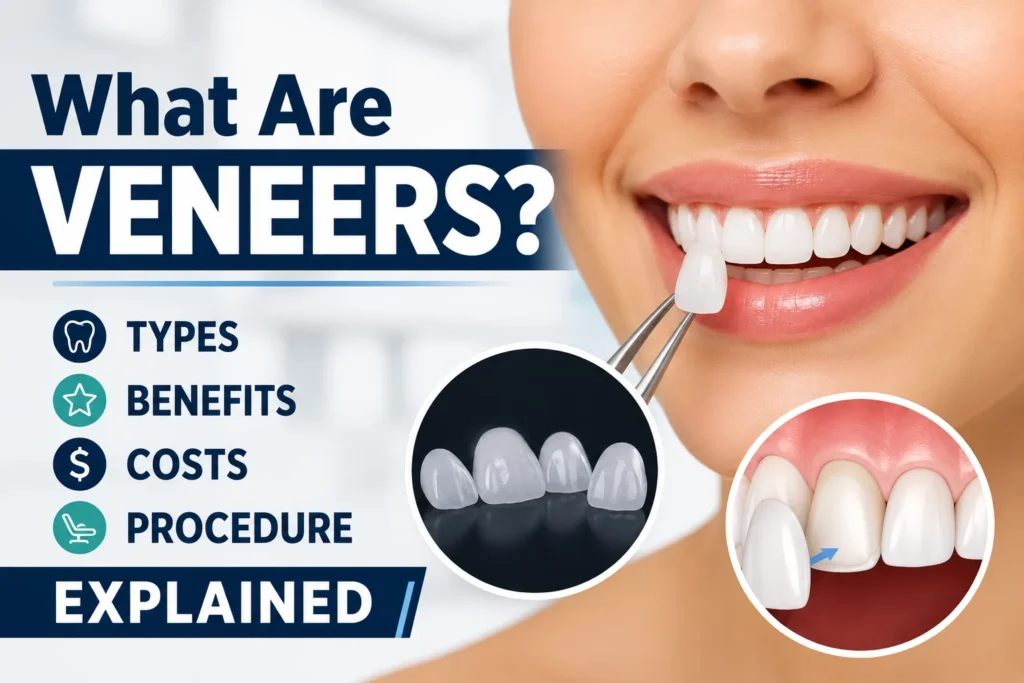
Veneers are thin, custom-made shells that are fixed on the front surface of the tooth. These are basically made up of porcelain or composite resin, which helps in correcting the gaps, chips, stains, cracks, and other cosmetic imperfections. Each veneer is made carefully according to the shape of the teeth. And the color is also matched to blend naturally with your smile.
Veneers are cosmetic treatments made to enhance your smile and to fix the deep structural problems. But these cannot replace the medical treatments for other problems related to gums and teeth.
Different Types of Veneers
Veneers can be classified into four types depending on the material used to make them and the cost.
1. Porcelain Veneers:
These are lab-made and are used with the help of ceramic material. They mimic the real enamel and provide the natural look to the teeth. They resist staining well and typically last anywhere from 10 to 20 years with decent care. These are fixed by removing the small layer of enamel. Once this enamel is removed, it cannot grow back, making the procedure permanent.
2. Composite Resin Veneers:
These are a little bit cheaper as compared to the porcelain. These are made up of resin and directly sculpt on your tooth, often in a single visit. The process is quick and cheaper, and normally the veneers last around 5-7 years, and they are more prone to staining over time.
3. No-Prep Veneers (Lumineers):
These veneers are very thin, so they don’t require much enamel removal. This gives you a more conservative approach to enhancing your smile and may also allow your previous smile to be reverted if desired later. They can be a great option for someone who wants to improve their smile without being permanently committed.
Get health article on usa general health official webs
Why People Actually Get Veneers
Beyond providing a nicer smile, there are more reasons:
- They give you a quick fix for stains that won’t respond to whitening treatments, including stains from medication or old fillings
- They can close small gaps without the months (or years) that braces require
- They make chipped or worn teeth look whole again
- They can slightly reshape teeth that are naturally short, pointed, or uneven
- The results are immediate. You walk out with a new smile the same day the veneers are placed
- Porcelain versions resist staining, so your smile stays consistent instead of yellowing again over time
What Is the Veneer Procedure?
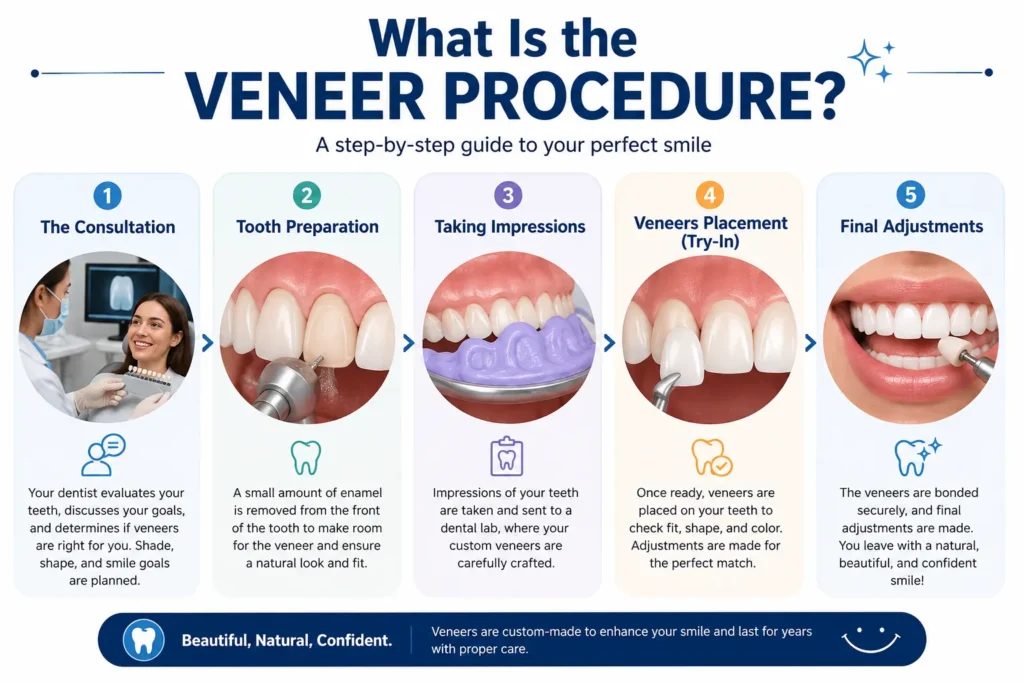
Image Reference: Ai
Getting veneers usually involves a few simple steps. Here’s how the procedure works.
The Consultation
Your dentist examines your teeth and gums to confirm you’re a good candidate. This is also when you’ll talk through what you want to change and pick a shade that matches (or brightens) your natural smile.
Tooth Preparation
In this step your dentist will take out a small bit of your enamel from the front of the tooth, around ½ mm, if you are wearing porcelain veneers. This helps the veneers look natural on the teeth instead of making them look like a thick covering or fake teeth.
Taking Impressions
Once the dentist prepares your tooth, an impression or digital scan is taken and sent off to a dental lab, where the veneers are custom crafted according to the impressions. This step can take a couple of weeks, until the time the dentist provides you with temporary veneers to wear.
Final Adjustments
After fitting the veneers on your teeth, this is the last stage, where your bite test is done. This is to make sure that after veneers everything feels comfortable and aligned. If any changes need to be made like trimming or polishing, then these are done at this stage. This whole process is completed in one day only.
How Much Do Veneers Cost?
This is a very common question, as there is a lot of confusion regarding the cost of veneers. So, the answer is very simple: veneer pricing varies because it depends on the material it is made from and, secondly, on how many teeth will be covered with veneers.
- Composite veneers: roughly $250 to $1,500 per tooth
- Porcelain veneers: roughly $900 to $2,500 per tooth, sometimes higher with top cosmetic specialists
- Zirconia or E.max veneers: typically $900 to $2,500 per tooth
- No-prep veneers: usually $800 to $2,500 per tooth
Most people don’t veneer every tooth. A common approach is the “social six,” covering just the upper front teeth that show when you smile. A full set like this can land anywhere between $9,000 and $25,000, depending on material and location.
A few things that push the price up or down:
- Where you live (city dentists tend to charge noticeably more than suburban or smaller-town practices)
- Your dentist’s experience and reputation in cosmetic work
- The dental lab quality behind the veneers
- Whether you need prep work first, like fillings or gum reshaping
Most of the time dental insurance does not cover veneers, as they are considered a cosmetic treatment rather than a medical necessity. But there are certain dental clinics that offer flexible payment plans or financing options. This makes it easier to manage the cost of the veneers over time.
How to Care for Veneers?
Veneers are shells, so they also need proper care; otherwise, they can chip or crack. The care is simple, as you just need to follow your regular dental routine:
- Brush twice a day with a soft, fluoride toothpaste that isn’t too abrasive
- Floss daily
- Cut down on sugar and other things that stain the teeth, like coffee, red wine, and tea, especially in the first few days after getting veneers.
- Skip biting into hard things like ice or your nails, they can chip the veneer if you’re not careful
- Follow proper dental routine and dont miss your regular dental checkups
Are You a Good Candidate?
Veneers can be a great option, but they aren’t suitable for everyone. They are most effective if:
- Your teeth and gums are healthy
- You have enough natural enamel for the bonding process
- You don’t grind your teeth heavily (or you’re willing to wear a nightguard).
- You’re looking for a cosmetic fix rather than a structural one
If you’ve got active cavities or gum disease, or you clench your jaw a lot at night, your dentist will likely want to address those first.
A Quick Final Word
Veneers can genuinely change how confident you feel about your smile, but they’re still a dental procedure, not a quick beauty hack. The best next step is sitting down with a licensed dentist who can look at your actual teeth, not just photos online, and tell you honestly whether veneers make sense for you.
FAQ’s
1. How do I know if veneers are right for me?
You can choose to have veneers placed on your teeth if you have good oral hygiene, but your teeth may be stained, chipped, spaced apart, or jagged at their edges. Veneers are great tools used to improve your tooth structure and give you a great-looking smile.
2. Should I choose veneers or teeth whitening?
Most of the time, people get confused between veneers and teeth whitening. It is very simple. If you have yellow or stained teeth, then you should go for teeth whitening. However, if you have healthy teeth, but they are chipped, have gaps, cracks, or uneven shapes, then veneers are a good option.
3. How Long Does It Take to Get Veneers?
Getting veneers usually takes two to three weeks total. Your first visit covers prep and impressions, then you wait while the lab crafts them, and a final visit handles fitting and bonding.
4. How many veneers do I need to improve my smile?
Most people don’t need a full set. Just 6 to 8 veneers on your upper front teeth, often called the “social six,” usually creates a balanced, natural-looking smile. After checking your dental health and the condition of the teeth – your dentist will let you know how many veneers are required to enhance the smile. Your dentist will guide the exact number based on your goals.
5. What are the signs that my veneers need replacing?
Normally veneers can last up to 10-15 years with good care. But eventually they need replacing. If you notice a chip, crack, looseness, or visible edges from receding gums, stubborn stains, or new tooth sensitivity, then visit your dentist.
Article Reference: https://my.clevelandclinic.org/health/treatments/23522-dental-veneers