

Black fungus (mucormycosis) is a rare but serious fungal infection caused by environmental molds called mucormycetes, and it mainly affects people with weakened immunity — such as those with uncontrolled diabetes, cancer, organ transplants, or recent high-dose steroid use. It typically enters through the nose and sinuses, causing symptoms like facial pain, swelling, nasal blockage, dark discharge, and vision changes, and can spread rapidly to the eyes, lungs, or brain if untreated. It is not contagious and cannot spread from person to person; it is acquired only from the environment (soil, dust, decaying matter). Diagnosis relies on clinical examination, CT/MRI imaging, and a tissue biopsy, while treatment combines intravenous antifungal medication (usually liposomal amphotericin B) with surgical removal of infected tissue, alongside strict control of underlying conditions like blood sugar. Current data shows an overall fatality rate of around 50%, making early recognition and immediate medical care the most important factors in recovery. Below is a complete breakdown of every aspect of the condition.
What Is Black Fungus?
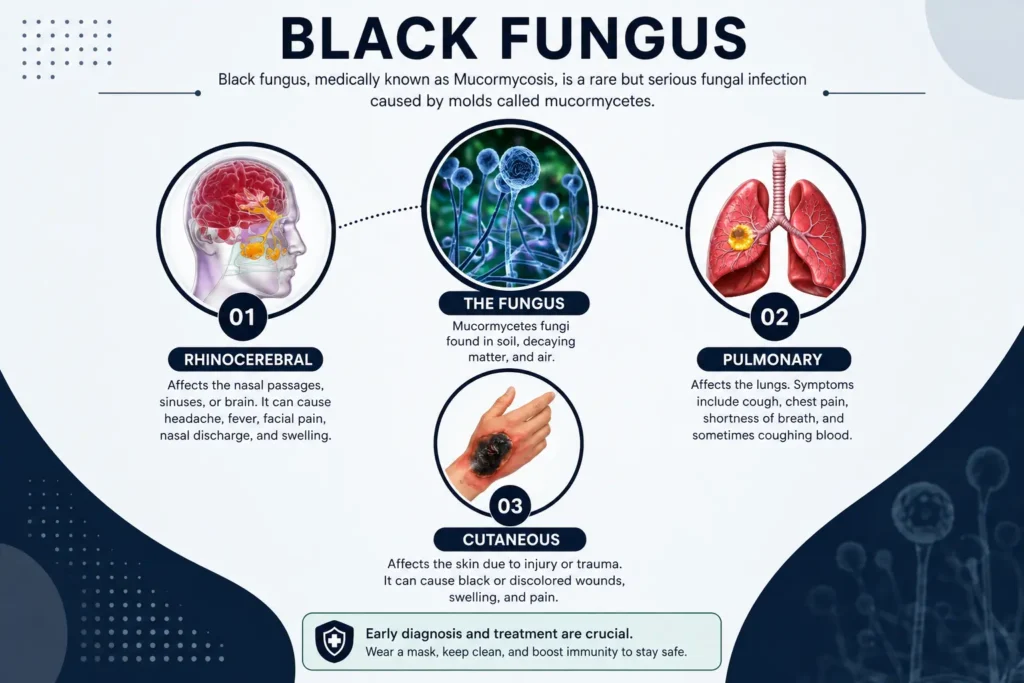
Black fungus is the popular name for mucormycosis, a rare but life-threatening fungal infection caused by a group of molds called mucormycetes. These molds occur naturally in soil, decaying leaves, compost, and rotting wood, and most healthy people inhale their spores regularly without ever falling ill. The infection develops only in people whose immune defenses are weakened or who have specific underlying health conditions. It came into the spotlight during the COVID-19 pandemic, when a sharp rise in cases was seen among recovering patients — especially those with uncontrolled diabetes or high-dose steroid use — and it remains a condition doctors actively watch for in immunocompromised and diabetic patients even today, in 2026.
What Does Black Fungus Mean?
The name comes from the dark, blackened tissue that can develop at the infection site as the fungus cuts off blood supply and causes tissue death (necrosis). It’s worth noting that public health bodies have clarified this name is somewhat misleading — the fungi that cause mucormycosis actually come in a range of colors, not just black. Doctors always use the medical term mucormycosis; “black fungus” is simply the name that stuck in everyday conversation.
What Causes Black Fungus Infection?
Mucormycosis occurs when spores from fungi in the Mucorales order — most often Rhizopus, followed by Mucor and Lichtheimia — enter the body and find conditions favorable for growth. In a person with normal immunity, these spores are cleared without incident. But in someone with diabetes, cancer, a transplant, or another immune-compromising condition, the fungus can multiply rapidly, invading blood vessels and tissue and, in severe cases, bone.
Is Black Fungus a Serious Infection?
Yes, extremely. Mucormycosis is treated as a medical emergency because it progresses fast and can destroy tissue within days. Current clinical data continues to show an overall case fatality rate of roughly 50%, and mortality can climb even higher — up to around 90% — in cases where the infection has disseminated through the bloodstream to multiple organs. Early recognition and immediate treatment remain the single biggest factor in survival.
Is Black Fungus Contagious?
No. Black fungus does not spread from person to person or from animals to humans. It’s acquired directly from the environment, so there’s no need to isolate an infected patient to prevent spread to others — a distinction that’s still frequently misunderstood.
What Are the Symptoms of Black Fungus?
Symptoms depend on which part of the body is affected and tend to start subtly before worsening quickly.
What Are the Early Symptoms of Black Fungus?
Early signs — nasal congestion, mild facial discomfort, or a low-grade headache — are often mistaken for a sinus infection or a common cold. This overlap is exactly why the infection can be missed early, and why doctors continue to urge high-risk patients not to wait out symptoms that would normally be dismissed as minor.
What Are the Common Symptoms of Black Fungus Infection?
Across its different forms, common symptoms include fever, headache, facial pain or numbness, nasal blockage or dark/blood-tinged discharge, swelling around the eyes or cheeks, blackish discoloration on the nose or facial skin, loosening teeth or toothache, and blurred or double vision.
What Are the Symptoms of Black Fungus in the Nose and Sinuses?
This is the most common presentation, called rhino-orbital mucormycosis. It typically shows up as one-sided nasal blockage, dark or bloody discharge, facial pain, and swelling around the nose and cheeks, sometimes with a visible black crust inside the nasal cavity.
What Are the Symptoms of Black Fungus in the Eyes?
When infection reaches the eye socket, symptoms include eyelid swelling, redness, a bulging eye (proptosis), blurred or double vision, restricted eye movement, and — if untreated — permanent vision loss.
What Are the Symptoms of Black Fungus in the Lungs?
Pulmonary mucormycosis causes persistent cough, chest pain, fever, breathlessness, and sometimes coughing up blood. It’s more common in people with blood cancers or organ transplants, and recent case data continues to show it can progress very rapidly — sometimes being mistaken for bacterial pneumonia before fungal cultures confirm the real diagnosis.
What Are the Symptoms of Black Fungus in the Brain?
When infection spreads to the brain, often from the sinuses, it can cause severe headache, confusion or altered mental status, seizures, one-sided weakness, and loss of consciousness. This form carries the highest risk and needs emergency care.
Can Black Fungus Cause Facial Swelling or Pain?
Yes. One-sided facial swelling and pain are hallmark symptoms of sinus and eye-socket involvement, often with numbness or a sense of pressure around the eyes, cheeks, or upper jaw.
When Should You See a Doctor for Black Fungus Symptoms?
Anyone with diabetes, a weakened immune system, or a recent history of COVID-19 or steroid use who develops facial pain, nasal blockage, unusual discharge, vision changes, or facial swelling should get evaluated right away, rather than waiting to see if it clears up on its own.
What Causes Black Fungus Infection?
What Fungi Cause Black Fungus?
Mucormycosis is caused by fungi in the order Mucorales. Rhizopus species remain the most frequently identified cause, responsible for the large majority of cases, followed by Mucor, Lichtheimia, Cunninghamella, Apophysomyces, and a few rarer genera.
How Does Black Fungus Enter the Body?
Most commonly, spores are inhaled through the nose and settle in the sinuses, from where the infection can spread to the eyes, brain, or lungs. It can also enter through cuts, burns, or wounds, leading to cutaneous (skin) mucormycosis — this route is increasingly recognized in hospitalized or trauma patients as well.
Who Is at Higher Risk of Black Fungus?
Higher-risk groups include people with uncontrolled diabetes, patients on long-term steroids, those undergoing chemotherapy for cancer, organ or stem-cell transplant recipients, people with advanced HIV/AIDS, patients with iron overload, and those who’ve had major trauma, severe burns, or extended ICU stays.
Is Diabetes a Risk Factor for Black Fungus?
Yes — it remains one of the strongest risk factors, especially with episodes of diabetic ketoacidosis. High blood sugar and an acidic internal environment both favor fungal growth and blunt the immune cells that would normally fight it off.
Can a Weak Immune System Increase the Risk?
Yes. Any condition or treatment that suppresses immunity — chemotherapy, long-term steroids, transplant medication, blood cancers — reduces the body’s ability to clear spores before they take hold.
Can Steroid Use Increase the Risk of Black Fungus?
Yes. Steroids can be essential for controlling severe inflammation, but they also suppress immunity and raise blood sugar. This combination, widely seen during the pandemic, remains a recognized risk pathway whenever steroids are used in vulnerable patients.
What Other Medical Conditions Increase the Risk?
Other contributing factors include prolonged hospitalization, kidney disease, malnutrition, low birth weight in infants, and conditions causing iron overload, since the fungus uses iron to grow.
How Does Black Fungus Spread?
Can You Get Black Fungus From Another Person?
No — there’s no person-to-person transmission, so there’s no infection risk from being near someone who has it.
Can Black Fungus Spread Through the Air?
The spores themselves are airborne and get inhaled from the environment, but that’s different from the infection spreading through the air from a sick person. The source is always environmental, not another patient.
Can Black Fungus Be Contracted From Soil or the Environment?
Yes. These fungi are common in soil, decaying matter, compost, and dust. Most people are exposed regularly with no ill effect, but in high-risk individuals, inhalation or contact with a contaminated wound can trigger infection. Hospital-associated exposure — through items like water leaks, poor air filtration, or non-sterile equipment — is also a recognized, if less common, pathway.
How Is Black Fungus Diagnosed?
What Tests Are Used to Diagnose Black Fungus?
Diagnosis combines clinical examination, imaging, and laboratory analysis of tissue or discharge samples, including microscopy (KOH staining) and fungal culture.
How Do Doctors Confirm a Black Fungus Infection?
Doctors typically start with a physical and endoscopic exam of the nose and sinuses to look for characteristic tissue changes, then confirm with imaging and lab testing of a tissue sample, since visual signs alone aren’t sufficient for a definite diagnosis.
Is a CT Scan or MRI Used for Black Fungus?
Yes. CT scans help assess sinus involvement and bone erosion, while MRI is preferred when there’s concern about spread to the eyes or brain, since it captures soft tissue detail more clearly.
Is a Biopsy Needed to Diagnose Black Fungus?
In most cases, yes. A tissue biopsy is examined under a microscope and cultured to confirm the exact fungus involved, which helps guide antifungal treatment choice.
How Long Does Black Fungus Diagnosis Take?
Given how fast the infection progresses, diagnosis is handled urgently. Clinical suspicion plus imaging can often be established within a day, while confirmatory biopsy and culture results may take a few more days — though treatment is usually started on strong clinical suspicion without waiting for final lab confirmation.
How Is Black Fungus Treated?
What Is the Treatment for Black Fungus?
Treatment combines antifungal medication with surgical removal of infected and dead tissue, alongside correcting the underlying risk factor (like uncontrolled diabetes or excess steroid use). Because the infection spreads through blood vessels quickly, combined treatment started early remains the standard of care.
Which Antifungal Medicines Are Used for Black Fungus?
Liposomal amphotericin B, given intravenously, remains the first-line treatment of choice. Once the infection is under control, doctors often step down to oral antifungals such as posaconazole or isavuconazole for continued therapy — isavuconazole in particular is now well-established as an effective primary or alternative option, with growing clinical experience behind it.
When Is Surgery Needed for Black Fungus?
Surgery is often essential because antifungal drugs can’t penetrate dead tissue effectively. Surgical debridement — removing infected and necrotic tissue — is frequently required to stop further spread, and in advanced eye involvement, removing the eye may be necessary to prevent the infection reaching the brain.
How Long Does Black Fungus Treatment Take?
Treatment length varies with severity but generally runs several weeks to a few months, often continuing after hospital discharge with regular follow-up imaging to track progress.
Can Black Fungus Be Completely Cured?
Yes, with early diagnosis and aggressive treatment, many patients recover fully. Outcomes still depend heavily on how early it’s caught, how far it has spread, and how well underlying conditions are controlled during and after treatment.
What Happens If Black Fungus Is Not Treated?
Untreated, the infection spreads rapidly to surrounding tissue, the eyes, and the brain, and can cause vision loss, severe facial disfigurement, and death. This is why the roughly 50% overall fatality rate seen in current data is so strongly tied to how early treatment begins.
Black Fungus Treatment Based on the Affected Area
Treatment for Sinus and Nasal Black Fungus
Treatment usually involves surgical clearing of infected sinus tissue combined with IV antifungal therapy and strict blood sugar control in diabetic patients.
Treatment for Eye-Related Black Fungus
Depending on severity, treatment ranges from antifungal therapy alone to surgical removal of infected orbital tissue, and in severe cases, removal of the eye to stop the infection reaching the brain.
Treatment for Lung Black Fungus
Pulmonary mucormycosis is treated with systemic antifungal medication, with surgery considered if the infection is localized and the patient is fit enough for the procedure.
Treatment for Brain-Related Black Fungus
This is the most critical form, requiring aggressive IV antifungal treatment along with neurosurgical intervention where possible, typically managed in intensive care given how quickly it can deteriorate.
What Are the Possible Complications of Black Fungus?
Can Black Fungus Affect the Eyesight?
Yes. Infection spreading to the eye socket can cause partial or complete vision loss, sometimes requiring removal of the eye to halt further spread.
Can Black Fungus Spread to the Brain?
Yes, particularly from untreated sinus infections. Brain involvement carries the highest risk of severe complications and death.
Can Black Fungus Affect the Lungs?
Yes, especially in patients with blood cancers or transplants, where pulmonary mucormycosis can cause significant lung damage and, per recent case reports, can be fatal within a short window if not caught early.
Can Black Fungus Become Life-Threatening?
Yes. When it spreads to the brain or bloodstream, or when diagnosis is delayed, it can be fatal. Prompt treatment substantially improves survival odds.
How Can Black Fungus Be Prevented?
How Can High-Risk People Reduce Their Risk?
High-risk individuals can lower their risk by keeping underlying conditions well controlled, avoiding unnecessary or prolonged steroid use, maintaining good hygiene, and staying away from dusty, damp, or moldy environments — including construction sites and flood- or water-damaged buildings — where possible.
How Can People With Diabetes Reduce Their Risk?
Keeping blood sugar consistently within a healthy range, attending regular checkups, and promptly addressing any signs of infection remain the most effective steps for people with diabetes.
Can Good Hygiene Help Prevent Black Fungus?
Yes. Handwashing, proper wound cleaning, using clean water for nasal rinses, and wearing protective clothing and masks in dusty or outdoor work environments all help reduce spore exposure, especially for people who are immunocompromised.
How Important Is Proper Control of Underlying Health Conditions?
It’s central to prevention. Since most cases occur in people with poorly controlled diabetes, weakened immunity, or recent steroid exposure, managing these conditions well remains the single most effective preventive measure available — there is still no vaccine against mucormycosis.
Black Fungus vs Other Fungal Infections
What Is the Difference Between Black Fungus and White Fungus?
White fungus, usually linked to Candida species, tends to affect the lungs and other organs in people with weakened immunity but generally behaves less aggressively than mucormycosis and is treated with a different set of antifungal drugs.
What Is the Difference Between Black Fungus and Aspergillosis?
Aspergillosis, caused by Aspergillus species, mainly affects the lungs, while black fungus more commonly starts in the sinuses and progresses faster with more extensive tissue destruction. The two need different antifungal regimens, making accurate diagnosis important.
Is Black Fungus the Same as Mucormycosis?
Yes — “black fungus” is just the popular name for mucormycosis. They’re the same condition.
Black Fungus Frequently Asked Questions
What Is the First Sign of Black Fungus?
Early signs often include nasal congestion, facial discomfort, or a mild headache, which can resemble a common cold or sinus infection in the initial stage.
Is Black Fungus Curable?
Yes, especially with early diagnosis and a combination of antifungal medication and, when needed, surgery.
How Fast Can Black Fungus Spread?
It can progress within days, particularly in people with weakened immunity or poorly controlled diabetes — which is why urgent evaluation is still recommended for anyone with risk factors and symptoms.
Is Black Fungus Painful?
Yes, it can cause significant facial pain, headache, and discomfort as it progresses and invades surrounding tissue.
Can Black Fungus Affect Healthy People?
It’s rare in people with healthy immune systems, though cases have been documented in otherwise healthy individuals after major trauma, burns, or severe COVID-19 infection. It remains almost exclusively linked to an underlying risk factor.
Can Black Fungus Be Treated Without Surgery?
In very early or localized cases, antifungal medication alone may work, but most cases still require surgical removal of infected tissue for effective control.
Can Black Fungus Cause Vision Loss?
Yes, if the infection spreads to the eye socket or optic nerve, it can cause partial or complete vision loss.
How Long Does It Take to Recover From Black Fungus?
Recovery time varies widely with severity but typically runs several weeks to a few months, including ongoing antifungal therapy and follow-up care.
Can Black Fungus Come Back After Treatment?
Recurrence is possible, particularly if underlying risk factors like uncontrolled diabetes or immunosuppression aren’t properly managed after treatment ends.
When Should Black Fungus Be Considered a Medical Emergency?
Any high-risk individual with facial swelling, vision changes, blackish nasal discharge, or neurological symptoms such as confusion or seizures should be treated as a medical emergency and seek immediate care.
Key Takeaways About Black Fungus
What Are the Most Important Things to Know About Black Fungus?
Black fungus, or mucormycosis, is a rare but aggressive fungal infection that mainly affects people with weakened immunity, uncontrolled diabetes, or recent steroid use. It is not contagious, but it can spread quickly within the body and become life-threatening if untreated — current data still puts overall fatality at around 50%, higher in disseminated disease. Early symptom recognition, prompt diagnosis via imaging and biopsy, and a combination of antifungal therapy with surgery continue to offer the best chance of full recovery, and there is still no vaccine, making early action the most reliable defense.
When Should You Seek Medical Care?
Anyone in a high-risk group who develops facial pain, swelling, nasal blockage, vision changes, or unusual discharge should see a doctor without delay. Because mucormycosis can progress within days, early medical attention remains the single most important factor in a good outcome.
This article is intended for general informational purposes only and is not a substitute for professional medical advice, diagnosis, or treatment. Always consult a qualified healthcare provider for any concerns about symptoms or treatment.