
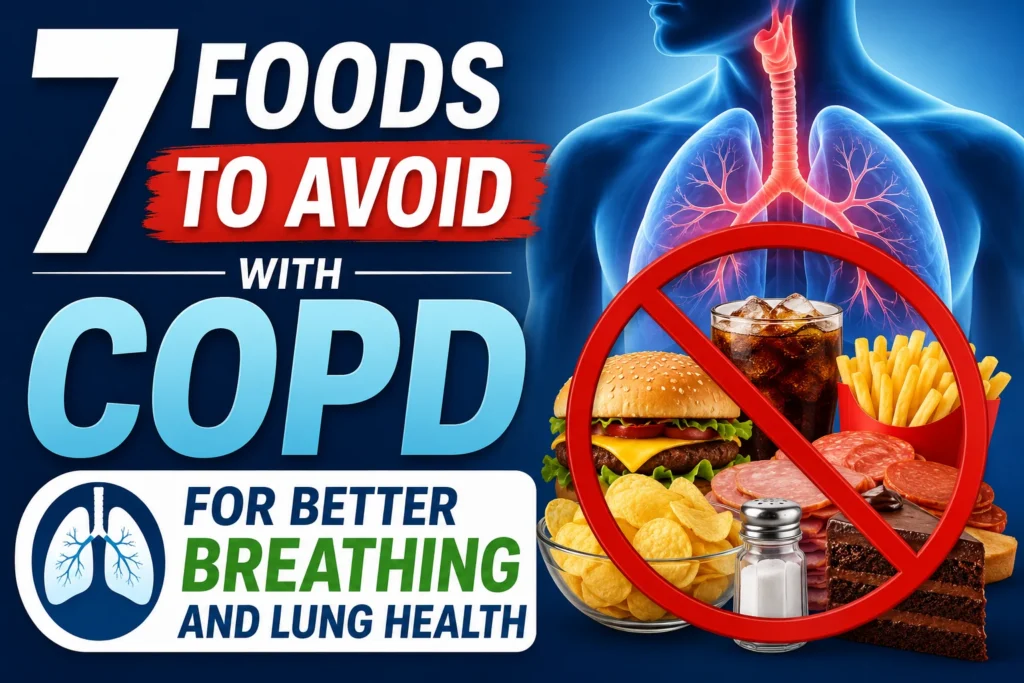
Patients living with COPD (chronic obstructive pulmonary disease) have to take care of everyday choices, including food. Though a change in food habits can reduce the symptoms of the condition and help in managing the condition. Foods like fried items, processed meats, salty snacks, and sugary meals can cause bloating in the stomach and put extra pressure on the lungs.
COPD management is more than medications and regular doctor visits. It all comes down to your breathing, so daily routines, such as what you eat, can have a noticeable impact on how you feel. Certain foods may result in bloating or excess mucus, which can obstruct the airways and make breathing more difficult.
How Does Food Affect COPD Symptoms?
Food affects COPD symptoms in many ways:
- Heavy Meals: Large meals take longer to digest, which can leave you feeling tired and make breathing feel more difficult in the COPD patients.
- Bloating and Gas from Food: Foods high in fiber can cause gas and bloating, which may put pressure on the diaphragm and affect comfortable breathing.
- Increased Inflammation: Foods high in sugar or salt can trigger inflammation in the body and may worsen COPD symptoms over time.
- Thickened Mucus: COPD can worsen as some dairy products can make mucus feel thicker, leading to more coughing, congestion, and breathing discomfort.
7 Foods to Avoid with COPD
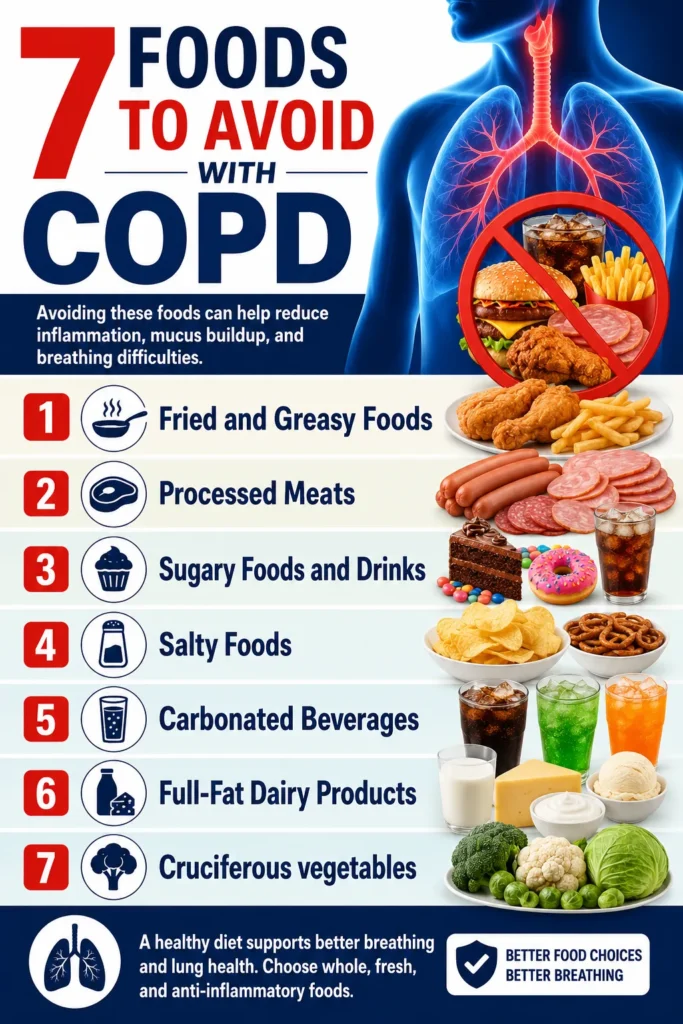
Before diving into the list of foods, it is very important to understand why your diet matters when you have COPD. Some foods cause bloating, while others can lead to fluid retention; this makes you feel heavy and uncomfortable and sometimes makes it harder to clear mucus from the airways. Not every patient with COPD reacts to food in the same way, but noticing small details like how you feel after the meals can help you identify foods that are affecting your symptoms.
1. Fried and Greasy Foods
Fried foods like potato chips, French fries, onion rings, fried chicken, and corn dogs are rich in unhealthy fats that are very taxing on the digestive system and can lead to weight gain. These greasy foods make you feel heavy and cause bloating in the stomach. Bloating causes extra pressure in the stomach that makes it harder for the lungs to fully expand and also affects your breathing pattern, especially for the people who have COPD.
You can choose gentler options like grilled, baked, roasted, or air-fried foods. These foods are lighter, which makes them easy to digest, making you feel more comfortable while supporting overall health.
2. Processed Meats
Processed meats like bacon, sausages, salami, ham, and deli meats are some of the worst foods for individuals suffering from COPD. To maintain their shelf life, these foods are made with added preservatives like nitrates and nitrites. These preservatives lead to inflammation in the lungs, making it harder for the body to use oxygen properly, and also raise the risk of chest infections.
According to a study titled “Processed Meat Consumption and Lung Function: Modification by Antioxidants and Smoking,” published in the European Respiratory Journal, people who consume higher amounts of processed meats are more vulnerable to the lung infection.
3. Sugary Foods and Drinks
Sugary foods like cake, pastries, chocolates, sweetened cereals, and soft drinks are all packed with large amounts of refined sugar. If a patient with COPD consumes these foods on a regular basis, they can cause inflammation in the body as well as in the airways, which worsens COPD symptoms. These sugary drinks and foods also lead to weight gain and cause quick spikes and drops in blood sugar levels, leading to fatigue and low energy.
If you are craving something sweet, then go for fresh fruits, yogurt, dates, dark chocolate, curd with honey, berries, apples, or bananas, as these foods provide nutrients to the body without adding unnecessary calories.
4. Salty Foods
Today, packaged snacks, instant noodles, canned soups, frozen meals, and ready-made sauces are go-to food options for many individuals. These contain a lot of sodium without adding extra salt while preparing. Excess sodium causes the body to retain water, causing swelling in the ankles and a heavy, tight feeling in the chest. Many people with COPD notice that after eating a salty meal, they feel more tired, puffy, or short of breath than usual.
Natural herbs, garlic, spices, lemon juice, and salt-free seasoning can be used for seasoning your food instead of adding salt for flavor. Incorporate more fresh foods into your daily diet and cut back on processed foods.
5. Carbonated Beverages
Summer’s favorite drinks for most of the people are these carbonated beverages, which contain gas that becomes trapped in the digestive system. This causes bloating and discomfort in the stomach.
For people with COPD, even mild bloating can be troublesome. Due to trapped gas, the stomach expands, which pushes against the diaphragm and limits the lung expansion, making breathing more difficult than usual.
In place of cold drinks or soda, you can go for water, herbal tea, coconut water, or fruit-infused water that will keep your body more hydrated without making your stomach bloated.
6. Full-Fat Dairy Products
So milk, cheese, butter, and cream are common everyday foods, but full-fat dairy can affect people with COPD differently. These foods can cause coughing and chest discomfort and can even make mucus feel thicker in some people. As these are filled with high fats, they can cause bloating and can even provide a feeling of heaviness on the stomach after having them. Full-fat dairy is high in saturated fat, and regular consumption can negatively impact overall respiratory health.
You can substitute full-fat dairy with low-fat dairy or plant-based alternatives like almond milk, oat milk, or soy milk. These foods minimize these effects and support easier digestion and breathing.
7. Cruciferous vegetables
Cabbage, broccoli, cauliflower, Brussels sprouts, and beans, these cruciferous vegetables are healthy but are also rich in fiber that can cause gas and indigestion in some people. These vegetables cause bloating in the stomach that puts extra pressure on the diaphragm and makes breathing more difficult after meals. If you have COPD, then cook them well and eat these vegetables in small portions, which helps with better and easier digestion.
Vegetables like spinach, carrots, zucchini, cucumbers, and green beans are also good alternatives to cruciferous vegetables, as these help in reducing bloating and provide you with essential nutrients.
Best Foods to Eat with COPD
The best approach for a person with COPD is to focus on lighter, nutrient-rich options instead of heavy or triggering foods, such as:
- Fresh fruit, including apples, papaya, and bananas
- Cooked or steamed vegetables, instead of fried foods
- Whole grain foods, including oats, brown rice, & whole wheat
- Lean protein sources, including eggs, chicken and turkey, fish, and legumes
- Herbal teas or warm water in place of carbonated beverages
- Low-fat dairy products or plant-based alternatives if you have discomfort with dairy.
Tips for Eating Better with COPD
- When dining, consume smaller portion sizes as opposed to larger serving sizes.
- After eating for about 15-20 minutes, you should get some exercise.
- Don’t go right to bed after you finish your dinner.
- As you eat, chew your food thoroughly and take your time.
- In the evening, don’t consume very large dinners.
- Be sure to drink plenty of water throughout the day to stay hydrated.
- Identify and stay away from anything that may trigger your appetite or worsen COPD symptoms.
Conclusion
COPD is common enough that many people live with the condition and work to reduce how much it affects their daily routines. Therefore, making dietary and exercise changes is one way you can improve your overall health and quality of life over the long term.
Though small changes in your eating habits may seem minimal on their own, they can become an important part of your everyday routine over time. If you don’t know what effect specific foods have on your breathing, try keeping a food and exercise diary so that you can discuss your observations with your doctor.
Frequently Asked Questions
1. What is COPD?
COPD (Chronic Obstructive Pulmonary Disease) is a long-term lung disease that gradually affects your breathing by limiting airflow in and out of the lungs. It mainly includes emphysema, which damages the tiny air sacs (alveoli) where oxygen exchange takes place, and chronic bronchitis, causing inflammation and excess mucus in the airways.
2. Is COPD cancerous?
No, COPD is not cancerous, but it is a long-term lung disease that negatively affects the airflow and makes breathing difficult. However, people with COPD, who have a history of smoking, have a high risk of developing cancer.
3. What causes COPD?
COPD is basically caused by the long-term exposure to irritants like smoking, air pollution, chemical fumes, dust, and secondhand smoke that damages the lungs. In some of the cases, even genes are also responsible for causing chronic obstructive pulmonary disease.
4. Can COPD be cured?
COPD cannot be cured completely, as it causes permanent damage to the lungs. But you can reduce the risk of worsening symptoms by proper treatment and care.
5. When should someone see a doctor for COPD?
If you are having shortness of breath, a chronic cough, frequent chest infections, or your symptoms are worsening, then you should see a doctor immediately. And if you are over 35 or have a history of smoking, then don’t delay to prevent the condition from getting worse.
Reference ULR: https://my.clevelandclinic.org/health/diseases/8709-chronic-obstructive-pulmonary-disease-copd