
If you’re taking creatine, you’re likely chasing a specific goal: more strength, better recovery, or a more muscular frame. But when the weekend hits and the social pressure ramps up, it’s easy to wonder if a few drinks will totally erase the hard work you’ve put in at the gym. While having a drink won’t necessarily put you in the hospital, it does create a biological tug-of-war in your body.
From dehydrating your muscle cells to overworking your liver, mixing the “gold standard” of supplements with alcohol can significantly blunt your progress. Understanding how these two interact is the only way to make sure you aren’t literally flushing your gains down the drain.
What Is Creatine And How Does It Work?
Creatine is essentially a high-speed backup battery for your muscles. It’s a natural compound made of amino acids that helps your body regenerate ATP, the primary fuel used for short, explosive movements like heavy lifting or sprinting. By keeping your stores topped off, you can push through those final, difficult reps that usually lead to the most muscle growth.
Beyond just energy, creatine pulls water directly into your muscle fibers, a process known as cell volumization. This internal hydration doesn’t just make your muscles look fuller; it creates a better environment for your body to repair tissues and recover from soreness.
How Creatine Supports Muscle Growth?
Creatine is naturally created by the body to provide more energy for physical exercise or training. It helps replenish ATP stores in the muscle, which is the main energy source used to perform short bursts of high-intensity movements such as lifting weights or sprinting. By helping keep your body’s ATP levels high, it enables you to retain strength and power for an extended period of time and prevents you from getting as fatigued during training.
Additionally, it also helps your body while lifting weights, sprinting, or performing an intense workout. By helping your muscles replace damaged muscle fibers more quickly and return to their normal energy levels, you can shorten your recovery time and be ready earlier for your next workout.
Is There a Direct Interaction Between Creatine and Alcohol?
Actually, there is no proper evidence to support that creatine and alcohol chemically react or that alcohol directly blocks creatine absorption.
The main concern with alcohol and creatine isn’t a direct reaction between the two, but how they affect your body together. Creatine helps support energy production, hydration, and muscle recovery, while alcohol can work against these processes by affecting recovery and fluid balance.
Both creatine and alcohol are metabolised by the liver and kidneys through different pathways. According to research that is animal-based, long-term heavy alcohol intake alongside creatine may put stress on these organs, making them work twice their capacity.
While drinking alcohol in moderate amounts may not affect creatine or other organs. But excess intake for a long period of time can put a lot of stress on the liver and kidneys, reducing their functionality and making it harder for the body to process nutrients and heal properly.
So it can’t be said that creatine and alcohol cancel each other out, but they work differently from each other. This pushes your body in different directions when it comes to performance, recovery, and muscle growth.
What Are The Effects Of Combining Alcohol And Ceratine?
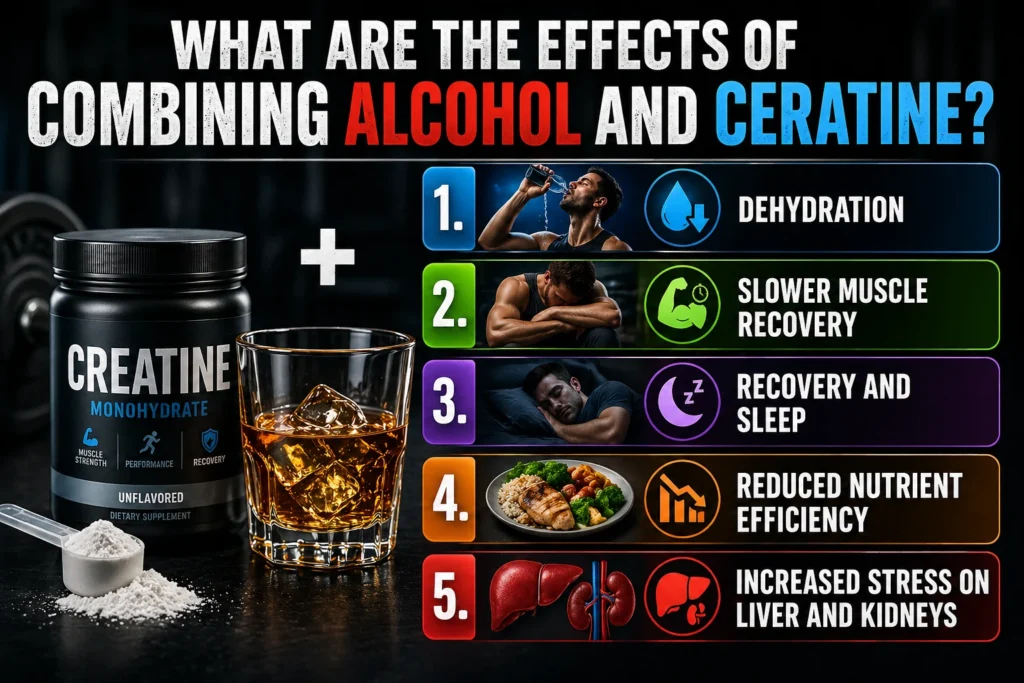
No definitive chemical reaction between alcohol and creatine has been proven nor has it been indicated that alcohol cancels out creatine; rather, both affect your body in terms of how they impact performance and recovery, since both will influence those processes that are critical for performance as well as recovery.
1. Dehydration
Alcohol reduces the release of vasopressin, a hormone that helps the kidneys retain water, due to its diuretic effect. As a result, this increased urine production causes a loss of fluids and electrolytes from your body, leading to dehydration and, consequently, tiredness or low energy levels.
Whereas creatine requires enough water to replenish muscle cells with liquid and provide energy for exercise. Because of dehydration, the body’s ability to bring creatine into cells is reduced, thus limiting the effectiveness of creatine during training and the recovery period.
2. Slower Muscle Recovery
Muscle growth and repair depend on a process called muscle protein synthesis (MPS), in which muscle fibres are rebuilt and strengthened after training. Alcohol simply reduces progress by interfering with the body’s natural muscle repair mechanism, it doesn’t matter how much alcohol you are consuming, from moderate to high amounts.
This slows down the recovery process after workouts, and also reduces the muscle and body strength over time.
3. Recovery and Sleep
Sleep plays an important role in recovery. Alcohol may make you sleepy at first, but it can disrupt your sleep quality by reducing REM sleep and can make you frequently awake during the night. This disrupts the body’s ability to fully restore itself.
Deep sleep releases vital hormones for muscle repair, including growth hormone and testosterone. Alcohol can mess with restoration and the body’s response to training. Not getting enough sleep might also make you less motivated, focused, and energetic, which could make your workouts less successful.
4. Reduced Nutrient Efficiency
Alcohol has zero nutritional value; there are no nutrients present in alcohol that can be used in physical or mental growth. This is why it is also viewed as “empty calories.” The body breaks down and processes alcohol first before any other nutrients, due to which the body is not able to metabolise other nutrients effectively.
Excessive alcohol consumption may lead to an increase in calories consumed throughout the day. This negatively impacts muscle gain and fat loss goals. In addition, alcohol consumption can make it challenging to maintain adequate nutrition to meet your performance and fitness-related goals.
5. Increased Stress on Liver and Kidneys
The liver and kidneys both process alcohol and creatine. Each is also responsible for eliminating waste from the body. Alcohol is largely metabolised by the liver; excessive drinking or in large quantities puts extra strain on the liver and kidneys and impairs their normal functioning. This can slow down nutrition digestion and detoxification.
When Alcohol Reduces Creatine Benefits?
Timing plays an important role in how your body responds to both creatine recovery and alcohol intake. After a workout, your muscles enter a key recovery phase where they repair and rebuild, making post-workout nutrition especially important for muscle growth and performance.
After a workout, your body starts restoring energy and muscle repair. This is the time when alcohol can have the strongest negative effect, as it may slow creatine recovery. It can interfere with muscle rebuilding and reduce hydration balance. Recent sports nutrition research shows that alcohol after resistance exercise can reduce muscle protein synthesis, which is essential for alcohol muscle growth outcomes and overall recovery.
Pre-workout drinking is also not recommended, as it can reduce performance, increase dehydration, and negatively impact coordination during exercise. Alcohol is known to impair physical output and recovery processes, which can directly affect training quality and post-workout nutrition results.
Drinking immediately after workouts has the most impact on recovery since your body needs nutrients and fluids during this window. Having alcohol several hours later or on rest days has a smaller effect, as it is not during the main muscle repair phase and has less influence on creatine recovery and muscle growth support.
Is It Safe To Mix Creatine And Alcohol?
Creatine supplements are generally considered safe to use if you are consuming alcohol occasionally while taking them.
Though there is no strong evidence that creatine and alcohol directly react or cancel each other out. However, some preclinical research that is basically conducted on rats has shown that, when you combine creatine with heavy or chronic alcohol, it increases the stress on the liver.
This has mainly been seen in studies where alcohol is consumed in large amounts over a long period, rather than from occasional drinking.
Normally, people get small amounts of creatine from daily food, while supplements provide up to 3-5 gm per day to support strength and performance. According to the International Society of Sports Nutrition (ISSN), even higher doses are taken by healthy individuals without causing any side effects.
If you have liver or kidney conditions, it is best to consult a healthcare professional before using creatine, especially if you regularly consume alcohol.
How to Use Creatine and Alcohol Safely?
“Now you might be thinking, creatine and the occasional drink, is it even possible? Yes, you can do both-you just have to be a little smarter about how you balance them.”
1. Stay well hydrated throughout the day
Alcohol is diuretic in nature and increases fluid loss, so it becomes even more important to drink more water, especially when you are working out. Proper hydration helps creatine work effectively by allowing it to pull water into muscle cells.
2. Keep your creatine intake consistent
If you are working out, don’t skip your daily creatine dose. Try to take it regularly, approx. 3-5 gm per day; it will help maintain stable levels in your muscles, supporting strength and performance over time.
3. Avoid alcohol right after workouts
After workouts you body is busy actively repairing muscle tissues. Drinking alcohol during this time can slow down your recovery, so it’s better to wait a bit after physical training before having a drink if you can.
4. Don’t fall short on your protein intake
Alcohol makes it harder for the body to use nutrients efficiently. Protein helps with muscle repair and growth after a workout. After a workout, it helps the body recover properly and works together with creatine, keeping your progress on track.
5. Keep alcohol intake moderate
While taking creatine, you don’t need to avoid alcohol completely. But limiting how much and how often you drink can make a difference. Moderate intake will not get in the way and helps reduce stress on your body, and allows better recovery.
Takeaway
- Alcohol doesn’t block creatine completely, but it can lower how well it supports your performance.
- By affecting hydration, recovery, and nutrient use, it can slow down muscle growth and make your workouts less effective.
- It can also increase dehydration and put extra stress on the liver and kidneys, especially if drinking is frequent or excessive. Over time, this may impact your energy levels and overall progress.
- To get the most out of creatine, drink plenty of water, eat meals that are balanced, and don’t drink too much alcohol, especially before and after workouts.
Let’s Answer Your Questions
1. Can I drink alcohol while taking ceratine?
If you are taking creatine, you can drink alcohol, but it is necessary to keep a check on it, not in excess. Being diuretic in nature, alcohol causes fluid loss and reduces how effectively creatine works for muscle performance and body strength. If you are a regular drinker, then both alcohol and creatine will put extra pressure on the organs, making them do double work and affecting performance during workouts and extended recovery time.
2. Will mixing alcohol and ceratine cause kidney damage?
Though taking creatine and alcohol does not directly harm the kidneys in healthy individuals. But excessive intake may affect your health and other bodily functions. Alcohol can lead to fluid loss, which may interfere with how creatine supports muscle hydration and performance. In moderation, it is usually fine, but frequent or heavy drinking may place extra strain on the kidneys and reduce how effectively creatine supports strength and muscle growth.
3. Does alcohol affect muscle growth?
Alcohol, being diuretic in nature, slows down the muscle protein synthesis, a process in which the body repairs and builds muscle after workouts. Altering sleep, hydration, and hormone levels like testosterone, it affects the quality of recovery. Drinking occasionally won’t have much of an impact, but it can generally slow down the growth and development of muscles.
4. What can I drink instead of alcohol with creatine?
Alcoholic beverages can be substituted with non-alcoholic drinks and hydrating beverages.
These beverages can facilitate the enhancement of the effects of creatine, i.e., hydration through the use of drinks such as coconut water, electrolyte beverages, and plain water, which will add to the ability of creatine to aid recovery and enhance its performance or effectiveness in the body. Also, try using protein shakes; they will assist in muscle recovery and strengthen your body.
5. Does taking creatine before alcohol affect results?
If you are taking creatine before drinking alcohol, for the short term, it will not cause much harm. But to take the most benefit, avoiding alcohol completely would be better. Alcohol acts as a diuretic, leading to dehydration and reducing creatine’s ability to support muscle hydration, strength, and recovery. The alcohol and creatine combination can slow down muscle repair and lessen the overall effectiveness of supplementation.
Reference Url: Healthline