
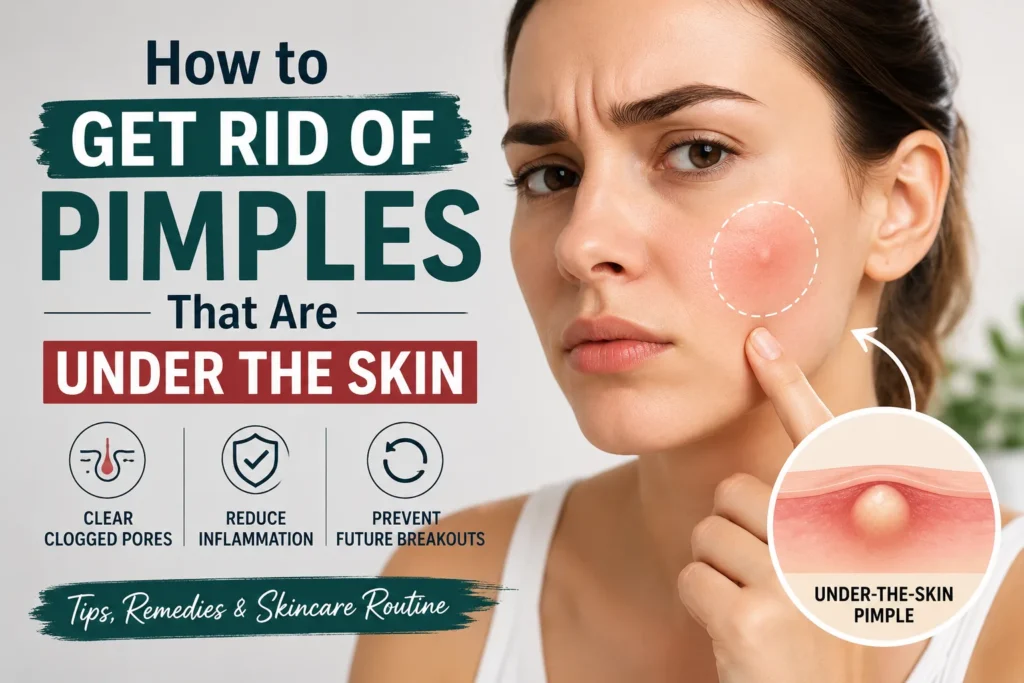
You know the type of pimple I’m talking about. It doesn’t have a head, it just sits there under your skin, red and sore, and touching it feels like poking a bruise. You wake up hoping it’s gone, and it’s not. Sometimes it hangs around for a week or two before it finally settles down.
What Are the Pimples Called That Are Under the Skin?
These are usually called cystic or nodular pimples. They form when a pore gets blocked deep down instead of near the surface, so all that irritation stays trapped under your skin instead of coming out. That’s exactly why squeezing them almost never works and usually makes things worse – more swelling, more redness, and a much higher chance of it leaving a mark behind.
Two things tend to happen with these. Sometimes you get pimples that are hard under the skin, almost like a little pebble you can feel when you press on your cheek or jaw. Other times, it’s less about the hardness and more that you’ve got pimples that are under the skin and hurt every time your face moves, or even just when you touch them by accident.
Here are some simple ways to remove pimples under the skin:
1. Start with a Warm Compress
This is honestly the easiest fix and one people skip because it feels too simple to work. Heat gets the blood flowing to that spot, which helps loosen things up and slowly bring the clog closer to the surface. It’s especially useful for pimples that are hard under the skin, since the warmth softens things up over time.
Just soak a clean cloth in warm water, wring it out, and hold it on the pimple for about ten minutes. Do this a couple times a day. It won’t disappear overnight, but you’ll notice it feels less tight and painful pretty quickly.
2. Ice It When It’s Angry-Looking
If the spot is swollen and red and just looks upset, ice can calm it down fast. Cold shrinks the blood vessels a bit, so the swelling goes down. This helps a lot when you’re dealing with pimples that are under the skin and hurt, since the cold numbs the area a little too.
Wrap an ice cube in a cloth, hold it there for a few minutes, and you’ll usually see the redness settle. This one’s great before you have somewhere to be and need it to look less dramatic, even if it doesn’t fix the underlying issue.
3. Tea Tree Oil, But Don’t Use It Straight
Tea tree oil has natural antibacterial properties, so it can help with the bacteria that’s part of what’s causing the breakout in the first place. But it’s strong stuff, so putting it on undiluted can burn or irritate your skin.
Mix a couple drops with something like coconut or jojoba oil, then dab it on with a cotton swab once or twice a day. A little goes a long way here.
4. Aloe Vera for the Irritation
Aloe vera gel is very soothing and has a soft, gel-like texture that helps keep the skin moisturised. Though it won’t get rid of a pimple by itself, it takes away some of the redness and also reduces irritation while it heals.
Fresh aloe straight from the plant is best if you have access to one, but a simple gel with minimal ingredients works fine too. Just smooth a thin layer over the area.
5. A Dab of Raw Honey
This sounds a little old-fashioned, but honey – especially raw or Manuka – has antibacterial qualities and helps pull out impurities while keeping the skin hydrated so it doesn’t get flaky or sore.
Put a small amount right on the spot, leave it for fifteen or twenty minutes, and rinse with warm water. Some people leave it on overnight if their skin handles it well.
6. Turmeric Paste
Turmeric has a compound in it called curcumin that helps bring down swelling and fights off some of the bacteria involved. Fair warning: it can leave a slight yellow tint on your skin for a bit, so maybe don’t do this right before you need to leave the house.
Mix a small pinch with water or honey until it forms a paste, apply it for about ten minutes, and then wash it off.
7. Diluted Apple Cider Vinegar
ACV works as a mild astringent, which helps balance your skin and cut down on some of the oil buildup around the pore. Never put it on straight though – it can genuinely burn if it’s too strong.
Mix one part vinegar with three parts water, dab it on with a cotton pad just on the pimple, leave it a few minutes, then rinse it off.
8. Green Tea, on Your Skin and in Your Cup
Green tea has antioxidants that help calm inflammation, and this works whether you’re drinking it or putting it directly on your skin. Some research points to it helping regulate oil production too, over time.
Brew a cup, let the tea bag cool down, and hold it against the pimple for a few minutes. Drinking a cup or two through the day doesn’t hurt either.
How to Hide Pimples That Are Under the Skin
While you’re waiting for it to heal, you probably still have to leave the house, and that’s fair. A few small things make it much easier to hide pimples that are under the skin without caking on product:
- Skip heavy foundation on the spot itself. It tends to sit on top of the swelling and actually draw more attention to it. A thin layer of color corrector (green or peach tone, depending on how red it is) under a light concealer works better.
- Pat, don’t rub, the concealer on. Rubbing irritates the area further and can make it look shinier and more raised.
- Set it lightly with powder so it doesn’t slide off if the spot is still a little swollen or warm.
- Avoid touching it up all day. Every time you add another layer, it builds up around the bump and makes it more obvious, not less.
It’s a temporary fix, not a cure, but it helps you get through the day while the actual healing happens underneath.
A Few Habits That Matter More Than People Think
- Change your pillowcase more often than you think you need to. Oil and bacteria build up on it fast.
- Try to keep your hands off your face during the day, even when it’s tempting.
- Drink enough water, and if you notice sugar or dairy seems to trigger breakouts for you, it might be worth cutting back.
- Don’t overwash your face. Stripping it too much can actually make your skin produce more oil to compensate.
- Give it time. Deep pimples take longer to heal than the surface ones, sometimes a week or two even when you’re doing everything right.
When It’s More Than a One-Off
If these keep coming back, leave scars, or just won’t budge after a few weeks of care, it’s worth talking to a dermatologist. Natural remedies work well for the occasional breakout, but chronic or severe cystic acne sometimes needs something stronger than home care can offer, and there’s nothing wrong with getting help for that.
At the end of the day, these pimples are annoying, and they hurt more than they should for something so small. But with a bit of patience and the right care, they do heal – just try not to pick at it while you wait.
Faq’s
1. How do I get rid of a pimple under the skin naturally?
Use warm compresses, ice for swelling, and gentle spot treatments like diluted tea tree oil or honey. Avoid picking it, keep the area clean, and allow it to heal itself.
2. What is the fastest way to reduce a painful blind pimple?
Ice it first to calm swelling, then follow up with a warm compress to loosen the clog underneath. Together, they bring down pain and pressure fastest.
3. Are under-the-skin pimples a sign of hormonal acne?
Yes, most of the time under-the-skin pimples can be the result of hormonal changes in the body. Hormonal acne tends to show up as deep, painful bumps around the jaw and chin, especially tied to your cycle, stress, or hormone shifts.
4. Can I pop a pimple that is under the skin?
No, you shouldn’t pop the under-eye pimple because there is no head to release, so popping it just pushes bacteria deeper. This can cause more swelling, pain, and a chance of scarring.
5. How long do under-the-skin pimples take to go away?
Mostly, it takes roughly one to two weeks to fully heal, perhaps more if it’s a deeper cyst. Warm compresses and regular care, such as not touching it, can speed up the process a little.