
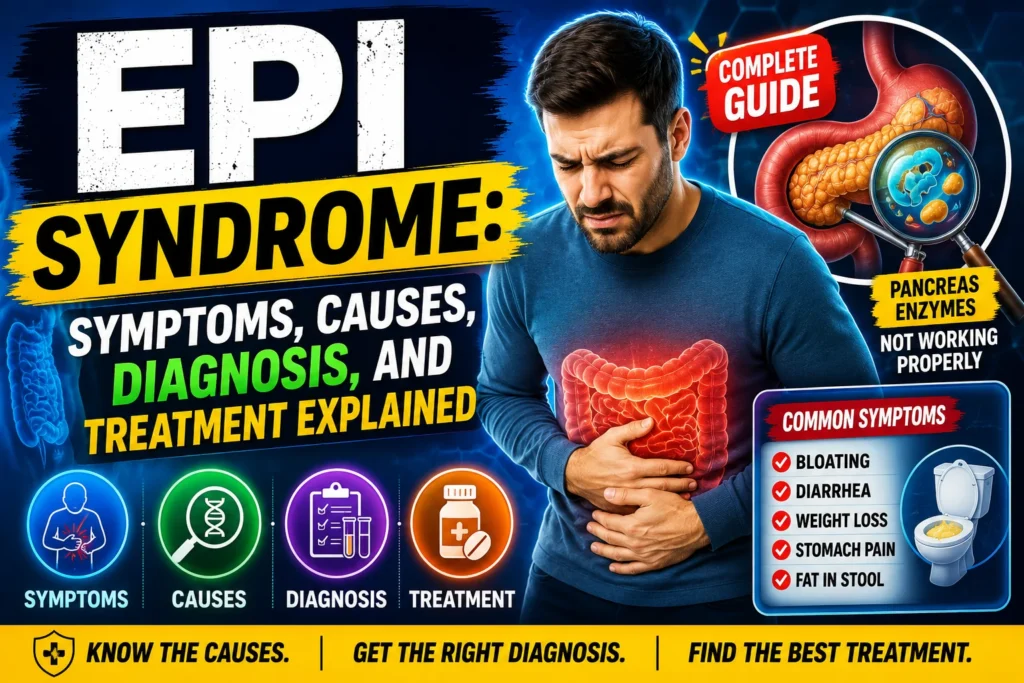
EPI (ExocrinePancreatic Insufficiency) usually occurs when the pancreas stops making enough digestive enzymes to break down the food. It is not a rare condition, but most of the time people mistake this for other stomach issues. So many people live with it for years before getting a real diagnosis.
What Is EPI Syndrome?
EPI is when your pancreas does not produce enough pancreatic enzymes, or the enzymes it produces are not working properly. These enzymes break down the food into easily digestible forms, and the nutrients are absorbed by the body easily. A missing enzyme prevents the body from absorbing nutrients and, over time, if not managed correctly, leads to malnutrition in the body.
What Are the Symptoms of EPI?
Since fat is the hardest nutrient to break down without enough enzymes, most EPI symptoms trace back to poor fat digestion. Research this NIF. The most common signs include:
- Abdominal pain, gas, and bloating
- Diarrhea, or in some cases, constipation
- Fatty stools that are pale, oily, foul-smelling, and tend to float
- Unexplained weight loss (or failure to thrive in infants and young children)
- Ongoing fatigue or low energy
These symptoms overlap so heavily with other digestive problems, like IBS or lactose intolerance, that EPI is frequently mistaken for something else at first. If any of these symptoms are persistent rather than occasional, it’s worth getting checked rather than assuming it’s just a sensitive stomach.
What Causes EPI?
EPI doesn’t develop on its own. It’s the result of an underlying condition damaging the pancreas or blocking its enzymes from reaching the small intestine. The causes tend to differ slightly between adults and children.
Causes In Adults
Chronic pancreatitis is the leading cause of EPI in adults. As many as 8 in 10 people with chronic pancreatitis eventually develop it, since repeated inflammation gradually damages the enzyme-producing cells in the pancreas. Other conditions linked to EPI in adults include:
- Celiac disease
- Type 1 or type 2 diabetes
- Inflammatory bowel disease, including Crohn’s disease
- Pancreatic cancer
- Surgery involving the digestive tract, including weight loss surgery
- Acute pancreatitis, often triggered by gallstones blocking the bile duct
- Autoimmune pancreatitis, where the immune system attacks the pancreas directly
Causes In Children
Cystic fibrosis is the most common cause of EPI in infants and children. It is an inherited condition, which means a child inherits it from their parents. In this condition, thick mucus builds up around the pancreas, blocking the enzymes from reaching the small intestine for digestion. Nearly 9 out of 10 infants with cystic fibrosis become prone to EPI within the first year of life.
How Is EPI Diagnosed?
Since there is no test that is exclusively definitive for EPI, doctors assess a patient’s condition by taking into consideration the following tests and diagnoses according to the signs and symptoms of the patient:
- Fecal Elastase Test: In this process, the stool is inspected for the elastase enzyme. A low amount of elastase indicates EPI.
- Fecal Fat Test: In this test, the amount of fat that passes undigested in the stool is assessed.
- Secretin Pancreatic Function Tests: In this test, secretin through IV is injected to check the pancreatic response by collecting the fluid through endoscopic ultrasound.
- Imaging Tests: These tests involve the use of a CT scan or abdominal ultrasound.
How Is EPI Treated?
EPI is a lifelong condition for most people but can be managed with the right treatment.
Treatment usually combines three things:
Pancreatic enzyme replacement therapy (PERT): This is the core of enzyme therapy for EPI. It replaces the enzymes your pancreas isn’t producing and needs to be taken with every meal and snack. Timing matters here, enzymes need to go in with the first bite of food, not after the meal is finished. Finding the right dose usually takes some back-and-forth with your doctor.
A high-calorie, high-fat diet: Cutting out fat isn’t the answer. Fat actually helps the body absorb nutrients, so most people benefit from working with a dietitian to build a diet that works alongside enzyme therapy rather than avoiding fat altogether.
Vitamin support: Fat-soluble vitamins A, D, E, and K are harder to absorb with EPI, so supplementation is often part of the treatment plan to prevent deficiencies down the line.
What Complications Can EPI Cause If Left Untreated?
If you are having EPI, your digestion will be affected the most, as it does not allow normal digestion to take place. It interferes with the absorption of fats, proteins, and carbohydrates, causing malabsorption, and if it is not treated in time, then it can cause malnutrition in the body.
- Skin dryness and brittle nails or hair
- Fatigue, weakness, or dizziness
- Constant chills
- Loss of muscle mass
- Mood swings
- Problems with memory and attention
- Swelling of the body tissues
Outlook / Prognosis
What Is the Outlook for People With EPI?
For a longer and healthier life, it is important to manage the root cause properly. EPI damages the pancreatic cells, and they don’t regenerate. So, for most people, enzyme therapy is needed.
Staying consistent with dosing, diet, and vitamins will help in keeping the symptoms stable for the long term.
One exception: About half of children with Shwachman-Diamond syndrome eventually start producing enough enzymes on their own and may be able to stop PERT altogether, so ongoing monitoring still matters even with a lifelong diagnosis.
Prevention
How Can EPI Be Prevented?
It depends on the cause. For pancreatitis-related EPI, there’s real room to lower your risk:
- Cut back on alcohol, a major driver of chronic pancreatitis
- Avoid smoking, which speeds up pancreatic damage
- Treat gallstones or high triglycerides promptly, since both can trigger flare-ups
- Get pancreatitis treated early rather than letting it recur untreated
For inherited causes like cystic fibrosis or Shwachman-Diamond syndrome, prevention isn’t really possible since they’re genetic. The best approach there is early detection, staying alert to symptoms so treatment can start before malnutrition sets in.
Living With EPI: When Should You Call a Doctor?
In the beginning, EPI symptoms feel like normal stomach pain, so most of the time people don’t pay much attention to it. But there are some signs to watch out for that need immediate attention, like:
- Extreme fatigue or dizziness
- Oily, floating stools
- Signs of malnutrition
- Weight loss you can’t explain
Once diagnosed, it also helps to ask directly: What’s causing your EPI? What treatment fits your case best? What dietary changes should you make? Whether you need vitamin supplements and what complications to watch for going forward. Sticking with your treatment plan and supporting overall gastrointestinal health and digestive wellness through diet makes day-to-day life with EPI far more manageable.
FAQs
1. Is EPI curable?
EPI is not curable, as it causes permanent damage to the pancreas, but you can manage it long-term with enzyme therapy rather than cure it outright. In some cases children with Shwachman-Diamond syndrome may no longer need treatment as they grow older.
2. What’s the difference between EPI and malabsorption?
Malabsorption is the result of EPI, not a separate condition. EPI is the enzyme shortage; malabsorption is what happens because of it.
3. Are there any common signs of EPI?
EPI sounds like a common stomach ailment, but some regular signs include too much gas, bloating, diarrhea, oily or greasy stools, and stomach discomfort after eating meals. Some people see sudden weight loss also due to ineffective digestion.
4. Can diet alone treat EPI?
No, diet supports treatment, but enzyme replacement therapy is necessary, as it helps in restoring digestion. Diet changes alone can’t be an alternative for missing enzymes.
5. Does EPI affect life expectancy?
Certainly untreated EPI can impact life expectancy as the body is not able to process digestion, which can lead to fatigue and malnutrition. However, early diagnosis, pancreatic enzyme replacement therapy (PERT), and appropriate management of the underlying cause of EPI can significantly improve long-term health outcomes.
Conclusion
EPI is easy to overlook because its symptoms look like ordinary digestive trouble, but it’s a real, diagnosable, and treatable condition once it’s caught. Between enzyme therapy, the right diet, and regular follow-up with a doctor, most people manage it well and go on living normal, active lives.
At USA General Health, our mission is to provide accurate, evidence-based health information that helps readers better understand medical conditions and make informed decisions about their well-being. If you found this guide on EPI Syndrome helpful, explore our other expert-written articles on digestive health, nutrition, chronic conditions, and healthy living to stay informed and support your long-term wellness journey.