
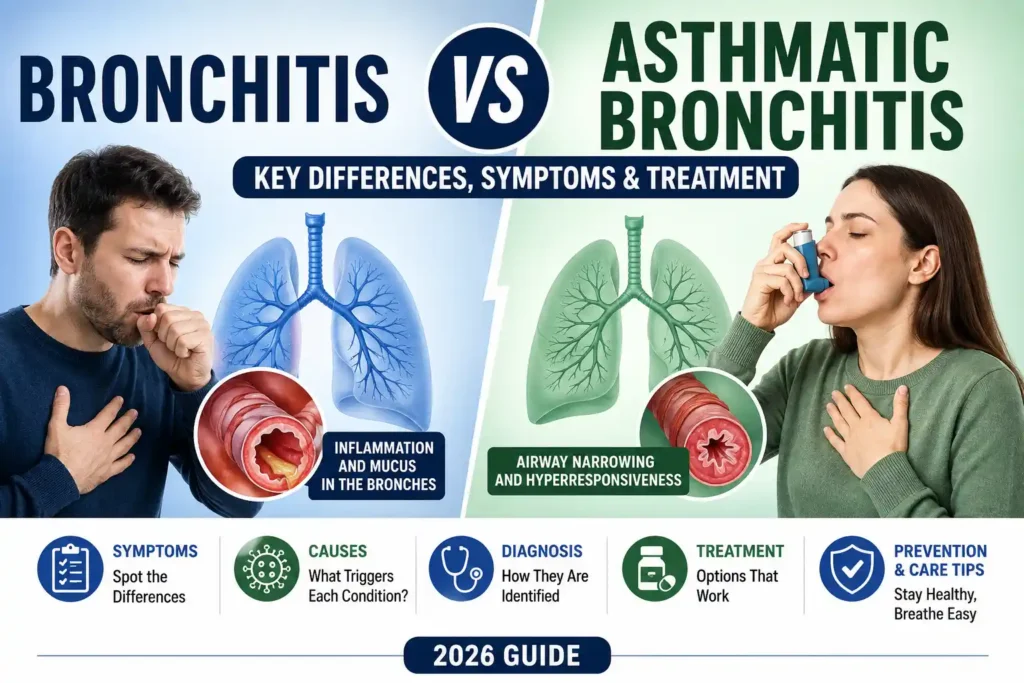
Persistent coughing, wheezing, and shortness of breath are some symptoms that are commonly shared by bronchitis and asthmatic bronchitis. In both conditions, the airways are affected, and both share many similarities. But they have different underlying causes and may require different treatment approaches. To recognise symptoms at an earlier stage and seek the proper treatment, it is helpful to have an understanding of how they differ.
What Is Bronchitis?
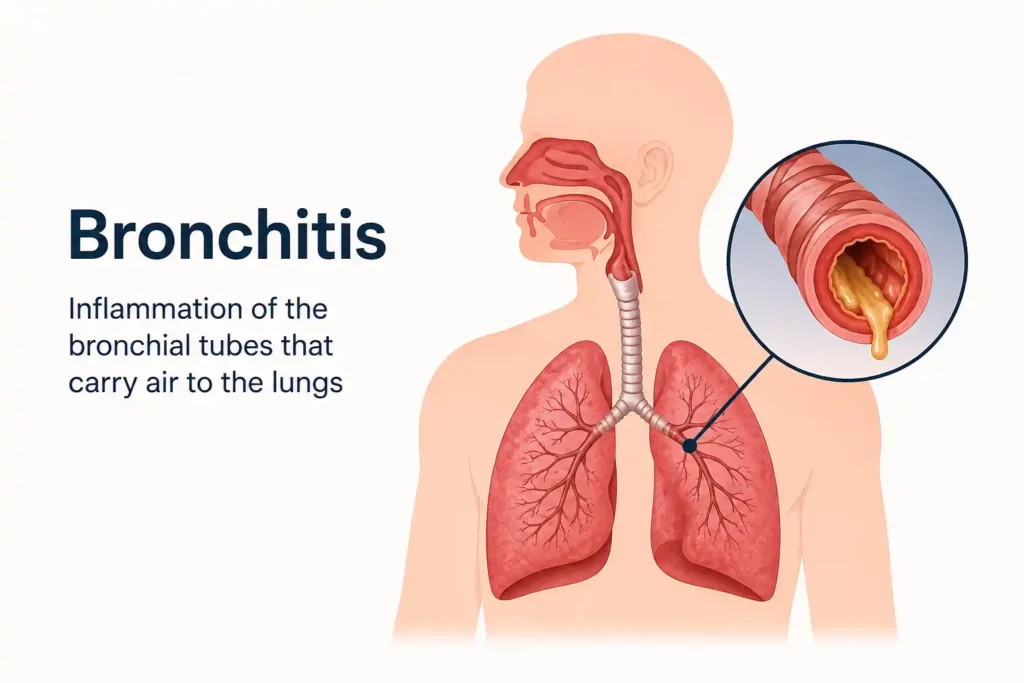
Image Reference: Ai
Bronchitis is inflammation of the bronchial tubes – the airways that carry air from your windpipe into your lungs. When these tubes get irritated, they swell and flood with mucus, producing that deep, stubborn cough most people link to a bad chest infection. There are two types, and they behave very differently:
- Acute Bronchitis: The most common form. Almost always caused by a viral infection – the same virus behind the common cold or flu. It usually clears up on its own within two to three weeks.
- Chronic Bronchitis: Far more serious. Defined as a productive cough that lasts at least three months a year for two consecutive years. Strongly tied to long-term smoking or heavy pollution exposure. It is classified as part of COPD and does not simply go away.
In both cases, the airways themselves are the problem – but the lungs are not inherently overreactive. Once the infection or irritant is removed, most people with acute bronchitis recover fully. Chronic bronchitis, however, requires ongoing management and tends to worsen over time without proper care.
What Is Asthmatic Bronchitis?
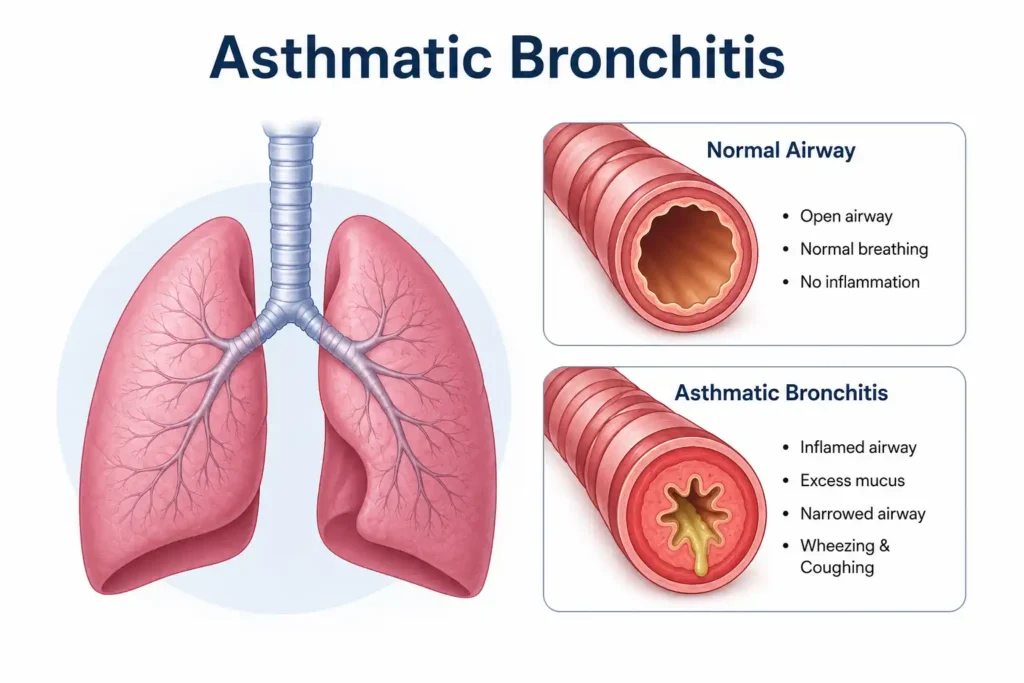
Image Reference: Ai
Asthmatic bronchitis usually occurs when a person has both asthma and bronchitis, which can make the symptoms worse.
Asthma is the condition in which the bronchial tubes are affected the most, which makes them more sensitive and prone to inflammation. Sensitive airways are easily irritated by the things like dust, pollen, smoke and even cold air.
When bronchitis develops in these already sensitive airways, it can lead to:
- Acute inflammation from the bronchitis itself, causing swelling and excess mucus.
- Hyperreactive airways from the underlying asthma, amplifying every symptom.
- Bronchospasm: the airways going into spasm more easily and more frequently.
- A wider trigger range: not just viruses, but also cold air, allergens, dust, exercise, and stress.
This is why asthma bronchitis tends to linger longer, flare unpredictably, and respond poorly to the usual over-the-counter remedies.
How to differentiate between asthma and bronchiolitis?
The table below provides a quick comparison of bronchitis and asthma bronchitis.
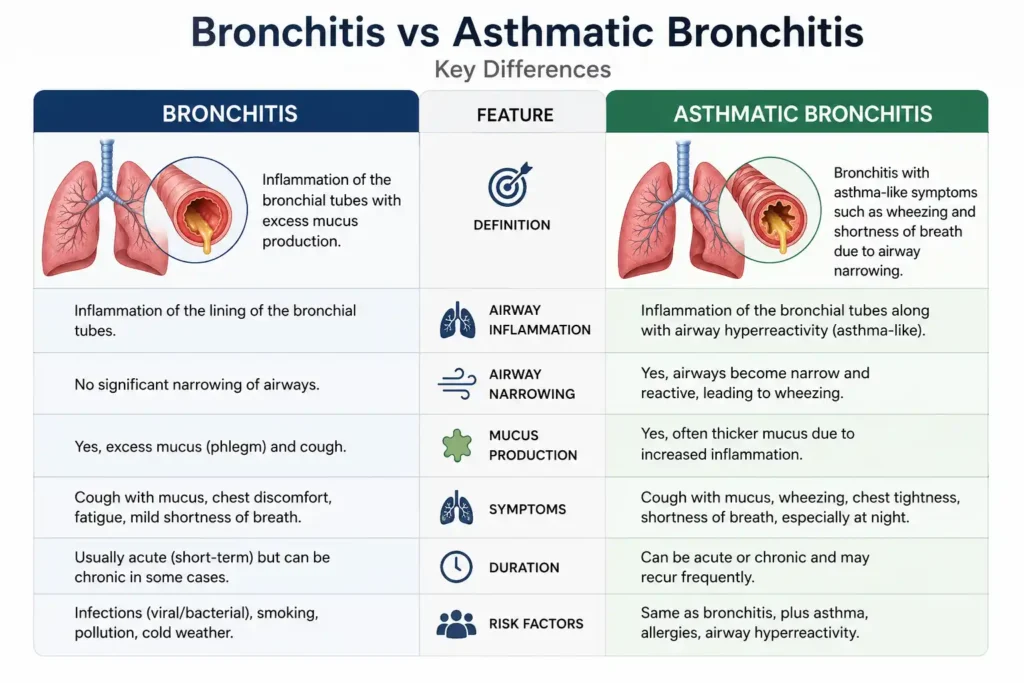
Image Reference: Ai
| Factor | Bronchitis | Asthmatic Bronchitis |
| Underlying condition | None, otherwise airways are healthy | Asthma, airways are already hyperreactive |
| Primary cause | Viral or bacterial infection, long-term smoking | Infection or irritant triggering asthma flare |
| Who gets it | Anyone, at any age | People with a pre-existing asthma diagnosis |
| Cough type | Wet, productive cough | Wet cough with an episode of wheezing |
| Wheezing | Occasional, usually mild | Frequent and often pronounced |
| Shortness of breath | Mild to moderate | Moderate to severe, can occur at rest |
| Chest tightness | Present during illness | Often more intense; a hallmark symptom |
| Nighttime symptoms | Uncommon | Common – asthma typically worsens at night |
| Trigger beyond infection | Mainly smoke and pollutants | Also includes allergens, cold air, exercise, stress |
| How long it lasts | 1-3 weeks for acute cases | Often longer; may not fully clear until asthma is stabilised |
| Recurrence risk | Moderate | High-sensitive airways remain vulnerable |
| Treatment | Rest, fluids, symptom relief | Rest, fluids, symptom relief, bronchodilators, and anti-inflammatory medications |
What are the causes of bronchitis and asthma?
The root causes of bronchitis and asthmatic bronchitis are quite different – and knowing what starts the problem is the first step to managing it properly.
Causes of Bronchitis:
- Viral infections: Responsible for around 90% of acute bronchitis cases. The usual culprits are rhinovirus, influenza, and respiratory syncytial virus (RSV) – the same viruses that cause colds and flu.
- Bacterial infections: It is less common, but it can happen. Certain bacteria, including those that cause whooping cough, can sometimes lead to bronchitis, especially in people with a weakened immune system.
- Long-term smoking: This is the primary cause of chronic bronchitis. Persistent smoking of cigarettes or tobacco irritates and destroys the bronchial lining, leading to a persistent state of inflammation over time.
- Air pollution and chemical exposure: Repeated breathing of polluted air, industrial fumes, dust, or chemical vapors can cause the same kind of ongoing airway damage as smoking.
- Weakened immune system: People who are immunocompromised – due to illness, stress, or medication – are more susceptible to the infections that lead to bronchitis.
Causes Of Asthmatic Bronchitis:
Asthma bronchitis always begins with an underlying asthma diagnosis. On top of that, the following act as triggers that set off an episode:
- Respiratory infections: Viruses and bacteria that cause bronchitis are even more problematic for someone with asthma because the airways are already inflamed and sensitive.
- Allergens: Pollen, dust mites, mold spores, and pet dander are classic asthma triggers that can directly set off or worsen a bronchitis episode.
- Cold or dry air: Breathing cold air causes the airways to constrict – a well-known asthma trigger that makes bronchitis significantly worse.
- Exercise: Physical exertion can trigger bronchospasm in people with asthma, particularly when combined with an existing infection.
- Cigarette smoke and air pollution: Both the factors affect the airways, making breathing more difficult and raising the risk of infection in the lungs.
- Occupational exposure: Certain workplaces involving dust, chemicals, fumes, or molds put people with asthma at a particularly high risk of recurrent asthmatic bronchitis.
The key difference in causes: Bronchitis usually has one clear trigger -an infection or an irritant. Asthma bronchitis has a much wider net of potential causes because the sensitive airways react to far more things than healthy airways would.
Symptoms of Bronchitis and Asthmatic Bronchitis
Both conditions share a handful of symptoms – which is exactly what makes them easy to mix up. Here is where to look for the real differences.
Shared symptoms – present in both:
- Persistent, wet cough often with yellow or green mucus
- Fatigue and general low energy
- Mild fever, especially in the early stages of infection
- Chest discomfort, a feeling of heaviness or congestion
In asthma bronchitis, symptoms are more intense.
- Wheezing that is frequent and audible, not just occasional – often worse in the early morning or at night
- Shortness of breath at rest, not just during exertion; breathing feels laboured even when sitting still
- Chest tightness like a squeeze more intense and persistent than the heaviness of standard bronchitis
- Symptoms that come in waves, feeling better one day, significantly worse the next – especially after allergen or cold air exposure
- Nighttime flare-ups, waking up struggling to breathe, are a classic asthma warning sign
Key signal: If your breathing gets tight at night or your cough keeps returning every few months in the same pattern – do not dismiss it as just another chest infection. That is worth investigating properly.
Diagnosis: Bronchitis vs Asthmatic Bronchitis
Because symptoms overlap, you cannot reliably self-diagnose the difference. Here is what a proper medical assessment looks like.
1. Physical Examination: A doctor listens to your lungs with a stethoscope. Persistent wheezing between illness episodes, not just during a bad cough, is a significant early clue.
2. Spirometry Test: A breathing test is done to measure how much air you can move in your airways and how fast. It helps in identifying the reversible airflow obstruction, which is the main cause of asthma.
3. Bronchodilator Response Test: You breathe into a spirometer, take a dose of an asthma inhaler, and then breathe in again. A significant improvement in airflow after the inhaler strongly points to asthma being part of the picture.
4. Chest X-Ray: This helps in figuring out if a patient is having pneumonia or any other lung conditions that may look similar.
5. Allergy Testing: If asthmatic bronchitis is suspected, then allergy testing helps in identifying the main triggers that are worsening the airways.
6. Peak Flow Monitoring: It is a small device that is mostly used at home to track your daily lung function; it is beneficial in spotting patterns and identifying the triggers for flare-ups.
The bronchodilator response test is the most important step. In standard bronchitis, lung function returns to normal once the infection clears. In asthmatic bronchitis, there is a consistent, reversible obstruction even between episodes – which is what confirms asthma as the underlying driver.
Bronchitis vs Asthmatic Bronchitis Treatment
Getting the diagnosis right matters here – because the treatment paths are genuinely different.
For standard bronchitis, the approach is straightforward:
- Rest and plenty of fluids your immune system does most of the work
- Steam inhalation or a humidifier helps loosen mucus and ease congestion
- Over-the-counter cough relief or pain medication for symptom comfort
- Antibiotics – only if a bacterial infection is confirmed, most cases are viral, and antibiotics do nothing against viruses
For asthma bronchitis, you need more:
- Reliever inhaler (bronchodilator) opens up the airways during episodes of tightness – this is central, not optional.
- A preventer inhaler (inhaled corticosteroid) is used daily to keep the airways calm and reduce how often flare-ups happen.
- A short course of oral corticosteroids for severe flare-ups that do not respond to inhalers alone.
- Identifying and avoiding personal triggers long-term lifestyle adjustment, not just during illness.
- An asthma action plan is a written guide from your doctor on what to do when symptoms worsen – genuinely useful in a crisis.
Note: Never self-prescribe corticosteroids or antibiotics. Overusing antibiotics when they are not needed does not help – and contributes to antibiotic resistance. Always confirm with a doctor first.
Signs You Should Seek Medical Attention
Not every cough needs a clinic visit. But some signs should not be ignored.
See a doctor if any of the following apply:
- Cough lasting more than three weeks with no clear sign of improvement
- Regular wheezing, especially at night or early in the morning
- Shortness of breath doing normal daily things, climbing stairs, light walking
- Symptoms that keep coming back every few months in the same pattern
- Your asthma inhaler is not working as well as it used to
- High fever that does not settle above 38.5°C / 101.3°F
- Coughing up blood or rust-coloured mucus – seek care the same day
What to Do Based on Your Symptoms
| If you are experiencing | What should you do |
| A mild cough with clear mucus and no fever that started recently | Get plenty of rest, drink fluids, and keep an eye on symptoms |
| A cough that has lasted longer than 3 weeks without getting better | Schedule an appointment with your doctor to find out what’s causing it |
| Wheezing, chest tightness, or feeling short of breath even while resting | Seek medical advice as soon as possible, ideally within 24 hours |
| Asthma symptoms that aren’t improving with your usual inhaler | Contact your healthcare provider the same day for guidance |
| Breathing becoming increasingly difficult or symptoms that are rapidly worsening | Seek urgent medical care immediately |
| Coughing up blood or experiencing severe chest pain | Get medical care help instantly |
Can Bronchitis and Asthmatic Bronchitis Be Prevented?
Prevention looks different depending on which condition you are dealing with.
For bronchitis – the basics go a long way:
- Annual flu vaccination the most effective single step you can take
- Wash your hands regularly; most chest infections start with viral exposure
- Quit smoking or avoid secondhand smoke, the single biggest risk factor for chronic bronchitis
- Stay indoors on high-pollution days, especially if you already have a sensitive chest
For asthmatic bronchitis, prevention is an ongoing commitment:
- Take your preventer inhaler daily: not just when you feel bad. This is the most important thing you can do.
- Know your personal triggers: pollen, dust mites, cold air, pet dander, and stress – and plan around them.
- Monitoring air quality apps and local forecasts can warn you before a bad day hits.
- Use a HEPA air purifier at home: particularly effective if indoor allergens are a known trigger.
- Warm up before exercise and use your reliever inhaler beforehand if cold air or exertion is a trigger.
Tips for Managing Bronchitis and Asthmatic Bronchitis
- Get a sufficient amount of sleep and give your body plenty of time to heal.
- Ensure you drink all the necessary liquids to help loosen up mucus and clear your airways.
- Stay away from all forms of smoking (regular & electronic), as well as secondhand smoke.
- Avoid as much as possible any sort of dust, strong odors, and anything that can be abraded by the air.
- Follow your doctor’s instructions on how and when to use your prescribed medicines and inhalers.
- Avoid or do your best to avoid anything that triggers your symptoms.
- Seek medical help if you see no improvement in your cough, wheezing, or shortness of breath or if they’re persistently coming back.
The Bottom Line
These two conditions sound almost identical, but they are driven by different things and need different treatment.
Standard bronchitis is an infection that most healthy people recover from with time and rest. Asthmatic bronchitis is an infection meeting a respiratory system that was already primed to overreact – and without treating both parts of that problem, you will keep going round in circles.
If your cough keeps coming back, your breathing feels tighter than it should, or your symptoms follow an unpredictable pattern, get it properly assessed. The right diagnosis does not just lead to the right treatment. It leads to you actually feeling better.
Faqs
1. Is bronchitis contagious?
Because viruses that cause acute bronchitis can be shared by coughing, sneezing, or touching contaminated surfaces, the illness is contagious. However, chronic bronchitis is completely non-transmissible.
2. Can bronchitis damage your lungs permanently?
Acute bronchitis is just a lung infection and rarely causes permanent damage. But if a person has repeated or untreated chronic bronchitis, then it can damage airways and can even cause permanent damage to the lungs over time.
3. Can asthmatic bronchitis be prevented?
It is not easy to prevent asthmatic bronchitis entirely. But by avoiding known triggers, using a daily preventer inhaler, and having an annual flu shot, the number of attacks can be reduced considerably.
4. Should I use an inhaler for bronchitis?
If you have simple bronchitis, you don’t always need to use an inhaler. But if you have tight breathing or wheezing, your doctor may prescribe a short-term bronchodilator to help ease your breathing.
5. Can allergies cause asthmatic bronchitis?
Yes, allergens such as dust, pollen, and pet dander can irritate sensitive airways, which can make symptoms worse and lead to more severe flare-ups.
Content Refrence:-
https://www.everydayhealth.com/asthma/bronchitis-or-asthma.aspx
https://www.healthline.com/health/asthma-vs-bronchitis