
Endometriosis is a condition affecting thousands of women, but it is still so disguised that many women are not able to figure out what is happening to their bodies. It is mainly seen as just normal period pain, so not much attention is paid to it.
But the reality is that endometriosis can show up in many different ways. Some women feel severe and unbearable pain, while others quietly deal with the discomfort that seems less obvious but is still very much disruptive. Some common signs can help women to understand endometriosis.
This article explains 20 common symptoms of endometriosis in a clear, informative, and relatable way.
What Is Endometriosis?
Endometriosis is a medical condition in which tissues similar to the lining of the uterus grow outside the uterus. These tissues can develop on the ovaries, fallopian tubes, bladder, intestines, or other areas in the pelvis.
During the menstrual cycle, the tissues are affected by hormonal changes. Since these tissues cannot leave the body like normal menstrual blood, they can lead to inflammation, irritation, scarring, and ongoing pain.
The severity of symptoms can vary from person to person. Based on symptoms, you may not be able to tell how severe the condition is. Some women experience severe pain, while in other women, tissue growth is widespread, but they still have mild pain and completely different symptoms.
20 Symptoms Of Endometriosis
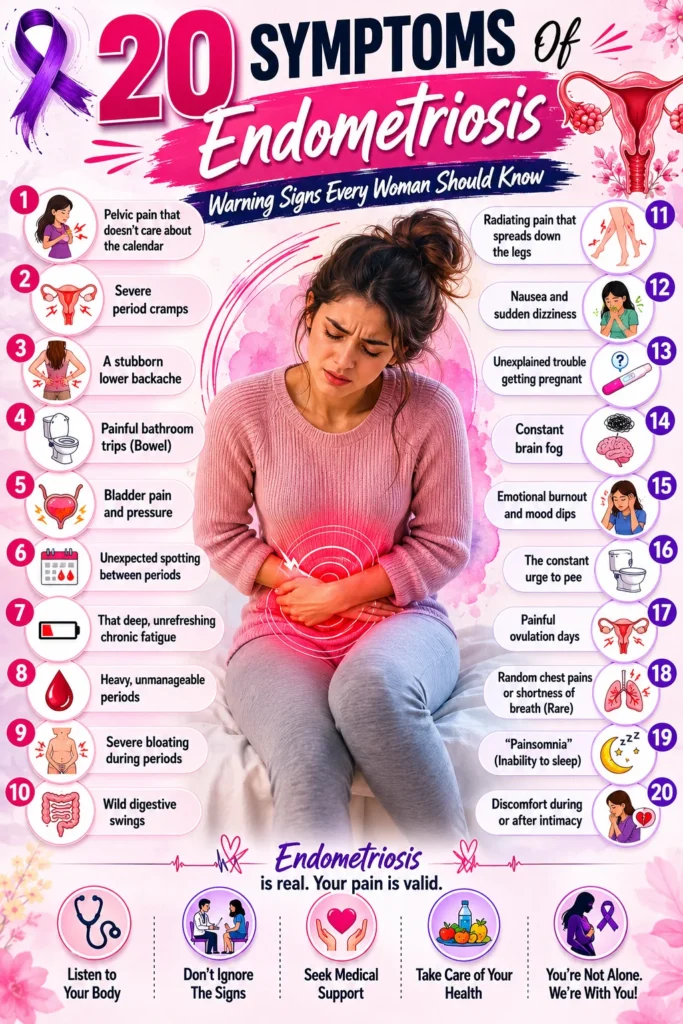
1. Pelvic pain that doesn’t care about the calendar
During periods, mild pain is normal and usually occurs. But endometriosis pain is different and sometimes very intense. You can feel a deep, heavy, or sharp ache in your belly that can appear randomly at any time of the month, not just during your menstrual cycle.
2. Severe period cramps
It is not normal or mild pain. Here, we are talking about the kind of pain that leaves you curled up on the bathroom floor, and even after taking maximum doses of painkillers, it doesn’t go away. You may have to miss your plans or take leave from the office.
3. A stubborn lower backache
The inflammation caused by the tissues inside the body makes many women feel a constant mild pain in the lower back. You may try many things like stretching, resting, or even changing positions while lying in bed, but it can still be hard to relieve.
4. Painful bathroom trips (Bowel)
Going to the bathroom is giving you shivers now. As you feel sharp pain, severe cramping, or a weird “pulling” sensation when you try to pass stool, especially during periods, it is very common to experience this.
5. Bladder pain and pressure
When endometrial tissue grows near the bladder, urinating becomes very painful or uncomfortable for many women. Some women have a burning sensation, feel pressure in the lower abdomen, or have a constant urge to urinate, especially during their periods, even when there is no urinary infection.
6. Unexpected spotting between periods
Hormonal changes caused by endometriosis may disturb your menstrual cycle, resulting in irregular periods and unexpected bleeding. There can be irregular bleeding or spotting between periods, and this bleeding can happen at different times during the month.
7. That deep, unrefreshing chronic fatigue
This isn’t “being tired” from late night. It is the exhaustion that is caused by hormonal changes and inflammation, which your body is fighting off constantly.
8. Heavy, unmanageable periods
Due to endometriosis, the period becomes very painful, and there is heavy bleeding. You may need to replace pads and tampons frequently. You could have significantly large blood clots. And the bleeding can even last for a week.
9. Severe bloating during periods
During periods, bloating is normal, but this is severe and very painful bloating that can come out of nowhere. You may wake up with a flat stomach, but by the end of the day, it can feel heavy, and your belly may look swollen, accompanied by a tight and tender abdomen.
10. Wild digestive swings
Anything you eat may not digest properly, and your digestive system can feel like a roller coaster. Sometimes you may experience painful constipation, while other times there are bouts of diarrhea, usually worsening around your period.
11. Radiating pain that spreads down the legs
You suddenly have a strong sensation of pain in the pelvic area that radiates to the thighs, hips, or even sometimes the legs. This intense pain makes moving or walking difficult. At times, even simple daily activities start feeling exhausting and uncomfortable.
12. Nausea and sudden dizziness
When the pain spikes or the pelvic inflammation irritates your gut, it’s very common to feel intensely nauseous, dizzy, or even physically sick to your stomach.
13. Unexplained trouble getting pregnant
Sadly, because endometriosis can cause internal scarring and throw off your reproductive tract, many women only discover they have it after trying to conceive for months without success.
14. Constant brain fog
Between coping with daily discomfort and dealing with systemic inflammation, your brain gets tired. You might find it hard to focus, struggle to find words, or feel totally spaced out.
15. Emotional burnout and mood dips
The ongoing pain, fatigue, and uncertainty can take a toll on your mental health, which slowly wears you down emotionally. Slowly, it becomes so overwhelming to manage symptoms daily that others cannot see or understand.
16. The constant urge to pee
The extra lining-like tissue can even cause bladder irritation, which makes you feel like you need to urinate every two minutes. During periods, the condition becomes worse and more painful, leaving you frustrated the whole day.
17. Painful ovulation days
A sharp, localized pinch or ache on one side of your lower abdomen, right around the midpoint of your cycle, when your body releases an egg.
18. Random chest pains or shortness of breath (Rare)
In very rare cases, these cells can travel high up into the diaphragm. If you notice chest pain or a strange shortness of breath that only happens when you’re on your period, pay attention to it.
19. “Painsomnia” (Inability to sleep)
You are exhausted, but the moment you hit your bed, your pelvic or back pain starts. You have changed your position to find a comfortable spot on the bed, but still not able to fall asleep.
20. Discomfort during or after intimacy
That intense pain in the pelvis before, during, or after intercourse can also be due to endometriosis. You feel like a period cramp, pressure in your bladder, or discomfort. And it can last for a while.
FAQs
1. Can I have endometriosis if my periods aren’t that painful?
Absolutely. Medical experts know that the amount of pain you feel doesn’t equal the amount of endometriosis inside you. You could have widespread tissue with very little pain, but deal with severe bloating, fatigue, or fertility struggles instead.
2. How do doctors actually test for this?
This is the frustrating part: normal ultrasounds and MRIs usually miss endometriosis unless it has caused a large cyst. The only definitive way to diagnose it is through a minor, minimally invasive surgery called a laparoscopy, where a specialist looks inside with a tiny camera.
3. Why does everyone keep telling me I just have IBS?
Because the symptoms overlap so much, since endometriosis loves to hang out near the bowels and cause bloating, gas, and stomach cramps, a lot of women spend years being treated for Irritable Bowel Syndrome (IBS) before finding out the real culprit is pelvic tissue.
4. Will a hysterectomy cure it?
No, and this is a huge misconception. Because endometriosis is defined by tissue growing outside the uterus, simply removing the uterus doesn’t fix the lesions on your bladder, bowels, or ovaries. True relief comes from a specialist carefully cutting away (excising) the actual diseased tissue.
5. Can endometriosis affect fertility?
In fact, endometriosis can sometimes interfere with a woman’s ability to get pregnant. Endometrial tissue can prevent conception by causing blockages in the fallopian tubes or scars in the pelvis.