
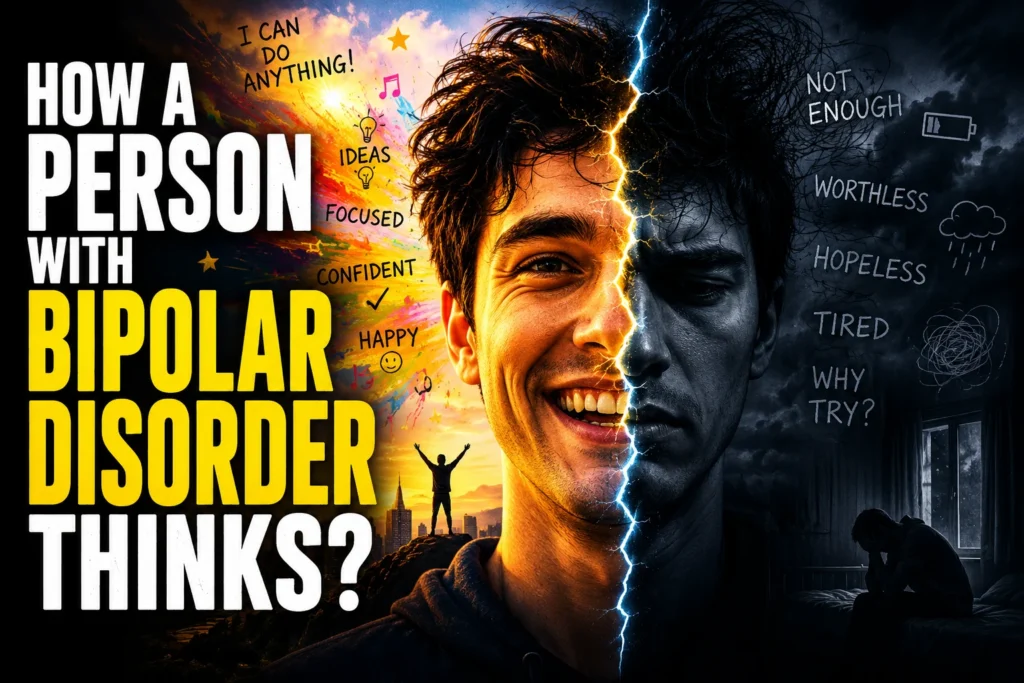
Sometimes a person is very happy, enthusiastic, and lively, and then, in a fraction of a second, there is sadness, guilt, and rage. Yes, this is bipolar disorder. It is not just mood swings, but much more than that. The thought process, energy levels, confidence, and self-image can change drastically during an episode.
Bipolar disorder is a complex mental health issue, and understanding how the person would react can be challenging. At one point, a person may feel full of ideas and energy, and very quickly, the same person may struggle to focus, feel emotionally exhausted, and get trapped in negative thoughts.
People will call you someone who is “too emotional” or “moody” without realising that it is not just emotion; it affects the overall personality of the individual, thinking process, and relationships.
What Is Bipolar Disorder?
Bipolar disorder is a mental health condition in which a person experiences mood swings, changes in energy, activity levels, and thinking patterns. These changes are more intense than normal mood shifts, and a person may experience sudden emotional highs or lows that can disrupt daily life.
In bipolar disorder, a person may go through episodes of mania, hypomania, depression, or a mixed state. During high phases, the mind of an individual remains very active; he feels very energetic, confident, and is full of thoughts.
During depressive episodes, the individual can be tired, self-critical, hopeless, and struggle with negative thoughts and low motivation.
Types of Bipolar Disorder
Bipolar disorder is not the same for everyone. It hits differently; some feel too energetic, some feel too sad. It affects mood, energy, and thinking patterns in its own way.
1. Bipolar I Disorder
In this type of bipolar disorder, an individual experiences at least one manic episode. This episode can last for a week, and in some cases, even hospitalization may be required. During the episode, thoughts run very quickly, and judgment may become clouded and impulsive. In severe cases, mania can become intense enough to affect reality perception, leading to a loss of sense of reality.
2. Bipolar II Disorder
It is recognised by having at least one depressive and one hypomanic episode instead of full mania. Hypomania is less extreme but nevertheless interferes with a person’s thinking, judgment, and actions. This is a time when the individual will have lots of energy but may have thoughts flying through their mind, which can make it difficult to focus or concentrate on one thing at a time and get things done.
3. Cyclothymic Disorder (Cyclothymia)
This is a milder but long-term form of bipolar disorder. A person goes through repeated periods of mild depression and hypomania. Although the symptoms are less severe, they can still affect thinking patterns over time.
What Are the Signs of Bipolar Disorder?
The signs of bipolar disorder can be seen in sudden changes in mood, energy, behaviour, and thinking of the person.
At different stages, a person may feel different. During manic or hypomanic episodes, they feel more energetic, confident, restless, or impulsive, with a mindset like ‘I can do it now.’ On the contrary, during depressive episodes, the same person becomes sad, is low in energy, feels hopeless, and is unable to concentrate on one thing properly.
Some common signs of bipolar disorder that an individual can show:
- Extreme mood swings
- Speaking very fast
- Racing thoughts
- Impulsive or risky behaviour
- Sleeping less than usual
- Gloomy, sad, or hopeless
- Difficulty concentrating
- Staying away from doing usual activities
Symptoms can vary from person to person, depending on the condition, and may change over time.
How Bipolar Disorder Affects Thinking?
In bipolar disorder, there can be mood shifts, including manic, hypomanic, and depressive episodes. It is different for every person depending on how he thinks or process information. According to the studies, around 50%-70% of people with bipolar disorder notice changes during these episodes.
And during manic and hypomanic phases, thoughts are kind of racing in the mind that are hard to control. A person may jump quickly from one idea to another, which makes it hard to focus on one thing.
How Do Mania and Hypomania Affect Thinking?
During manic and hypomanic episodes, a person experiences fast and overwhelming thoughts that are racing like horses and are hard to control. Due to this, it becomes difficult to concentrate on one task or process thoughts.
Sometimes there is strong self-confidence, to the extent that the person becomes overly confident to the point of believing in achieving anything.
In hypomania, these changes are mild and less intense, where the individual feels more productive, motivated, and more talkative than usual.
Both states can lead to impulsive actions, risk-taking, and difficulty in understanding the situations and consequences. This affects relationships, decision-making, and other aspects of life.
How Does Depression Affect Thinking?
A depressive episode in bipolar disorder brings a complete shift in a person’s energy from being over-enthusiastic to sadness and pessimism. Self-negative talk, guilt, and feelings of worthlessness start taking center stage in life. This simply means that the person expects the worst or has a black-and-white view of things, leaving them hopeless with no motivation.
The thought process becomes so murky that even taking a small decision becomes a mammoth task. Low energy and self-doubt make this worse, due to which individuals withdraw from social gatherings and start losing interest in things they used to love.
How Do Thought Patterns Change Between Episodes?
Bipolar disorder involves noticeable shifts between different episodes, and with these shifts, even the thinking pattern keeps changing quickly. Moving from mania to hypomania or a depressive episode can feel like a roller coaster ride of emotions. There is a sudden change from strong confidence and high energy levels to a sudden low mood, self-doubt, and lack of motivation to do anything.
Even sudden behaviour changes make it more confusing and difficult to understand one’s own emotions or thoughts. Thinking patterns, decision-making, and self-view can feel different depending on the mood they are in.
Understanding these changes helps make sense of what the person is going through and how it is affecting their life.
What Triggers Bipolar Disorder Episodes?
Bipolar episodes may be caused by anything that could alter the state of an individual’s mood. High stress levels, sleep deprivation, significant life changes, emotional conflict with family or friends, and irregularity in daily routine are common reasons. In some cases, stopping medication or the use of recreational drugs or alcohol can also trigger mood swings.
Triggers do not affect all individuals equally, but they can increase the likelihood that a person with bipolar disorder will experience a manic, hypomanic, or depressive episode.
How Does Bipolar Disorder Affect Self-Identity?
Because thinking patterns keep changing significantly across the episodes, it directly makes an individual question his self identity.
Because with every episode, there is a different personality. Some time individual feel overly capable or confident. And when they enter into a depressive episode, there is a sudden sense of sadness, shame, and worthlessness. These extreme shifts make it difficult for individuals to maintain a stable sense of self.
Impact on Relationships and Daily Life
Bipolar disorder episodes bring sudden, strong emotions in an individual that are extreme and hard to control. There can be a lot of chaos as it makes the individual more active, feeling like they can do everything at once, while sometimes there is total withdrawal from social and personal interactions.
This affects the social and personal life of the sufferer. A manic episode can cause conflict and misunderstanding as the individual becomes more active, talkative, and impulsive.
A depressive episode makes an individual more irritable and pessimistic, which causes the individual to withdraw from social gatherings, leading to less communication and affecting personal and social relationships.
Common Misunderstandings About Bipolar Disorder
1. It is not just mood swings
The mood swings are more intense, which directly affects the thinking pattern, energy levels, and daily life.
2. Bipolar disorder affects thinking too
During an episode, a bipolar individual cannot think straight; everything feels excessive. They can be too enthusiastic to do anything or too unhappy to get out of bed.
3. Mania is not always a “good” phase
Sometimes the episodes are so intense that they fog the judgment of the person and can lead to poor judgment, irritability, and severe mental or emotional distress.
4. People cannot simply “control” their episodes
Episodes are part of a medical condition that requires proper treatment and the right support. These can be controlled with proper medication.
5. People with bipolar disorder can not live stable lives
With the right treatment and healthy routines, many people are living successful lives. This is not the basis for judging anybody’s potential.
How To Manage Bipolar Diorders?
1. Stay consistent with treatment: Proper medication on time and keeping up with the therapy helps in improving mood swings and sleep patterns.
2. Keep a simple daily routine: Don’t complicate the routine; taking meals on schedule, exercising, and sleeping properly keep the mind calmer and more relaxed.
3. Watch for small shifts in your mood or thinking: Little things like sleeping less, always having racing thoughts, or suddenly feeling less energetic are clues to help you spot what’s coming early.
4. Challenge excessive thoughts: If you find that thoughts are becoming too heavy or too negative, then just stop and look at what is really going on in reality.
5. Slow down big decisions during mood changes: Avoid making any big decision when emotions feel too high or too low, and give a thought to your thinking patterns.
Conclusion
Bipolar disorder can affect many parts of an individual’s life, from thoughts and emotions to daily routines, but it doesn’t define who you are. With the right treatment, support, understanding, and stress management, many people are able to find stability in their lives.
FAQ’s
1. Can bipolar disorder be cured?
Bipolar disorder is a lifelong condition, but it can be treated effectively with the right therapy and support. For a person with bipolar disorder, stress management, timely medication, and sufficient sleep and support from loved ones keep a person calmer and more relaxed, and the episodes come less often.
2. Can people with bipolar disorder live a normal life?
Absolutely, a person with bipolar disorder can live a healthy and fulfilling life with the right treatment and support.
3. At what age does bipolar disorder usually start?
Bipolar disorder usually begins during the late teenage years or early adulthood. Though there are cases in which signs have also appeared between the ages of 15 and 25. Although the condition can develop at any age, in most cases, people experience their first episode before the age of 30.
4. Is bipolar disorder inherited?
According to the studies, there is a 70%-80% risk of inheriting bipolar disorder from family. Sometimes other factors, like lack of sleep, sudden trauma, stress, or major life changes, can also trigger its development.
5. Can stress make bipolar symptoms worse?
Stress puts individuals in a depressive state and can definitely trigger bipolar disorder symptoms. It can affect the sleep pattern, making a person more exhausted, which can worsen manic or depressive episodes.