
If you’re beginning a keto diet, you might be asking yourself, is cheese keto and whether it’s something you can include regularly in your meals.
Because keto is all about eating a lot of fat and very few carbs, it’s crucial to choose the correct foods to stay in ketosis.
Cheese is often included in keto diets, as it is high in fats and low in carbs. Still, not every type of cheese works the same way, and some options are better suited depending on your goals.
This guide will walk you through the best cheeses for keto, how much you should eat, and easy ways to add them to your meals without slowing your progress.
Is Cheese Really Keto-Friendly?
Cheese is a nutritious food for a ketogenic diet since it is high in fat, moderate in protein, and low in carbs. In the keto diet, carbs are very low, and the body mostly depends more on fat for energy, so cheese becomes an easy food choice that fits this shift.
Naturally, most of the cheese usually contains around 1-2 g of net carbs per serving. This is something so small that it can easily fit into even strict keto diet plans. While having cheese, the fat content helps meet daily energy needs when carbs are reduced, and protein helps in supporting normal body functions.
One of the many reasons to include cheese in your keto diet is that it keeps you satiated for longer, which naturally reduces unnecessary snacking and cravings for sweet or high-carb foods. However, it is also important to keep track of the type of cheese you are eating. Full-fat natural cheese works better than processed or low-fat varieties for weight loss and for following a keto diet.
Best Cheeses for Keto Diet
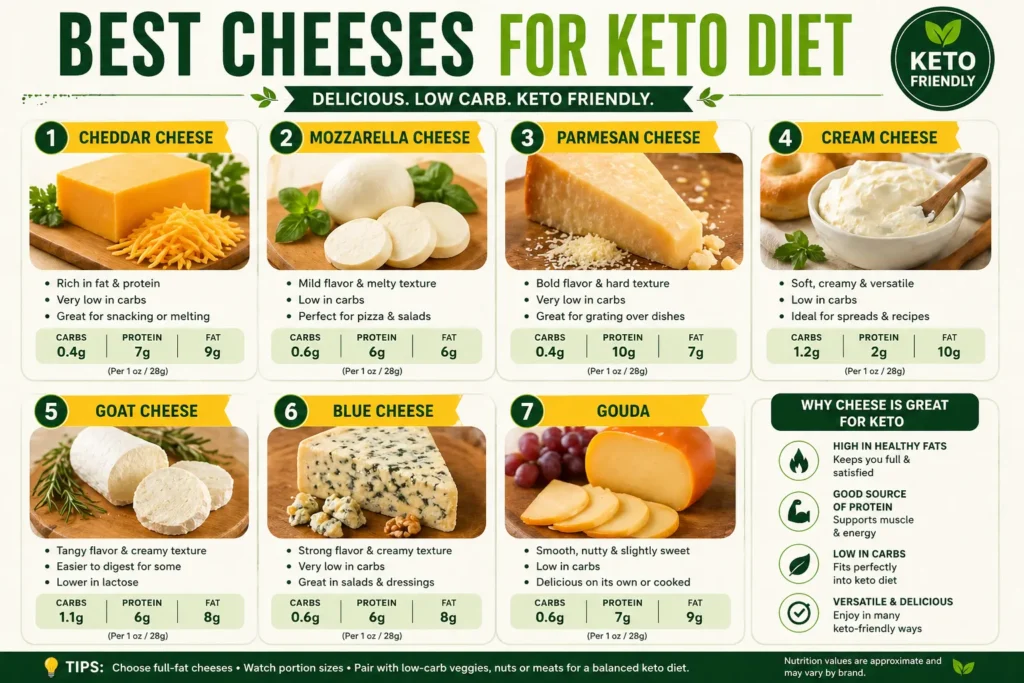
Image Reference: AI
Cheese comes in a variety, and not all the varieties work the same for the keto diet. Some are naturally high in fat, low in carbs, and less processed, which makes them to include in diet plans while following keto.
Cheddar Cheese
Cheddar is one of the most commonly used cheeses on a keto diet because it contains about 0.5 to 1 g of carbs per ounce, along with roughly 9 g of fat and 7 g of protein. This makes it a solid choice for maintaining ketosis. It fits easily into everyday meals like eggs, burgers, casseroles, and snacks and is often preferred by beginners since it is simple to use in a variety of recipes.
Mozzarella Cheese
Mozzarella is mild, soft, and easy to use in everyday cooking, and it can be easily added to your keto meals. It provides around 1-2 g of carbs per ounce, so it goes well into a low-carb keto diet plan. As it melts, you can use this cheese in dishes like pizza and salads, or you can have it with your baked recipes, where you want a light cheese that melts easily without overpowering the taste.
Parmesan Cheese
Parmesan is naturally very low in carbohydrates, usually under 1 g per ounce, and has a strong, salty flavor. Because it is so rich in taste, even a small amount is enough to enhance keto meals without adding extra carbs. It is often used to add a sharp, savory finish that makes simple dishes taste more complete and satisfying.
Cream Cheese
Cream cheese is often used in keto desserts and snacks because it has a simple nutrition profile. As per USDA (United States Department of Agriculture) data, 1 ounce contains about 84 calories, 8 g of fat, 1 g of carbs, and 2 g of protein. It works well when you want to add more fat to your meals while keeping carbs low, and it is commonly used in keto baking and creamy recipes.
Goat Cheese
Goat cheese, also known as chevre, is a soft and creamy cheese made from goat’s milk. It has a mild, tangy, and earthy flavor that enhances its richness. It’s a 1-ounce (approx. 28g) serving that provides up to 9g of fat, 7g of protein, and very few carbs, making it one of the best options to add to your keto diet plan. You can easily add it to salads, omelets, or your light meals. It also has lower lactose compared to cow’s milk cheese, so people who are lactose intolerant can easily have this in their meal
Blue Cheese
Blue cheese is well known for its blue veins, it is made by adding specific mold cultures during the aging process. It has a strong aroma and a rich, creamy texture that enhances the overall flavor of dishes. Its serving of 1 ounce (28 g) provides up to 8 g of fat, 6 g of protein, and 1 g of carbohydrates. It has a lot of fat and a small amount of carbs, so it is healthy and can be eaten if you are following a ketogenic diet. In your keto diet, you can use it to make keto salads, dips, and savory foods taste stronger.
Gouda
It is a semi-hard cheese known for its smooth, creamy texture. It gives mild, sweet, and nutty flavors. In a 1-ounce (28-g) serving, it contains roughly 8 g of fat, 7 g of protein, and about 1 g of carbs, which makes it a good fit for a keto diet. Since it melts well, it works nicely in warm dishes like baked vegetables, keto pizza, grilled chicken, omelets, and casseroles.
Worst Cheeses for the Keto Diet
Some cheeses are not ideal for keto because of higher carb processing or low fat content.
Cottage Cheese
Cottage cheese is a fresh dairy product that is made by curdling milk and separating the curds from whey, both of which are forms of natural milk proteins. Normally, it is healthy if you eat it as part of your regular diet. But if you are on a keto diet, then it will not go well with that. In a 1/2-cup (114-g) serving, it provides about 5 g of fat, 14 g of protein, and 5 g of carbs. Even small portions can add up and affect daily keto carb limits.
American Cheese
American cheese is made by blending natural cheese with an emulsifier. It tastes moderate and has a silky texture. It contains approximately 2 g of carbohydrates, 4 g of protein, and up to 5 g of fat per 1-ounce slice. Compared to natural, less processed cheese sources, it is less appropriate for a clean ketogenic diet while being low in carbohydrates.
Milk Cheddar Cheese
Cheddar cheese is a semi-hard cheese that is made from cow’s milk. It has a rich, creamy flavor that gets sharper as it ages. There are roughly 9 g of fat, 7 g of protein, and less than 1 g of carbohydrates in a 1-ounce (28 g) meal. Although it is low in carbohydrates, some packaged varieties may contain added ingredients or stabilizers, so it’s important to read labels when following a strict keto diet.
Low-Fat Cheese
Low-fat cheese isn’t the best choice for a ketogenic diet because keto is all about eating more fat and keeping carbs low. Regular cheddar has about 9 g of fat per 1-ounce (28 g) serving, while low-fat versions contain around 2 g, and fat-free cheese has almost no fat. Since the body uses stored fat during ketosis, low-fat cheese might not be the best option.
Processed Cheese
American cheese or spray-can cheese is usually highly processed and is made by mixing in artificial preservatives. So it is not a good option to add it to your keto diet. Though it is high in fats, it also includes additives such as whey, canola oil, artificial colors, and preservatives. So regular intake of this processed cheese can alter your weight loss goals and overall health.
Health Benefits of Cheese on a Keto Diet
Cheese can be a helpful part of a keto diet and offers several simple health benefits when eaten in the right amounts.
- Supports Fat-Based Energy: Cheese is rich in healthy fats and very low in carbohydrates, which helps the body stay in ketosis and use fat as its main energy source instead of glucose.
- Helps Reduce Hunger Naturally: A mix of protein and fat in cheese keeps you full for longer, which naturally curbs your cravings and helps you keep on track.
- Provides Key Micronutrients: Cheese offers important nutrients like calcium, vitamin B12, phosphorus, and zinc, which support bone strength, energy production, and overall body function during low-carb eating.
- Supports Lean Muscle Preservation: The protein content in cheese helps maintain muscle mass, especially when carbohydrate intake is reduced during weight loss phases.
- Improves Diet Consistency: Because it adds flavor and texture to meals, cheese makes keto eating more enjoyable and easier to follow over the long term without feeling restrictive.
- Supports Stable Blood Sugar Levels: Since cheese is very low in carbohydrates, it does not cause sharp spikes in blood sugar or insulin, helping maintain more stable energy levels throughout the day.
- Easy to Include in Daily Meals: Cheese is simple to add to many keto-friendly foods like eggs, salads, meats, and snacks, making meal planning more convenient and flexible.
Is Cheese Good for Weight Loss on Keto?
Cheese contains a good amount of healthy fat, moderate protein, and very low carbs that help you in weight loss by keeping you satiated for a longer period of time. Therefore, it helps you avoid unnecessary snacking by curbing cravings and decreasing your inclination to snack throughout the day.
When following a ketogenic diet, the average person will consume around 3-4 ounces (85-115 g) of cheese each day, but it can vary considerably based on individual caloric needs. It is also important to remember that cheese has a lot of calories packed into a very small amount of food, so proper portioning is necessary if you want to achieve your goal of losing weight.
How Much Cheese Should I Eat on Keto?
While following a keto plan, cheese is a good option, and you can include it in your meals. But the question raises how much cheese one should eat on a ketogenic diet. It is better to consume cheese in moderation, not in large portions. The average serving size of cheese is approximately 1-2 ounces (28-56 grams). which fits perfectly into your ketogenic restrictions for the day, as it is typically low in carbohydrates.
People following a ketogenic diet usually consume cheese 1-3 times per day; it depends on their total carbohydrate allowance of 20-50 g per day. Because cheese is calorie-dense, eating in moderation can help you stay aligned with your weight loss goals and support maintaining ketosis.
How to Include Cheese in a Keto Diet?
You can include cheese in your keto diet in many ways:
- Snacks made from cubes of cheddar cheese (or gouda) are healthy options due to their high amounts of fat and protein, which gives you energy until your next meal.
- Use melted mozzarella for pizza or cream cheese to add flavor and creaminess to sauces and baked goods.
- On salads or roasted veggies, top them with parmesan cheese for a delightful combination of saltiness and flavor.
- Aged cheeses like Parmesan or Swiss are easier to digest for anyone with lactose intolerance.
- For breakfast, you can add some cheese to your eggs (scrambled or omelet style).
- Include cheese in your lunchtime menus by putting it into salads, wrap sandwiches, or as part of your avocado bowl meal.
- You can also enhance the flavor and richness of baked vegetable dishes or grilled meats by adding cheese or using it on keto-friendly pizza.
- Cheese can be served as cubes, slices, or as cream cheese with vegetables. They are quick and easy snacks to munch on while following the keto diet.
Common Mistakes to Avoid on Keto With Cheese
Cheese is a good option to include in a keto diet, but people often make small mistakes that can quietly slow down results and affect weight loss progress without even noticing.
- Eating excessive amounts of cheese can hinder your weight loss progress because it is calorie-dense.
- Dairy intake could make you feel bloated, constipated, or have other digestive issues.
- Lactose intolerance may also contribute to digestive discomfort and other symptoms.
- Excessive dairy products can sometimes result in mild-to-moderate inflammation, along with the possibility of developing some type of skin rash.
- Avoid processed cheeses, which can include additives and are high in hidden carbohydrates.
- If you only rely on cheese and do not diversify your food choices, your diet will likely lack balance.
Key Takeaways
- Cheese is generally a good addition to any ketogenic meal since it allows you to meet your daily fat and protein requirement and effectively keep your carbohydrate count low, thus making you feel full for longer.
- Different types of cheese have different nutritional profiles, so some cheeses will work well with keto while others may not.
- Processed cheeses and those with added ingredients should be eaten in limited amounts on the ketogenic diet.
- Choosing the right types of cheese will help you stick to your diet and achieve better overall results.
Frequently Asked Questions (FAQs)
1. Can I eat cheese every day on keto?
Cheese can be consumed every day while following a ketogenic diet because it provides healthy fat and fewer carbs. It also gives you the protein amount your body needs to help fill you up from meals, plus keep your body in a keto state. Since cheese’s caloric density is very high, it’s important that you practice portion control. When trying to lose weight consistently, make sure to eat in moderation versus large-sized portions.
2. Can cheese kick you out of ketosis?
Typically, cheese has relatively low carbohydrate content, usually between 0 – 2 g of carbohydrates per ounce (28 g), and, as long as you eat it in moderation, it will not negatively affect your keto diet. Try to avoid processed cheeses, which often contain preservatives and could potentially slow down the process of weight loss on the keto diet.
3. Which cheese has the lowest carbs?
Parmesan is one of the lowest-carb cheeses, with less than 1 g of carbs per ounce (28 g). Other cheese options like cheddar, mozzarella, and blue cheese are also keto-friendly and provide up to 0 to 2 g of carbs per serving. These are lowest in carbs and commonly included in a keto diet because they fit easily within daily carb limits.
4. Can dairy slow weight loss on keto?
Dairy can slow down weight loss on keto, especially if it is consumed in excess. Though it is low in carbohydrates and calorie-dense, people still end up overeating it. People who are lactose intolerant may develop some digestive issues or low-grade inflammation, which may slow down metabolism.
5. What are the 9 rules of the keto diet plan?
The 9 rules of keto are:
- To stay in ketosis, consume carbs around 20-50g only per day.
- Eat healthy fats like butter, cheese, coconut oil, olive oil, and avocado.
- Consume protein intake in moderation to stay in ketosis.
- Avoid sugar, bread, pasta, and other high-carb foods.
- Prefer whole foods over processed foods whenever possible.
- Drink enough water and keep yourself properly hydrated.
- Maintain electrolyte balance (sodium, potassium, magnesium) of the body.
- Keep track of your daily calorie intake to stay on track.
- Maintain consistency with your diet and routine to support steady fat burning.