
Quick Answer: What Is a Fungal Skin Rash?
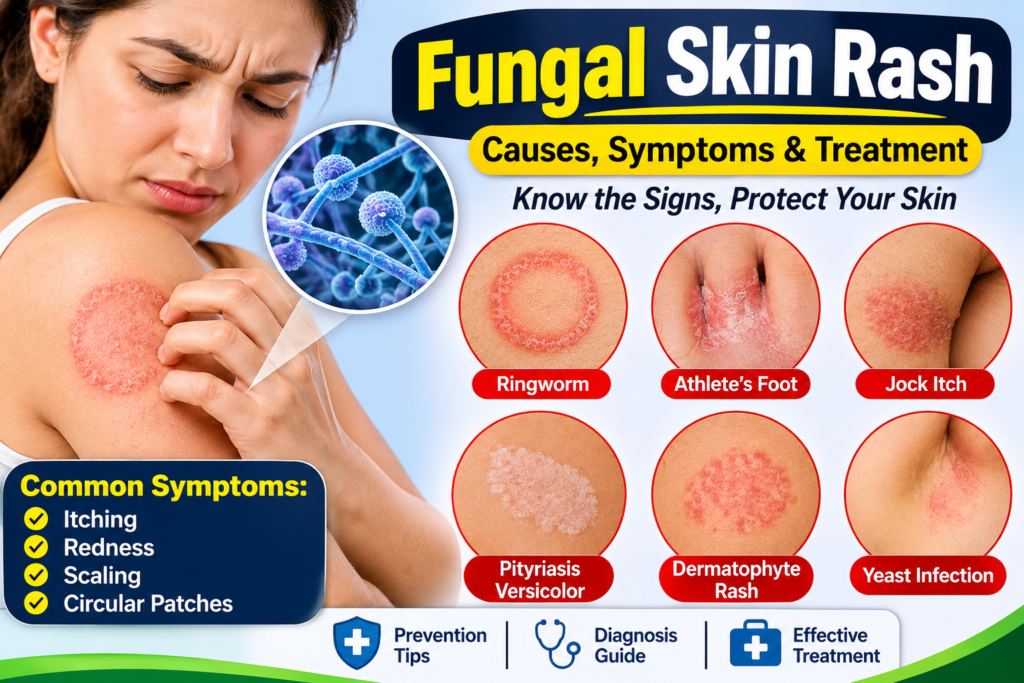
A rashes fungal infection is a skin condition caused by the growth of certain fungi on the skin, hair, or nails. It may appear as an itchy, red, brownish, scaly, circular, or irregularly shaped patch. Common examples include ringworm, athlete’s foot, jock itch, and yeast-related skin infections.
Fungal infections develop more easily in warm, humid environments, particularly in areas where sweat and moisture accumulate. They can spread through direct skin contact, infected animals, shared personal belongings, and contaminated surfaces.
Doctors identify fungal skin infections by examining the affected area and, when necessary, testing a small skin, hair, or nail sample. Treatment generally involves antifungal medications selected according to the type and location of infection.
However, not every itchy or discolored rash is fungal. Eczema, psoriasis, contact dermatitis, and other skin conditions can produce similar symptoms.
Introduction: Understanding Rashes and Fungal Infections
Skin rashes are common and can develop for many different reasons. Some are associated with allergic reactions, environmental irritation, bacterial infections, or underlying skin conditions. Others occur when fungi grow on the surface of the skin.
Fungal skin infections are particularly common in warm and humid climates. Sweat, tight clothing, prolonged moisture, and contact with contaminated surfaces can create conditions that encourage fungal growth.
One commonly recognized fungal infection is ringworm, medically known as tinea. Despite its name, ringworm is not caused by a worm. It is an infection caused by fungi that use keratin, a protein found in the skin, hair, and nails.
Understanding the appearance, possible causes, and diagnostic methods can help people recognize when a skin problem requires medical attention.
This guide explains the relationship between rashes and fungal infections using established medical information and scientific references.
What Causes a Fungal Skin Infection?
Fungal skin infections develop when certain fungi grow on or within the outer layers of the skin, hair, or nails.
Several different organisms can cause these infections.
Dermatophytes
Dermatophytes are fungi that use keratin as a source of nutrients. They commonly cause infections known as dermatophytosis or tinea.
Three important groups include:
- Trichophyton
- Microsporum
- Epidermophyton
These fungi are responsible for conditions such as ringworm, athlete’s foot, and jock itch.
Yeasts
Certain yeasts, including Candida species, can cause skin infections, especially in warm and moist areas of the body.
Candida-related infections frequently develop in skin folds, where moisture and friction can contribute to irritation.
Malassezia
Malassezia is a type of yeast naturally found on human skin. Under certain conditions, it can contribute to skin conditions such as pityriasis versicolor, which causes patches of altered skin pigmentation and fine scaling.
The appearance and treatment of a fungal rash depend partly on the organism responsible.
Reference: World Health Organization (WHO), Ringworm (Tinea).
What Are the Common Symptoms of Fungal Skin Rashes?
Fungal skin infections do not always look the same. Their appearance depends on the type of fungus, the affected body area, and the individual’s skin characteristics.
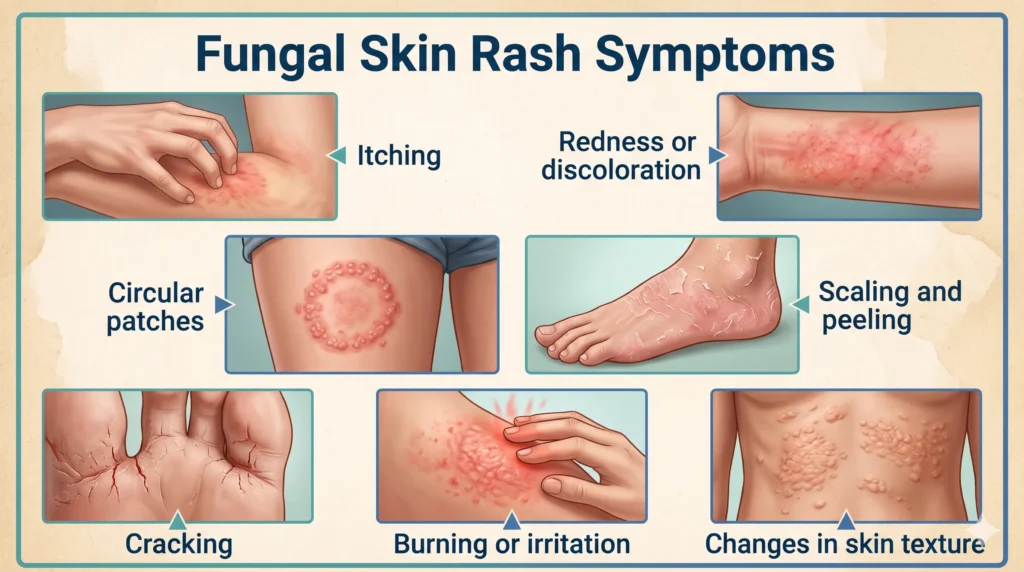
Common symptoms include:
Itching: Persistent itching is frequently associated with fungal infections, although it can also occur with eczema and allergic skin reactions.
Redness or discoloration: Affected skin may appear red, pink, brown, gray, or darker than the surrounding skin.
Circular patches: Some dermatophyte infections create circular or ring-shaped patches with a more noticeable outer border.
Scaling and peeling: Infected skin may become dry, flaky, or scaly.
Cracking: Fungal infections affecting the feet can cause skin between the toes to become cracked or damaged.
Burning or irritation: Some infections produce a burning sensation, particularly in areas exposed to moisture and friction.
Changes in skin texture: The affected area may become rough, raised, or slightly swollen.
It is important to understand that these symptoms are not enough to confirm a fungal infection. A healthcare professional may need to examine the skin or perform laboratory testing.
What Are the Different Types of Fungal Skin Infections?
Fungal infections are classified according to the body area they affect and the organisms responsible.
A. Ringworm (Tinea Corporis)
Ringworm is a common fungal infection affecting the body’s skin.
It often produces a circular or oval-shaped rash with a raised, scaly outer border. The center may appear clearer than the surrounding area.
The affected region may itch and gradually expand.
Ringworm can develop on the arms, legs, trunk, and other areas of the body.
B. Athlete’s Foot (Tinea Pedis)
Athlete’s foot affects the feet, especially the skin between the toes.
Common signs include:
- Itching between the toes.
- Peeling or flaking skin.
- Cracks in the affected area.
- Redness or discoloration.
- Burning or uncomfortable sensations.
Warm, damp footwear and shared shower areas can increase exposure to the fungi responsible for athlete’s foot.
C. Jock Itch (Tinea Cruris)
Jock itch is a fungal infection that usually affects the groin and inner thighs.
It can produce itchy, scaly patches that may spread along the skin folds.
Sweating, friction, and prolonged moisture can contribute to the conditions in which this infection develops.
D. Scalp Ringworm (Tinea Capitis)
Scalp ringworm affects the scalp and hair follicles.
Symptoms may include:
- Scaly patches on the scalp.
- Itching.
- Broken hair.
- Small areas of hair loss.
- Inflamed or tender patches.
This condition is more common in children than adults.
Unlike many fungal infections affecting ordinary skin, scalp ringworm generally requires prescription oral antifungal treatment.
E. Pityriasis Versicolor
Pityriasis versicolor is associated with an overgrowth of Malassezia yeast, which normally lives on the skin.
It may cause patches that appear lighter, darker, pinkish, or brown compared with the surrounding skin.
These patches commonly develop on the chest, back, shoulders, and neck.
Fine scaling may also be present.
Reference: CDC, Symptoms of Ringworm.
Why Do Fungal Rashes Develop?
Fungi are present in the environment, and some naturally live on human skin. An infection develops when certain fungi multiply under favorable conditions or enter susceptible areas.
Several factors may contribute.
Warm and Humid Weather
Fungi often grow more easily in warm, moist environments. This is one reason fungal skin infections are frequently encountered in hot and humid regions.
Excessive Sweating
Sweat can accumulate in skin folds, between the toes, and beneath tight clothing. When moisture remains for extended periods, the skin may become more vulnerable to irritation and infection.
Tight or Non-Breathable Clothing
Clothing that traps heat and moisture may create an environment favorable to fungal growth.
Sharing Personal Items
Sharing towels, clothing, footwear, combs, or bedding can increase the possibility of exposure to infection-causing fungi.
Contact With Infected Animals
Some dermatophyte infections can spread from animals to humans through direct contact.
Weakened Immune Function
People with weakened immune systems may have an increased risk of certain fungal infections or experience more extensive disease.
Public Moist Environments
Changing rooms, swimming pool areas, shared showers, and locker room floors may expose people to fungi.
The WHO identifies close contact, shared personal belongings, and warm, moist environments as important factors in the spread of ringworm.
How Is a Fungal Skin Infection Identified?
Identifying a fungal infection involves evaluating the appearance of the rash, its location, the duration of symptoms, and possible exposure.
A dermatologist or other healthcare professional may use several methods.
Visual Skin Examination
The healthcare professional examines the affected area for signs such as scaling, circular borders, discoloration, and patterns of spread.
The doctor may also examine other body areas because fungal infections can affect multiple locations.
Skin Scraping Test
A small amount of skin material is collected from the affected area.
The sample may be examined under a microscope using potassium hydroxide (KOH) preparation to look for fungal structures.
This is a commonly used method for investigating suspected dermatophyte infections.
Fungal Culture
A skin, hair, or nail sample may be sent to a laboratory to identify the fungus responsible.
Culture testing can be useful when the diagnosis is uncertain or an infection does not respond as expected.
Molecular Testing
In selected cases, molecular methods such as polymerase chain reaction (PCR) may help identify fungal organisms.
The choice of testing depends on the suspected infection and the availability of laboratory facilities.
According to the CDC, testing can help distinguish ringworm from other skin conditions and guide appropriate treatment.
How Is a Fungal Rash Different From Eczema or an Allergy?
One of the most important diagnostic challenges is distinguishing fungal infections from other skin conditions.
Several conditions can produce itching, redness, scaling, or changes in skin texture.
| Skin condition | Common characteristics |
|---|---|
| Fungal infection | May cause itchy, scaly patches, sometimes with circular borders |
| Eczema | Often causes dry, itchy, inflamed skin |
| Contact dermatitis | Develops after contact with an irritating or allergenic substance |
| Psoriasis | Often produces well-defined patches with characteristic scaling |
| Heat rash | May cause small itchy or prickly bumps after sweating |
These descriptions are general patterns, not diagnostic rules.
For example, some fungal infections do not form rings, and eczema can sometimes resemble a fungal rash.
A proper examination and, where necessary, laboratory testing can help establish the cause.
What Treatment Options Are Available for Fungal Skin Infections?
Treatment depends on the organism, affected body area, and severity of the infection.
Topical Antifungal Medications
Many uncomplicated fungal infections affecting the skin can be treated with antifungal creams, lotions, powders, or ointments.
Common antifungal ingredients include:
- Clotrimazole
- Miconazole
- Terbinafine
- Ketoconazole
- Econazole
The appropriate medication and duration depend on the diagnosis and product instructions.
Treatment should be followed for the recommended duration, even if visible symptoms begin improving earlier.
Oral Antifungal Medications
Some fungal infections require prescription medication taken by mouth.
Examples include certain scalp infections, extensive skin infections, and infections that do not respond adequately to topical treatment.
Oral antifungal medications may have side effects and drug interactions. A healthcare professional should determine whether they are appropriate.
Why Steroid Creams Can Be a Problem
Steroid creams are sometimes used for inflammatory skin conditions.
However, applying corticosteroid creams to an undiagnosed fungal rash can suppress visible inflammation without eliminating the fungus.
This may allow the infection to spread or become more difficult to recognize. This presentation is sometimes called tinea incognito.
The CDC specifically advises against using steroid creams for suspected ringworm.
Reference: CDC, Treatment of Ringworm.
How Can Fungal Skin Infections Be Prevented?
Prevention focuses on reducing moisture, limiting exposure, and avoiding the spread of infection.
Helpful everyday practices include:
- Keep skin clean and dry, particularly between the toes and in skin folds.
- Change out of sweaty clothing promptly.
- Wear breathable clothing and footwear.
- Avoid sharing towels, socks, shoes, or personal hygiene items.
- Wear appropriate footwear in shared showers and changing rooms.
- Wash clothing, towels, and bedding regularly.
- Avoid direct contact with affected skin or infected animals.
- Follow medical advice when treating an existing infection.
People with recurring fungal infections may benefit from discussing possible contributing factors with a healthcare professional.
When Should Someone See a Dermatologist?
Medical evaluation is important when a rash is persistent, spreading, recurring, or difficult to identify.
Consider consulting a dermatologist when:
- The rash continues to spread.
- Itching or irritation becomes severe.
- The affected skin develops painful cracks or blisters.
- The rash does not improve with appropriate treatment.
- The scalp develops scaling and hair loss.
- The nails become thick, brittle, or discolored.
- The infection repeatedly returns.
- You have diabetes or a weakened immune system.
Seek prompt medical attention if the rash is accompanied by fever, rapidly spreading redness, significant pain, pus, or other signs of a potentially serious infection.
A professional diagnosis is particularly important before using prescription antifungal medication or treating an unusual or widespread rash.
Frequently Asked Questions About Rashes and Fungal Infections
1. What does a fungal skin rash look like?
A fungal skin rash may appear as an itchy, scaly, circular, or irregular patch. Depending on the infection, the skin may also become discolored, cracked, or inflamed.
2. What is the main cause of fungal skin infections?
Fungal skin infections develop when infection-causing fungi grow on the skin, hair, or nails. Dermatophytes, yeasts, and other fungi can be responsible.
3. Are all itchy skin rashes fungal infections?
No. Itching can also occur with eczema, psoriasis, allergic reactions, insect bites, and other skin conditions. A medical examination may be needed to identify the cause.
4. Can fungal infections spread from one person to another?
Yes. Certain fungal infections can spread through direct skin contact, shared towels, clothing, footwear, and contaminated surfaces.
5. Can fungal infections develop in skin folds?
Yes. Warm and moist skin folds can encourage fungal growth. Infections may develop beneath the breasts, around the groin, or in other areas where skin touches skin.
6. How do doctors confirm a fungal infection?
Doctors may examine the affected area and collect a skin, hair, or nail sample. A KOH microscopic examination, fungal culture, or molecular test may be used when appropriate.
7. Are fungal skin infections treatable?
Many superficial fungal skin infections can be treated with appropriate antifungal medications. Treatment depends on the location, severity, and organism involved.
8. Can steroid creams make a fungal infection worse?
Yes. Corticosteroid creams can mask symptoms and allow certain fungal infections to spread or become more difficult to identify. Suspected fungal rashes should be assessed before using steroid-containing creams.
9. Why do fungal skin infections keep coming back?
Recurring infections may be associated with continued exposure, incomplete treatment, moisture, reinfection from footwear or personal belongings, or an underlying health condition. A healthcare professional can investigate the possible cause.
10. Can fungal infections affect the scalp and nails?
Yes. Dermatophyte fungi can affect the scalp, hair, and nails. Scalp infections may cause broken hair and patches of hair loss, while nail infections can cause thickening, discoloration, and brittleness.
Conclusion: Understanding the Causes and Identification of Fungal Rashes
Rashes and fungal skin infections can have similar appearances, but their underlying causes are not always the same.
Fungal infections may develop when dermatophytes or certain yeasts multiply on the skin, hair, or nails. Warm temperatures, moisture, sweating, close contact, and shared personal items can contribute to their spread.
Recognizing common signs such as itching, scaling, circular patches, peeling, and skin discoloration can help people understand when a skin condition deserves attention.
However, appearance alone cannot always confirm a fungal infection. Dermatological examination and laboratory testing may be necessary to distinguish fungal conditions from eczema, psoriasis, and other skin disorders.
The most appropriate approach is to identify the underlying cause before choosing treatment. Evidence-based antifungal care, good hygiene, and appropriate medical guidance can help manage many common fungal skin infections.
Medical Disclaimer: This article is intended for educational and informational purposes only. It does not replace professional medical advice, diagnosis, or treatment. Consult a qualified healthcare professional or dermatologist for persistent, spreading, painful, or unexplained skin rashes.
Scientific references
- WHO – Ringworm (Tinea)
- CDC – Symptoms of Ringworm
- CDC – Clinical Overview of Ringworm
- CDC – Treatment of Ringworm
- American Academy of Dermatology – Ringworm Diagnosis and Treatment
- Cleveland Clinic – Skin Fungus