
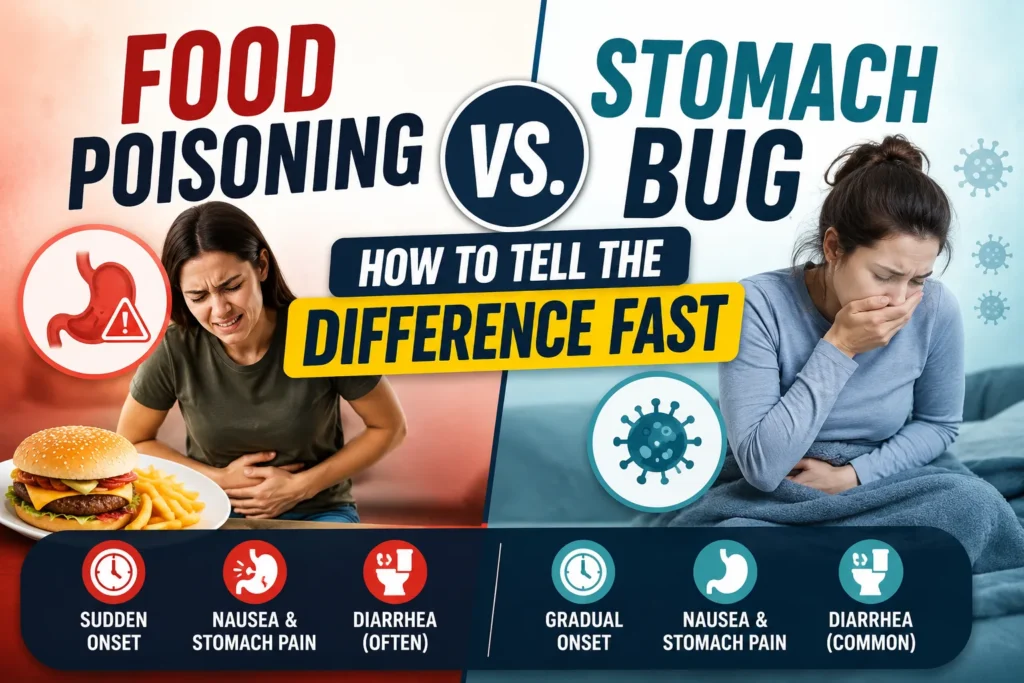
Suddenly having a stomach ache might be perplexing – one minute feeling fine, then suddenly experiencing nausea, cramping, or vomiting. When this happens, most people wonder if it’s food poisoning, a stomach bug, or something picked up from food or people around them. It’s often hard to tell at first since both conditions start in a very similar way.
What Is a Stomach Bug?
The stomach bug, commonly referred to as “viral gastroenteritis,” affects the stomach and intestinal system. This viral condition differs from the medically recognized flu because it is caused by many different types of viruses, such as norovirus, rotavirus (commonly seen among infants), adenovirus, and astrovirus.
It is mainly transmitted via touch with a contaminated surface, sharing your food or drink with other people, poor hand hygiene, or contact with infected persons. Stomach bugs spread more easily in close-contact areas where many people live together, like schools, companies, hospitals, or flats.
A person suffering from a stomach bug may experience symptoms like:
- Nausea
- Vomiting
- Diarrhea
- Stomach cramps
- Fever
- Headache
- Body aches
- Fatigue
- Loss of appetite
What Is Food Poisoning?
Food poisoning is caused when you eat or drink contaminated food or water. The bacteria, viruses, or parasites present in infected food enter your digestive tract, leading to uneasiness. It is mainly caused by mishandling food during preparation, storage, or cooking. Even apart from food, fruits, eggs, and even spoiled flour can also be sources. Most cases are mild and only last for a few days.
Some common bacteria that can cause food poisoning:
- Salmonella
- E. coli
- Listeria
- Campylobacter
- Staphylococcus aureus
You will feel sudden symptoms, or, in some cases, it can happen that a person feels them just a few hours after eating contaminated food.
Food Poisoning vs Stomach Bug: Quick Comparison
| Feature | Stomach Bug | Food Poisoning |
| Cause | Viruses such as norovirus or rotavirus | Contaminated food or water with bacteria, viruses, parasites, or toxins |
| Spread | Person-to-person contact or contaminated surfaces | Usually through contaminated food or water |
| Symptoms Start | 12-48 hours after exposure | Within a few hours after eating contaminated food |
| Common Symptoms | Nausea, vomiting, diarrhea, stomach cramps, fever, headache, and fatigue | Nausea, vomiting, diarrhea, severe stomach cramps, fever, chills, and weakness |
| Severe Symptoms | Dehydration, dizziness, and weakness | Bloody diarrhea, severe dehydration, and breathing difficulty |
| Fever | Common | May occur |
| Duration | Usually 3-7 days | Usually 1-3 days |
| Contagious | Very contagious | Usually not contagious |
| Common Trigger | Exposure to an infected person | Eating contaminated food |
| Treatment | Rest, fluids, electrolytes, and bland foods | Hydration, rest, mild foods, and sometimes antibiotics |
How Do Symptoms Differ?
Symptoms of a Stomach Bug
A stomach flu may begin slowly, with the initial symptoms being tiredness, nausea, and mild discomfort in the stomach; usually, the symptoms will come within 1-2 days of getting the stomach flu, and afterwards, they can last for 3-4 days.
Common symptoms of a stomach bug are:
- Nausea
- Vomiting
- Watery diarrhea
- Stomach cramps
- Fever
- Headache
- Body aches
- Fatigue
- Loss of appetite
- Weakness
- Mild dehydration
Others may experience chills or dizziness, mainly due to losing excessive amounts of fluid through vomiting and diarrhea.
Symptoms of Food Poisoning
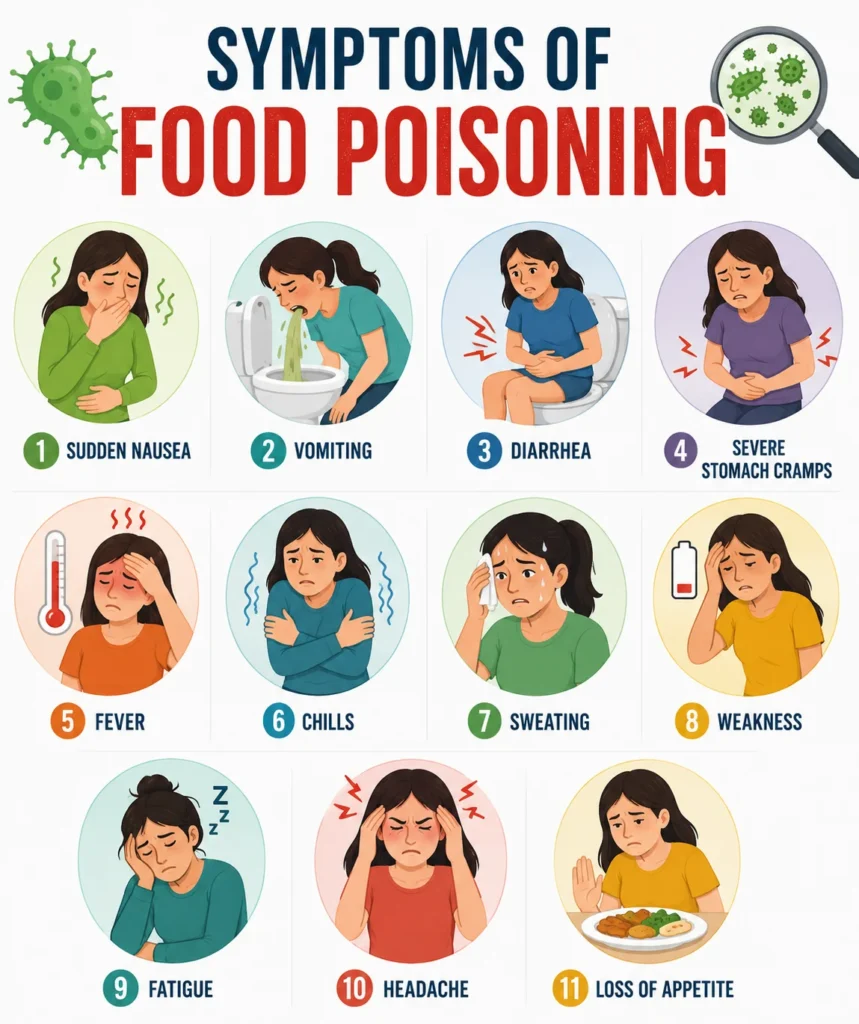
Image Reference: AI
Symptoms of food poisoning generally start quickly, often appearing as early as a few hours after ingesting contaminated food. Most times, the severity of the symptoms is more intense at the beginning of the experience.
Common symptoms of food poisoning include:
- Sudden nausea
- Vomiting
- Diarrhea
- Severe stomach cramps
- Fever
- Chills
- Sweating
- Weakness
- Fatigue
- Headache
- Loss of appetite
If there is a more serious case, then it can result in:
- Bloody diarrhea
- Bloody vomit
- Severe dehydration
- Blurred vision
- Difficulty breathing
The severity of symptoms usually depends on the type of bacteria, virus, or toxin involved.
What Are The Causes?
Causes of a Stomach Bug
A stomach bug is caused by a virus that is contagious and easily spreads from one person to another, especially in crowded areas, gatherings, or shared spaces. You can also get infected with it if:
- Anyhow, you came into contact with the infected person
- You have touched contaminated surfaces
- You have shared food, drinks, or utensils with the infected people
- Not washing your hands properly before and after eating your meals
- You have eaten food that is prepared by the infected person.
Causes of Food Poisoning
Food poisoning is caused by the intake of contaminated food or water with harmful microorganisms (bacteria, viruses, parasites, or toxins). Food may get contaminated at different stages, including while cooking, storing, packaging, or preparing it.
Some common causes of foodborne illness are:
- The consumption of raw or undercooked animal products (meat, poultry, eggs)
- Eating or having expired dairy products
- Eating shellfish or fish that were caught in the contaminated water
- Not washing fruits and vegetables properly
- Not storing food properly
- Eating food that has been left out for too long
- Cleaning surfaces or utensils with contaminated water
- Drinking contaminated water (bottled or tap)
How do Symptoms Begin?
Though normally both have a few similar symptoms, their causes, timing, and spread are different.
- Stomach Bug:
It takes time to show up because the virus spreads in the body first, and the symptoms usually begin after some delay.
- It will take around 12-48 hours after exposure
- Sometimes a bit longer, depending on the virus
It normally spreads when a healthy person comes in contact with sick people or contaminated surfaces.
- Food poisoning
As compared to a stomach bug, it acts faster because the body reacts quickly to harmful food or toxins. It can start:
- Just within a few hours after eating
- Sometimes, as early as 30 minutes
- Or sometimes it can even take 24 hours to show up
It is not contagious; if many people have eaten the same contaminated food and get sick, then it is likely food poisoning.
Which One Is More Contagious?
Viral gastroenteritis (stomach flu or stomach bug) is a lot easier to spread than food poisoning. It spreads easily from person to person, especially in crowded places like schools, offices, and homes, even after a short contact.
When you get in touch with contaminated objects like phones, doorknobs, or shared utensils and then touch your mouth or food, the virus can survive on the surfaces and spread through them. In simple words, it can easily spread into a large population in a very short period of time.
Generally, food poisoning is not contagious but rather results from eating or drinking something that is contaminated. If a person gets food poisoning from contaminated food, it is very unlikely to spread to other people.
Treatment
Treatment for Stomach Bug
Most stomach “viruses” generally resolve without any specific treatment, and the main goal is to support your recovery while preventing dehydration.
You should:
- Drink fluids on a regular basis to replace fluids lost from the body
- You can drink oral rehydration solution, clear soup, or coconut water
- Give proper rest to your body and avoid doing any heavy physical activity
- Once your body starts absorbing food and vomiting stops, eat light foods like bananas, rice, toast, and crackers
- Wash your hands more often and stay at home to prevent spreading the virus
Treatment for Food Poisoning
The majority of people with mild food poisoning improve with basic home treatment.
- If you’re dehydrated after food poisoning, vomiting, or diarrhea, sip fluids slowly.
- Stay hydrated with water, rehydration drinks, or clear broths.
- Once you feel better, eat bland foods like rice, toast, and bananas instead of large meals.
- Before recovering, avoid fatty and spicy foods, which can cause more pain.
- Take antibiotics if your food poisoning is bacterial or prescribed by your doctor.
Prevention Tips: Stomach Bug vs Food Poisoning
Preventing Stomach Bug :
- Do make sure to wash your hands with soap and water for at least 20 seconds.
- Disinfect the surfaces or objects that you come in contact with frequently, like your phone or watches.
- Do not share things like towels, cups, or utensils with anyone who has been diagnosed with an illness.
- If you are sick, then don’t step out of your home, as it will prevent from spreading the infection to others.
- Be especially cautious in crowded places such as schools, businesses, or public transportation, where people may be within 3 feet of you.
Preventing Food Poisoning:
- Ensure that you cook all types of meat, eggs, and seafood properly.
- Refrigerate any perishable items immediately after cooking.
- Do not mix raw and cooked foods, as it will help in preventing “cross-contamination.”
- Don’t forget to wash your fruits and veggies before consuming.
- Confirm that the food has not expired before consuming.
- Use only safe, clean drinking water (especially when traveling)
When to Seek Medical Care?
Most episodes of stomach flu or food poisoning improve on their own if you relax and drink plenty of fluids. The main idea is to maintain the body’s hydration and replace lost fluids with water, oral rehydration solutions, or light soups.
If you feel ready to eat again, start with bland meals like crackers, bread, bananas, rice, or boiled veggies. Steer clear of spicy, oily, or sweet foods until your stomach feels back to normal.
However, some symptoms should not be ignored, as they may need medical care:
- If you are having bloody stools or vomiting
- Fever is not going below 102°F (38.8°C)
- Having severe stomach pain
- Throwing up after eating or drinking fluids
- Diarrhea that lasts more than 2-3 days
- Fainting or not being able to stand
- Having mental fogginess
- Not being able to breathe properly
- The body is dehydrated, like having a very dry mouth, dark urine, very little urination, or dizziness
Can You Have Both at the Same Time?
Though it is very rare to have both a stomach bug and food poisoning at the same time. Both are different in nature, yet their symptoms overlap with each other, that confuse most of he peoples.
In both cases, a person feels nauseous, weak, and may have vomiting. But in food poisoning, you get infected by eating or drinking contaminated food or water, while a stomach bug is caused by a virus.
Because both affect the digestive system, doctors usually focus on symptom timing and recent exposure to determine the actual cause.
Foods to Eat During Recovery
- Bananas
- Rice
- Toast
- Crackers
- Applesauce
- Boiled potatoes
- Plain soup
- Oatmeal
- Boiled carrots
- Steamed vegetables
Foods to Avoid (Can Worsen Symptoms)
- Fried and oily foods
- Spicy foods
- Dairy products
- Coffee and caffeine
- Soda and carbonated drinks
- Alcohol
- Heavy or sugary snacks
- Raw spicy chutneys or sauces
- Highly processed snacks
Who Needs To Be More Careful?
Some people get dehydrated easily, or have low immunity, or are much weaker than others. So these people get easily affected. So even simple stomach bugs or food poisoning can make them seriously ill. So these people need to be more careful about the food they are eating:
- Infants and young children have a digestive system that is still developing.
- Older adults, as they age, their immunity and digestive health weaken.
- People who have weak immunity
- People who are on antibiotics or on any kind of medication
- A person who has gotten sick recently.
In these cases, symptoms like vomiting, diarrhea, or poor fluid intake should not be ignored. If the condition is getting worse or a person is not able to take fluids, then medical care is needed; immediately call your healthcare professional.
Takeaway
Most people take stomach bugs and food poisoning the same, as their symptoms are almost identical. But still, there is a little bit of a difference that helps you understand the difference between them. Food poisoning usually starts suddenly when you eat contaminated food and may feel more severe. Whereas a stomach bug develops more slowly and lasts longer.
However, the severity depends on the causes, overall health, and how your body responds. If you are feeling like the symptoms are becoming worse even after taking rest and fluids or last longer than expected, then it is better to seek medical advice to rule out other health issues.
FAQ’s
1. Can stomach bugs and food poisoning spread through water?
Stomach bugs and food poisoning can spread through contaminated water. Drinking contaminated water from lakes, wells, or unsafe supplies can make you sick. These infections can also result from eating contaminated agricultural products.
2. Can you get it again soon after recovery?
If you have recovered once, then again you can get infected with food poisoning or a stomach bug. The chances of a stomach bug recurring are high because different viruses spread easily.
3. Why do symptoms sometimes feel worse at night?
At night, there are fewer distractions, and our body is at rest, so even slight discomfort becomes more noticeable. During nighttime, there is minimal movement, and lying down also makes nausea and stomach cramps feel stronger, as you may also feel more uneasy at night.
4. How to tell if it is a stomach bug or food poisoning?
It can be challenging to tell if your illness is due to food poisoning or a stomach bug because both types of illnesses have very similar symptoms. However, by looking at the time of onset of your symptoms, how quickly you developed symptoms after eating, and how many other people you know have experienced significant stomach-related symptoms around the same time as you, can be used as information to help determine which illness you may have contracted.
5. Can reheated food cause food poisoning?
Yes, reheated food can also cause food poisoning if it has not been stored or cooled properly before reheating. The main problem lies in the bacteria that grow if food is left out for too long. Some toxins are still left behind even after it’s reheated.
Reference URL: https://health.clevelandclinic.org/