

If you have got yourself tested and are told that your alkaline phosphate (ALP) levels are higher than normal, then it is an indication that you should start paying attention to what you eat. Some foods can put extra pressure on the liver and overall body functions, so being mindful of your choices can really help.
We all know that what we eat totally impacts our body externally as well as internally. If you eat a healthy and balanced diet, that naturally helps your body to absorb nutrients better and reduces the unnecessary strain in the body organs. Even a simple swap can make a noticeable difference over time.
Let’s go through the foods that are usually advised to limit and the easier, healthier options that can help keep things more balanced.
What Is Alkaline Phosphatase?
Alkaline phosphatase (ALP) is an enzyme that is found particularly in the liver, bones, bile ducts, kidneys, and intestines. The main function of this enzyme is to keep your body’s natural ability to perform vital functions such as bone formation and maintenance, and to keep your liver healthy. A simple blood test can determine ALP levels, which doctors use to diagnose potential liver or bone problems.
High ALP levels do not always mean that you are having a serious problem; they mainly indicate several underlying conditions, such as:
- Might be there is liver inflammation or damage
- There is a possibility that the bile ducts are blocked
- Can signify bone disorders like Paget’s disease
- Might be there is an infection in the body
- Sometimes pregnancy-related changes, or possibly some cancers
- Might be that your body is having an imbalance of vitamins and minerals
What Are the Causes of High ALP Levels?
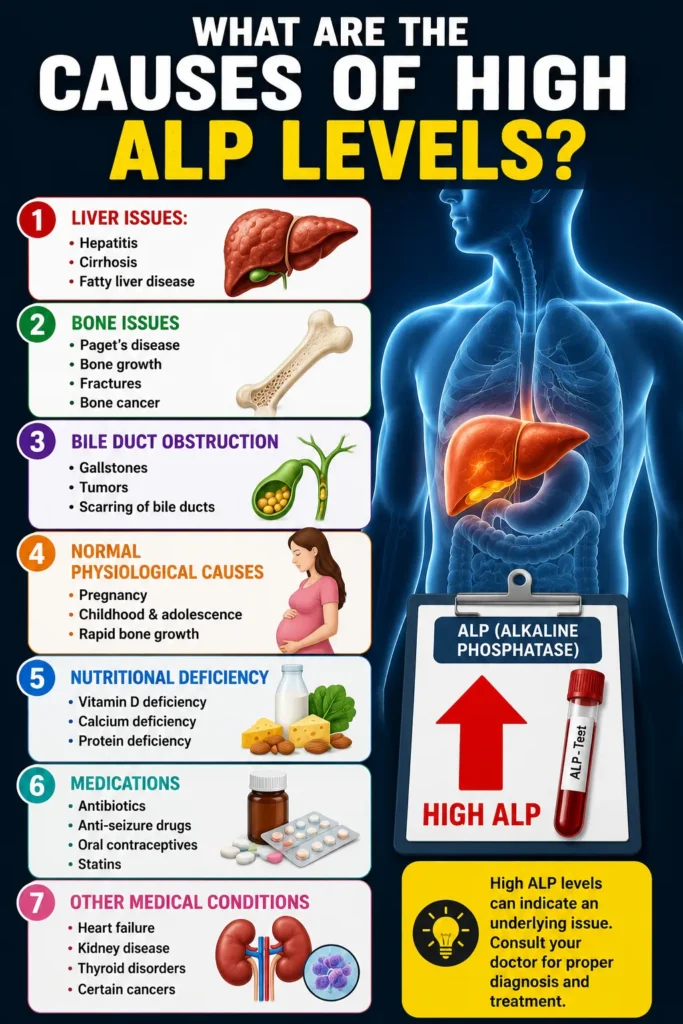
Image Reference: AI
There are several reasons that can cause high ALP levels in the body:
- Liver Issues: Hepatitis, fatty liver disease, alcohol-related liver problems, cirrhosis, and bile duct obstruction can result in elevated ALP levels because these conditions affect the functioning of the liver as well as the flow of bile.
- Bone Issues: ALP levels are also affected by bone health. When there is high bone activity, such as in vitamin D deficiency, Paget’s disease, osteomalacia, bone fracture during healing, or normal bone growth in children and teenagers.
- Bile Duct Obstruction: The obstruction caused by gallstones, tumors, or inflammation disturbs the bile flow, which can lead to high ALP levels.
- Normal physiological causes: Sometimes during pregnancy, there are a lot of hormonal changes, or in the adolescent phase, or when bones are healing after surgery, ALP levels can naturally increase in the body.
- Nutritional deficiency: Deficiency of vitamin D, poor calcium balance, and poor dietary intake cause weakness in your bones and liver health, eventually increasing ALP levels in your body.
- Medications: Certain medicines can also sometimes increase ALP levels in your body, like antibiotics and anti-seizure medications.
- Other Medical Conditions: In extremely rare cases, ALP may signify other underlying conditions like cancers that are affecting the bone or liver. Sometimes there is an infection also, or it can indicate heart failure.
Foods To Limit Or Avoid When ALP Is High
1. Alcohol
Alcohol puts direct stress on the liver by damaging liver cells; regular consumption can make existing liver or bile duct problems even worse. This disturbs normal liver functioning and increases inflammation in the body. As a result, the body’s natural healing and recovery slow down. It may also harm liver cells and increase liver enzyme and ALP levels, making it harder for the liver to work properly.
– What you can drink:
To stay hydrated, drink plain or lemon water, or try coconut water, fruit-infused water, or naturally sweetened flavored drinks. Even herbal tea can be a calming option.
2. Fried and Fatty Foods
As compared to normal foods, deep-fried foods take longer to digest, as they are packed with saturated fats. It affects your body’s digestion and overall metabolic process. These foods put strain on the liver and cause inflammation, which leads to a slowdown in liver functionality by building up fat around the liver.
– What you can eat:
Go for baked and grilled food options, or even steamed dishes, as they are easier to digest. And use olive oil for cooking in place of regular oil. And the best you can do is eat homemade meals using whole ingredients that are much easier on the liver and support overall health.
3. Sugary Drinks and Foods
Sugary drinks and foods increase fat buildup around the liver. And the body has to do extra work to digest them; it also affects metabolism and reduces liver functioning. In fact, sugar-rich foods are one of the main reasons that cause fatty liver, increasing insulin resistance, and adding metabolic stress. This makes it hard for the body to maintain normal enzyme balance.
– What you can eat:
The best is to add seasonal fruits in your diet for natural sweetness and drink unsweetened beverages. To improve energy levels, eat whole grains. You can also make your snacks at home that are tastier and healthier with minimal added sugar.
4. Processed and Packaged Foods
For long-term shelf life, processed and packaged foods are packed with high preservatives, excess salt, and unhealthy fats. All these additives take time to digest and put extra strain on the liver, which slows down its functioning, especially in conditions where your ALP levels are already high.
Gradually, it also stresses the body’s natural detox system, raising oxidative stress, due to which the nutritional needs are also not fulfilled for recovery and liver health.
– What you can eat:
There are many tasty and nutritious homemade meals that you can make yourself at home. Meals full of whole ingredients, fresh fruits and vegetables, and whole grains like oats or brown rice are also beneficial. In cooking, use healthy oils to make lightly cooked foods, such as olive oil.
5. Refined Carbohydrates
Refined carbohydrates break down into sugar very quickly in the body and can make things harder on the liver, especially when ALP levels are already high. Most of the people today rely on white bread, pastries, sugary cereals, or similar foods as a fast breakfast in the morning without realizing that they are damaging their liver.
These foods provide you energy only for the short term, and nutrition is almost minimal. This leaves you feeling drained for the rest of the day.
– What you can eat:
Instead of a fast alternative, swap your breakfast with whole grains like brown rice, oats, quinoa, and whole wheat bread. These foods get easily digested, providing you with steady energy, a better liver, and metabolic health.
6. Red and Processed Meats
Excess intake of red and processed meats causes inflammation in the body, as they are hard to digest and also affect liver function when ALP levels are high. These foods are very high in saturated fats and put extra pressure on the liver. If you are consuming red meat daily, it will slow down normal body processes and also affect recovery time. This makes you more lethargic, leaving you feeling low on energy and less balanced overall.
– What you can eat:
You can swap your red meat with lean proteins like chicken and turkey. Eat more plant-based foods such as beans, lentils, and tofu, and fish like salmon or cod.
7. Excess Supplements (Zinc & Phosphorus)
Eating food or taking supplements that are high in zinc and phosphorus disturbs the body’s mineral balance and also affects enzyme growth and activity when ALP levels are high. So avoid taking them without a doctor’s advice. These nutrients are important, but taking them in excess puts strain on overall body function, may impact your bone health, and gradually disturb how your body maintains healthy enzyme levels.
– What you can eat:
Eggs, seeds, whole grains, legumes, and dairy in moderate amounts. This naturally supports healthy bones and enhances metabolism.
8. Excess Salted Foods
Excess salted foods and high-sodium foods disturb the body’s fluid balance and put extra stress on the liver, which can affect the body’s metabolism. High-salt foods increase water retention in the body, straining liver function, due to which the metabolic balance of the body also slows down. In simple words, it slows down the body’s natural recovery process and makes it harder for the immune system to function smoothly over time.
– What you can eat:
The best is to eat freshly made homemade meals, in which you yourself can adjust your salt level. You can add natural herbs and spices for flavor. Naturally low-sodium foods like fruits, green vegetables, whole grains, and fresh protein are also good alternatives.
How to Improve ALP Levels Naturally?
Diet plays an important role in managing your ALP levels, but at the same time, physical activity and a healthy lifestyle also play an important role in your overall health.
- You can do simple exercises like taking a walk of 15-20 min in the park.
- For calorie burn, you can indulge in weight-bearing activities like jogging and stair climbing.
- Keep yourself hydrated by drinking the proper amount of water.
- Avoid smoking, as it increases inflammation and harms liver health.
- Keep your weight in check by maintaining a healthy weight.
- Don’t forget to check your sugar levels and cholesterol occasionally.
- Don’t forget to recharge yourself by getting proper sleep.
- Skip junk food and eat a healthy, balanced, and nutrient-rich diet.
When to See a Doctor?
You should always verify your alkaline phosphatase (ALP) level, because elevated levels are typically an indicator of another problem going on in your body. They are not just by themselves a final diagnosis; rather, the doctor will have to make some additional assessments based upon what else is going on with you to determine the cause of the elevated alkaline phosphatase level. Based upon your symptoms and overall condition, the doctor may recommend additional testing to determine what is wrong with your liver or bones by using the following:
- Liver function tests (assessing the health of your liver)
- Bone imaging studies (assessing the condition of your bones)
- Alkaline phosphatase isoenzyme testing (to determine if the elevation of alkaline phosphatase is coming from the liver or the bone)
- Vitamin D and calcium levels (to evaluate your mineral balance)
You should not rely on how you eat (dietary changes) or how you feel (self-assessment) to evaluate or treat your elevated alkaline phosphatase levels. You will need a physician to evaluate you and perform the necessary testing to obtain a proper diagnosis.
Final Takeaway
At first high ALP levels can feel worrying, but what you eat, what you do, and even your small habits and daily choices can make a huge difference. Being more mindful about your eating habits and limiting foods that put extra strain on the liver can support your body.
If somehow your ALP levels are high, it does not mean you have to change everything overnight. Just keep a check on your eating habits, and follow the right medical guidance to help manage it effectively. The main goal of managing this condition is to support healthy liver and bone function.
FAQs
1. Can high ALP be reversed with diet?
If you eat a nutritionally balanced and healthy diet, it can help in enhancing bone health, improve liver functioning, and restore blood levels to normal. But if the increase in ALP levels is due to another health condition, then diet change alone will not make much difference; in fact, you will require medical assistance.
2. What foods should I eat to keep ALP levels healthy?
To maintain healthy ALP levels in your body, you can eat the following:
- Green leafy vegetables: spinach, kale, fenugreek leaves
- Beans: kidney beans, black beans, chickpeas, lentils
- Nuts: almonds, walnuts, cashews
- Seeds: pumpkin seeds, chia seeds, flaxseeds
- Fatty fish: salmon, sardines, mackerel, tuna
3. Can the food you eat affect ALP levels?
Diet alone won’t be responsible for causing a sudden spike in your ALP levels; however, your overall dietary habits may have an effect on liver and bone health over time. Eating healthy and consuming processed foods may place stress on the liver and other normal bodily functions. For example, eating healthy while eating fast food could put strain on the liver and normal bodily functions.
4. Should I stop eating all fats if ALP is high?
You don’t have to stop eating all the fats if your ALP is high. Just try to reduce saturated and trans fats from your diet, and replace them with healthy fats like olive oil, nuts, seeds, and avocados. The healthy fats support liver function without eliminating the essential nutrients.
5. Is high ALP always a sign of liver disease?
There can be many reasons that can elevate ALP levels in the body; it does not always signify liver disease. It can also increase due to bone disorders, vitamin deficiencies, pregnancy, or even small bone growth during childhood or in the teenage years.
Reference URL: https://www.everydayhealth.com/