
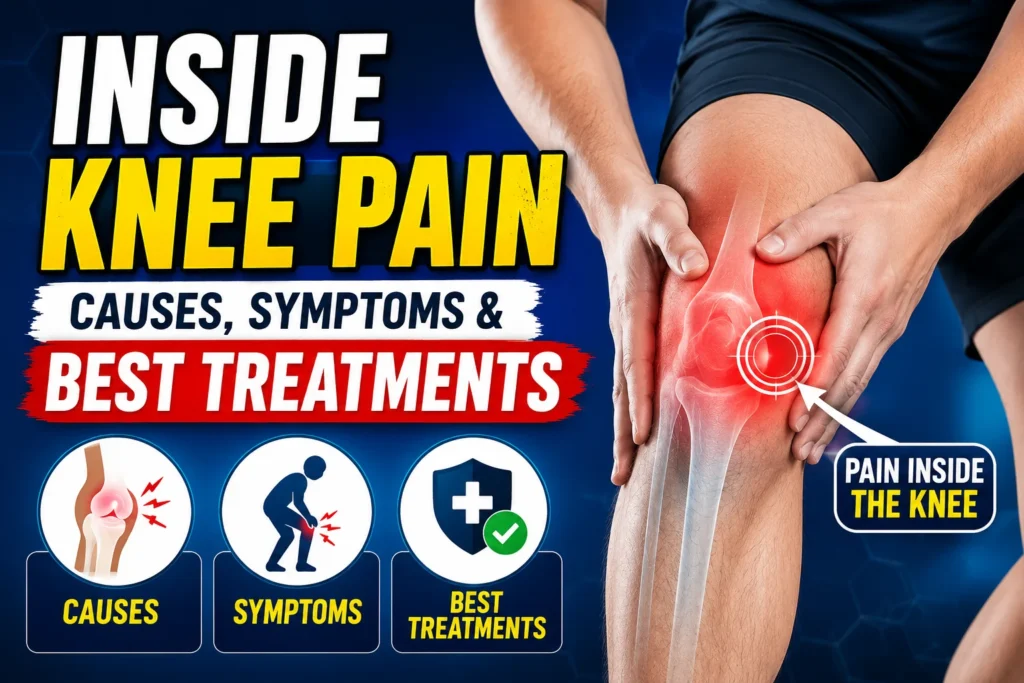
Medial knee pain is becoming common; it occurs in the inside (medial) portion of the knee. It is the middle part of the knee where bones, ligaments, and cartilage are present, and together they support each other during weight bearing (functionality) and movement (mobility). Knee pain may occur because of several reasons like injury, overuse, arthritis, or ligament strain, and it can be different for everyone. One might feel just mild pain, while some may feel severe pain while doing any movement.
Though in today’s lifestyle it can be felt by anyone, it is more common in athletes, individuals who are physically active, and senior citizens. You can feel this pain while performing daily activities like walking or climbing stairs, or while performing any exercise.
If knee pain is mild and has not been aggravated, many people can self-manage with appropriate rest, strength training, and self-care. But if the pain is constant and not going away, then you may need to see a physician.
What Is Inside Knee Pain?
“Inside knee pain” refers to discomfort experienced on the inner portion of your knee joint. In daily movements, this area plays an important role as it helps in carrying body weight, maintaining leg alignment, and supporting the body’s posture. It absorbs the impact the body feels while walking, running, or during any aggressive leg movement and helps maintain knee alignment.
When the surrounding tissue (muscle/ligament/cartilage) becomes irritated, strained, or injured, gradual development of pain will begin to occur within the region of the injured tissue. Pain can develop quickly from an acute (sudden) injury or develop slowly due to repetitive motion, overuse, or degeneration over time.
Common Causes of Inside Knee Pain
Knee pain can be caused by several reasons; sometimes it’s because of injury, and sometimes it’s too much pressure on the knees. Understanding these causes can help you identify the symptoms early. Some of the causes are:
1. Medial Collateral Ligament (MCL) Injury: It is the tear of the ligament on the inner side of the knee; it connects the thigh bone to the shin bone and helps in stabilizing the joint. When, during any activity or sport, your knee gets a sudden outer blow, a sudden twist, or is overused, it can affect the ligament, resulting in pain, swelling, and discomfort during movement.
2. Knee osteoarthritis: One of the most common reasons for pain inside the knee. In this case, the joints show structural alterations that ultimately destroy the cartilage. It is a degenerative disease and typically observed in persons above 45. It’s probably going to get worse as you mature.
3. Pes anserine bursitis: It is the joint pain between your kneecap (the patella) and thigh bone (the femur). It is caused by repeated stress on the knee or if, somehow, your kneecap is not in alignment. Usually in this condition, your knee will hurt from the back side, but over time it can affect the inner side of your knee too.
4. Tendonitis: When you repeat the same actions, push yourself too hard during exercise, or have poor posture, this can lead to damaging those tendons that are very sensitive tissues present in the innermost part of your knee. It causes extreme burning pain, tenderness, and discomfort while sitting, running, or even when you make a slight movement with your knee.
5. Meniscus tear: This damages the cartilage, which serves as a shock absorber in the knee, resulting in inner knee pain. It usually occurs when you make a quick movement that affects the function of the knee, such as changing direction or altering body position. The disorder is more common among those who habitually perform heavy lifting or overexert themselves in jobs that are labor-intensive.
6. Rheumatoid arthritis: It is the condition where the immune system attacks joints and damages healthy tissues, resulting in swelling, inflammation, and stiffness; in some cases, it even permanently causes damage to the tissues.
Symptoms of Inside Knee Pain
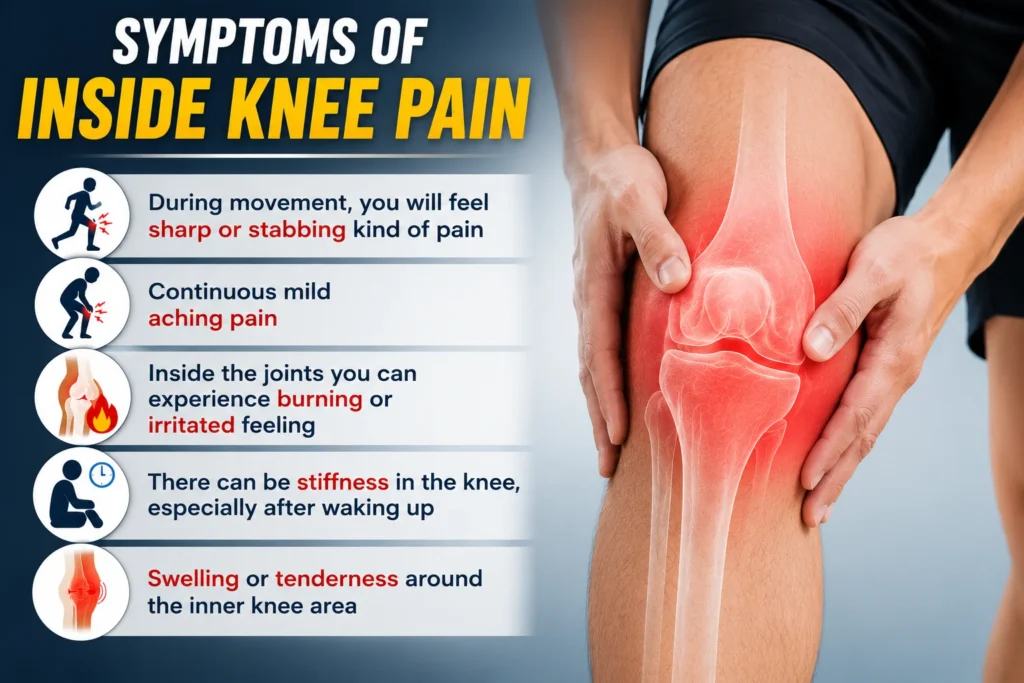
Inside knee pain is itself a symptom, but yes, it can vary from person to person. There may be a burning or irritation that you can feel in your knee; some people also felt sharp pain. So there will be pain, but it differs; for some it can be mild, while others can feel severe pain. Common symptoms are:
- During movement, you will feel sharp or stabbing kind of pain
- Continuous mild aching pain
- Inside the joints you can experience burning or irritated feeling
- There can be stiffness in the knee, especially after waking up
- Swelling or tenderness around the inner knee area
The pain is sometimes continuous and sometimes takes a longer time to disappear. The pain may also be intermittent, usually dependent on the type of movement, activity level, or amount of pressure applied on the knees. It’s also possible that you had a decent rest, yet due to stiffness, you feel sudden discomfort while performing any exercise.
And if you are suffering from inside knee pain, then along with the pain, you may also experience other signs as well, such as
- Swelling around the knee joint due to constant pain
- Warmth or heat in the affected area
- Clicking, popping, or a catching feeling when moving the knee
- Bruising or skin color changes in some cases
Treatment for Inner Knee Pain
If you are feeling constant pain in your knees, then it is better to consult your healthcare provider. He will simply ask you some questions and perform some physical checks, like taking a look at your knee. He may ask questions about any prior injury, your symptoms, or how much pain you feel while making a movement. If needed, in some cases he may suggest imaging tests like an X-ray or MRI to get a clear view of bones, ligaments, and cartilage.
Once the cause is identified, then he will suggest treatment depending on how severe your knee condition is. Well, in most cases, symptoms normally improve with simple, non-surgical care and lifestyle adjustments. Treatments suggested by doctors:
1. RICE Method (First Aid Treatment): This is one of the most effective home treatments that you yourself can do at home.
- Rest: Take proper rest and avoid activities that strain the knee.
- Ice: If your knee swelled up, then rub ice for 15-20 minutes.
- Compression: Use a light bandage that will provide extra support to the knee.
- Elevation: Keep the knee raised to lower swelling
2. Medications: The doctor may recommend medications to help manage inflammation or pain; the vast majority of individuals may use OTC or NSAIDs to help manage swelling and stiffness. In addition, muscle relaxants may be prescribed by the physician to help manage pain for shorter durations.
3. Physical Therapy: Physical therapy is very effective for inner knee pain. With a good therapist, you can try this, as this helps you in your movements and improves the body’s flexibility. It enhances the blood flow that eases the stiffness of the muscles around the knee, through which you feel ease in your knee pain, and also reduces the risk of future injury.
4. Weight Management: Managing weight means reducing the excess body weight to lessen stress on the joints, since even losing a small amount of weight can significantly decrease the pressure on the knees. You can go for swimming, cycling, or using an elliptical; for joint stability, do some light strength training. Body weight directly impacts your knee health, less weight means less pressure on the knee.
5. Knee Braces: Knee braces work as extra support for your knees and also help in keeping them in proper alignment. They help in lowering the pressure on the joints during movement; this makes knee healing faster and smoother.
6. Injection Therapy: Though injections are given when you have severe pain, they are of two types: steroid and hyaluronic acid injections. The first one is used to reduce pain and swelling, while the second one helps in smoother joint movement and reduces discomfort during movement.
7. Surgery (Severe Cases Only): Usually, surgery is done in very rare cases when other treatments fail. It normally involves minimally invasive arthroscopy to repair damaged meniscus tears or ligaments, or in some cases, even knee replacement is also done; this can be partial or complete.
Natural Remedies for Inner Knee Pain
1. Hot and Cold Therapy: You can use cold packs on the swollen area and pain; it would be better if you do it after activity. This helps in relaxing stiff muscles and improving blood flow.
2. Turmeric: This is naturally known for its anti-inflammatory properties that naturally help in relieving joint pain, swelling, and inflammation from the knee. You can even use it in your food or through drinks.
3. Epsom Salt Bath: It contains magnesium that helps in easing the stiff muscles. Just mix 2-3 spoons in warm water, and with the help of a towel, apply it around the affected area. Just do 2-3 times a week for 15 min. It is also effective in arthritis.
4. Ginger Tea: It helps in reducing knee pain, particularly from osteoarthritis. It contains gingerol, a natural compound that helps in reducing inflammation in the knee.
5. Massage Therapy: The best and simplest thing you can do on your own is to gently massage your knees. Don’t do it aggressively, just softly; this will help improve blood circulation and help reduce stiffness and tightness in the knee.
Can You Prevent Knee Pain?
Yes, you can absolutely prevent knee pain; it’s just that you have to be careful in your daily life while performing activities. Because we don’t realize it, but sometimes even small habits can put extra pressure on your knees and slowly lead to pain or discomfort over time.
During sports or exercise:
- Don’t forget to warm yourself before starting any activity or exercise routine; this will improve blood flow and help relax muscles and joints.
- After you are done with your exercise, do some stretches involving legs and arms, like side stretches, to reduce stiffness and tightness.
- Don’t do continuous exercise; take a break or some rest before starting the next exercise. This will help your knees recover.
- Always wear good-quality shoes or proper gear, which will help in maintaining proper balance and protection.
- If you are feeling mild pain in your knee, then stop doing that exercise instead of pushing through it; this will only worsen knee health.
General daily safety tips:
- Use a cane or walker if you have balance issues or feel unsteady while walking
- Use a stable step stool instead of standing on chairs or tables to reach high places
- Keep your home and workspace clean and free from objects that may cause slipping or tripping
When to See a Doctor?
If your knee pain is not improving and is affecting your daily life, it is better to consult your healthcare provider. It is important to check the symptoms early rather than leaving them unnoticed, as they may get worse over time.
- Pain continues for more than 1-2 weeks even after rest or home care
- There is noticeable swelling that doesn’t go down or keeps coming back
- The knee feels like it locks, clicks, or gives way while walking
- You are unable to put weight on the knee or walking becomes difficult
- The pain is getting worse instead of improving with time
Prevention Tips for Inside Knee Pain
By bringing small changes in your daily life, you can protect your knees and keep them healthy:
- Reduce the strain on the knees by keeping an appropriate weight
- Before exercising, be sure to warm up to prepare joints and muscles
- Choose shoes that provide adequate support and cushioning to aid in shock absorption
- Don’t overexert yourself and allow for sufficient recovery of your body
- Adequate muscular strength of the legs will provide extra supportive force to the knee joint
- Proper posture should be maintained while standing and sitting
- Increase the level of activity gradually.
- Avoid making sudden changes in the intensity of one’s activities
Conclusion
Inside knee pain is getting common, and the reason can be anything from sitting for long hours to overusing it or even small acts like a sudden twist or too much pressure on the knee. But you can easily treat this pain on your own by simply being more aware of your health and of the symptoms.
If you are feeling mild pain, then take proper steps to manage that in the early stage, only with proper rest, physical therapies, or making some changes in your lifestyle. And if your pain is constant, then see your physician.
FAQs
1. How long does inner knee pain take to heal?
Normally, knee healing can take up to 1-3 weeks. And if it’s slightly serious, then it can go up to 3-6 weeks. But in severe cases, knee healing takes time to go back to normal, and it can take up to 3 months to even 1 year.
2. What foods help with knee pain recovery?
You can eat foods that are rich sources of omega-3, vitamin D, and calcium, as they help in faster healing and improve the natural cartilage of the bone. You can also eat anti-inflammatory foods like leafy greens, nuts, fish, seeds, and fruits, as they help reduce inflammation and protect the knee from damage.
3. What causes inner knee pain with no swelling?
In cases where your knee hurts but there is no swelling present, the cause could be something mild or early on, like sprains to ligaments (MCL), tears in the meniscus, early stages of arthritis, or irritated tendons – and generally speaking, in these situations, you may only be experiencing pain. However, the inflammation has not yet reached a point where it is strong enough to create visible swelling.
4. Can walking make inner knee pain worse?
If you have inner knee pain, then mild walking will not make much impact. But if you are doing aggressive activities like fast walking or running, then it will enhance the inflammation and worsen the injury.
5. What exercises are safe for inner knee pain?
During inner knee pain, it is better to perform exercises that will improve your flexibility and strengthen your thigh muscles at the same time. You can go with straight leg raises or hamstring exercises, or can do clamshells as well. You may also perform low-impact activities (i.e., swimming or cycling) to help maintain knee activity as well as increase flexibility without putting excessive stress on the knee.
Reference URL: https://www.everydayhealth.com