
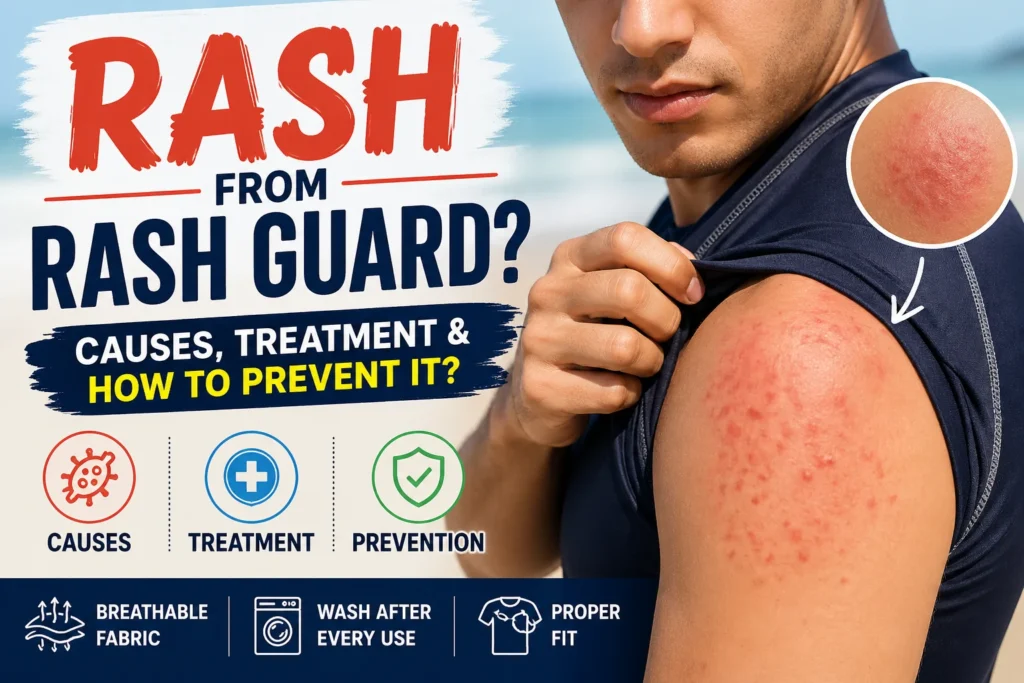
Rash guards are generally used to protect skin from harmful UV rays when you are doing any water-based activity, working out, or spending long hours outdoors.
But wearing it for extended periods can even cause skin irritation, redness, or rashes. Many people experience this when the rash guard is worn while sweating or in humid weather, especially when the fabric stays tight against the skin.
What Is a Rash from a Rash Guard?
Rashes often result when tight athletic or swimwear garments (rash guards) irritate the skin. Rash guards are typically made from synthetic, stretchable fabrics such as polyester, nylon, and spandex and provide protection against sun (UV) rays, abrasions, and other environmental elements during activities including swimming, surfing, and exercising.
Although these garments have a protective purpose, they may still cause irritation to the skin. This is primarily due to the quality of the fabric, improper fit, or even environmental factors, any of which can trigger an allergic reaction in the skin. In very serious situations, skin irritation can result in redness, itchiness, inflammation, or painful chafing.
How Common Is It?
Skin irritation from the rash guard is more common, and it occurs when you:
- Wear a rash guard for long periods
- Engage in water or high-sweat activities
- Are living in hot and humid climates
- Or you have sensitive or allergy- prone skin
Athletes, swimmers, surfers, and gym-goers are particularly at risk of getting rashes. Even casual users may experience irritation if the garment is too tight, not cleaned properly, or worn for a long time while still wet.
Who Is Most at Risk?
Normally, anyone can have rashes if the skin is sensitive or due to other reasons, but still, certain groups are more vulnerable. Like:
- Childrens, as their skin is more delicate and sensitive
- People with sensitive skin
- Athletes, due to prolonged wear and friction
- A person having skin issues, like eczema or dermatitis
- People living in humid environments as sweat and moisture increases the risk of irritation.
Types of Rashes Caused by Rash Guards
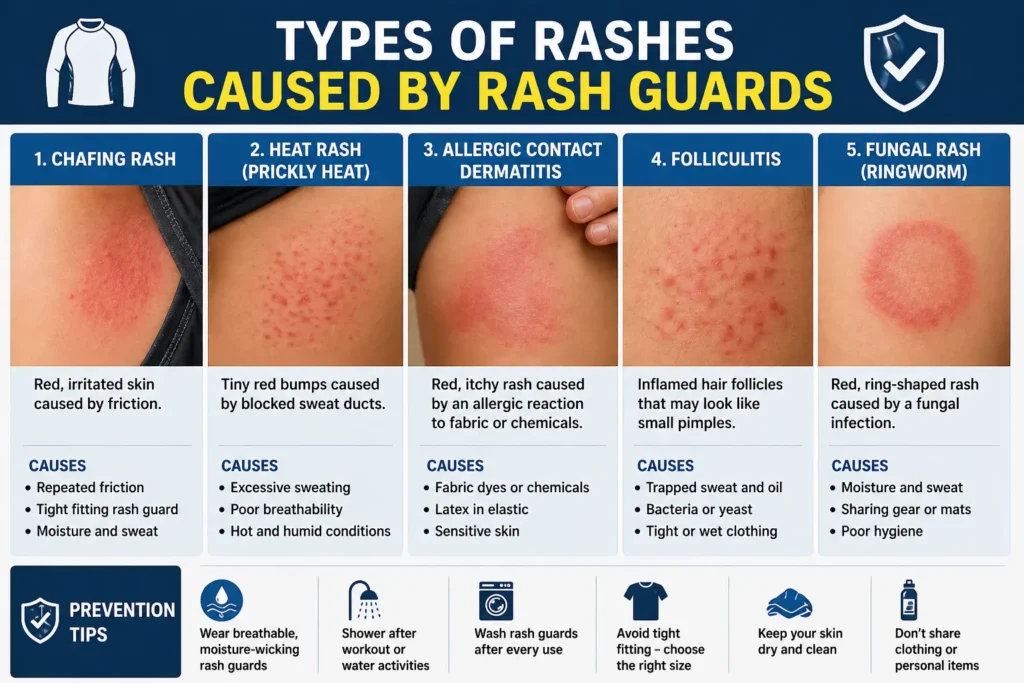
Some of the common rashes that are caused by the rash guard are:
1. Contact Dermatitis: These types of rashes are caused by two reasons:
- Firstly, irritation caused by friction, rubbing, perspiration, or exposure to harsh chemicals on the rashguard.
- Secondly, caused by allergic reactions when a person has sensitivity to certain materials like dyes, fabrics, etc.
2. Heat Rash (Prickly Heat): It is normally caused when sweat gets stuck under tight clothing, not allowing skin to breathe properly, causing little, irritating bumps on the body.
3. Fungal or Bacterial Rash: It is normally caused by wearing a wet rash guard for a long period of time. It holds moisture in the fabric, which can promote bacteria buildup and result in red, itchy rashes.
4. Chafing: Constant rubbing of fabric against the skin causes redness and irritation.
Normally, it happens around the neck, armpits, chest, and inner thighs, where the fabric keeps rubbing against the skin.
5. Acne Mechanica: It can cause small bumps called acne mechanica, usually on the chest, back, and shoulders. This usually happens when an individual wears tight clothes, sometimes due to sweat clogging or when the body heats up.
Symptoms and Causes
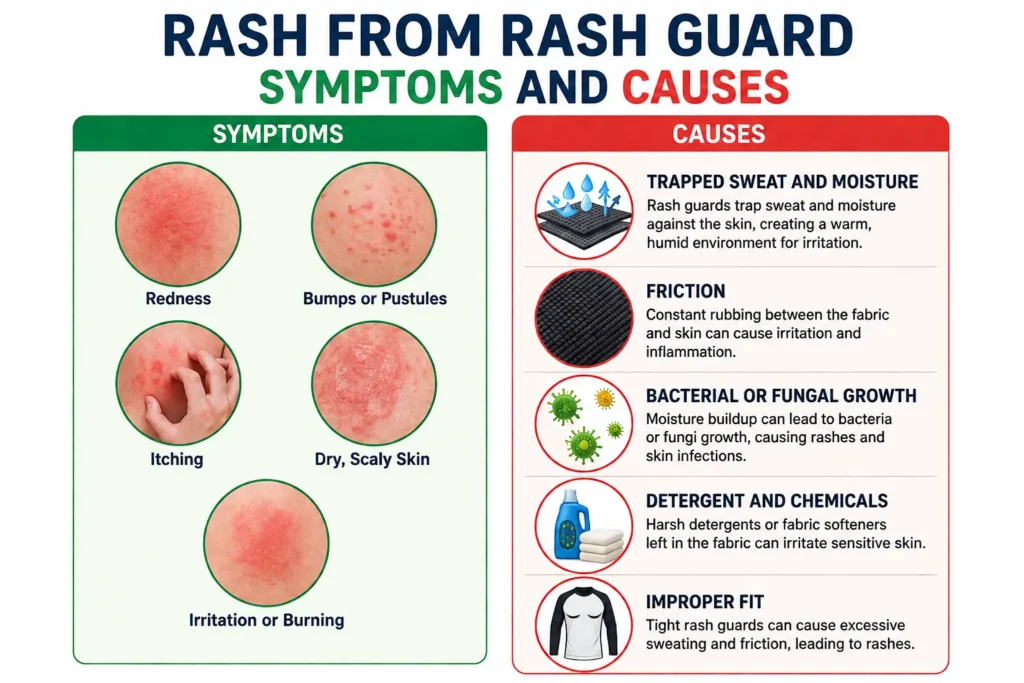
What Causes a Rash from a Rash Guard?
A rash from a rash guard normally happens when there is heat, sweat, and constant rubbing together, and start to irritate your skin. Some of the main reasons are:
- Friction and Poorly Fitting Rash Guards: Friction from an ill-fitting or too-tight rash guard can damage the skin and increase the risk of irritation, especially during movement or when worn for long periods.
- Debris and Trapped Sand: Small particles like sand or tiny debris get stuck inside the surface of the rash guard. It leaves a rough texture that may rub on the skin and worsen irritation.
- Sea Lice: In very rare circumstances, microscopic sea organisms can get stuck in the rash guard and cause itching or rash-like symptoms.
- Sweat or Heat Buildup: Trapped sweat inside the wetsuit and limited airflow can clog pores, causing an itchy, prickly feeling and discomfort under the rash guard.
- Allergic Contact Dermatitis: If you are sensitive to the synthetic fibers of the rash guard, dyes used in it, or residue from detergents used to wash the garment, can develop redness, itching, and skin reactions.
- Prolonged Exposure to Wetness: If a rash guard is worn while wet for a long time, the constant dampness keeps the skin soft and sensitive, which can increase the risk of irritation.
- Saltwater or Chlorine: Chlorine can dry the skin out, while sea salt can dehydrate it, both of which can increase skin sensitivity and reactions.
- Infection: Sometimes warm, moist conditions created by a damp and tight-fitting rash guard can cause bacterial or fungal skin infections.
- Poor Hygiene: Sweat, bacteria, salt, or chlorine can accumulate on an improperly cleaned rash guard, increasing the risk of skin irritation.
What Are the Symptoms of Rashes?
The rashes you get from using a rash guard are different from typical rashes and may appear differently due to the nature of the irritation (friction, heat, perspiration, and fabric reaction) and the type of rash, so it can vary in how it looks depending on what is causing the body to react.
If you have a rash, it will typically be located where your rash guard is fitted or tight against your skin; however, there are instances when it can extend beyond those areas.
There are many ways to identify a rash caused by wearing a rash guard. Here are some examples:
- Red or inflamed areas
- Itching or prickling
- Burning sensation or stinging
- Small bumps, blisters, or pimple-like spots
- Dry, flaky, or peeling skin
- Tender or sore areas
- An area that becomes darker (in some cases slightly darker) or thicker and continues to return after wearing a rash guard
These symptoms become more noticeable over time (due to sweat, swimming, or wearing a rash guard for longer periods). Not giving your skin enough time to rest and recover can allow the irritation to persist longer or worsen over time.
Diagnosis and Tests
How is Rash Guard Rash Diagnosed?
Rashes from a rash guard can be caused by several factors, such as sweat clogging, saltwater, chaffing, etc. So diagnosis simply starts with simple clinical tests. A healthcare professional will examine the skin condition, look out for symptoms, and may ask you some questions related to the infection, such as when the rash started, what you were doing, and how many days you have had it.
You may undergo tests such as:
- Skin examination and medical history: The doctor checks the rash closely and asks about your activities. Rashes from rash guards often appear in areas where the fabric is tight or rubs with the skin, like the neck, chest, or underarms.
- Rule out other skin conditions: The doctor will evaluate for other skin issues, such as eczema, fungal, or psoriatic conditions, because they would have a similar appearance to a rash caused by wearing a rash guard.
- Allergy testing (if needed): Patch tests may be conducted if the rash continues to recur, to determine if you have allergies to the fabrics, dyes, or detergents used in the clothing. Redness or itching during the test suggests an allergy.
- Infection check: If there are signs like swelling, pus, or spreading redness, a skin sample may be taken to check for bacteria or fungal infection.
- Response check: In many cases, the cause becomes clearer when the rash improves after avoiding the rash guard or switching to less irritating clothing.
Management and Treatment
How Is Rash Guard Treated?
Generally, a rash from a rash guard is not that serious and can be managed with simple care.
- Keep the skin clean and dry: Wash the area gently with a mild soap to remove sweat and buildup. After that, gently pat the skin dry, as rubbing can make the irritation worse.
- Anti-inflammatory creams: A simple hydrocortisone cream from the pharmacy can help settle redness, swelling, and that constant itch.
- Soothing products: Calamine lotion, aloe vera gel, or a gentle, fragrance-free moisturizer can help calm the skin and make it feel more comfortable.
- Cool showers: A cool or slightly lukewarm shower can ease the heat and reduce that burning or stinging feeling pretty quickly.
- Oatmeal baths: Sitting in an oatmeal bath can really help if your skin feels dry or itchy-it soothes the area and gives some relief.
- Avoid further irritation: Stay away from tight-fitting clothing or rash guards until healing is complete, and let your skin breathe freely.
- Medicated treatments: If things don’t improve or start to look worse, a doctor may suggest creams like Clotrimazole or Mupirocin for infection, or, in some cases, prescribe tablets such as Fluconazole or Cephalexin to help clear it up.
What Are the Complications of a Rash from a Rash Guard?
A rash from a rash guard is usually mild and gets better with basic care, but if it’s ignored or keeps getting irritated, it can result in:
- Skin infection: Scratching can create small cuts in the skin, making it easier for bacteria or fungi to enter. This can lead to more redness, swelling, pain, or even pus.
- Post-inflammatory hyperpigmentation: Many times, the rash leaves darker spots in the area where the irritation was, especially if it lasted for a long time.
- Chronic irritation (lichenification): If you touch or scratch the affected area, then the skin may get thicker, rougher, and slightly leathery over time due to constant touching.
- Allergic sensitization: Your skin may become more sensitive over time if repeatedly exposed to certain fabrics or substances.
- Infection Spread: Sometimes infection can spread to other parts due to warm, damp conditions, mostly where sweat collects.
- Skin barrier damage: The outer layer of skin can wear down from constant friction and wetness, making it more sensitive and taking longer to heal.
Outlook / Prognosis
How Long Does A Skin Rash from a Rash Guard Last?
How long the rash guard lasts depends on how it is caused and how you are taking care of your skin once it appears. In most of the cases, it is from friction, sweat, or heat, and it starts getting better within a few days and usually clears up in about a week.
If the rash is linked to a reaction to the fabric, detergent, or something on the skin, it may take a bit longer to settle, especially if the trigger isn’t removed right away. When there is an infection, correct treatment is necessary, and the healing can take time.
Giving your skin a break, keeping it clean and dry, and avoiding whatever caused the irritation can make a big difference. When taken care of properly, most of the rashes improved over time without leaving any lasting problems.
Prevention
How Can You Prevent Rash Guard Rashes?
By just taking simple precautions, you can easily avoid rashes that are caused by the rash guard:
- Always use a rash guard that fits snugly without being too tight or restricting your movements.
- Do not wear fabrics or materials that irritate your skin.
- Do not remain in a wet rash guard for an extended period; always change out of your wet swimwear immediately after swimming or exercising.
- Make sure to rinse your rash guard properly after every use and maintain it well.
- Use a gentle, mild detergent that’s easy on your skin when washing it.
- After exercising or swimming, make sure you clean up and dry your body well.
- Never share clothing or sporting equipment with others.
- After being exposed to chlorinated water or saltwater, rinse your entire body thoroughly.
When Should You See a Doctor?
In most cases, rashes caused by rash guards will resolve on their own within a short time period with very little care, but it is recommended that you contact your healthcare provider for assistance in evaluating your rash and any associated care needed.
You should seek medical help if any of the following occur:
- The rash begins to spread or cover more of your body.
- You notice pain, swelling, or heat in the area of the rash.
- You see any type of drainage or pus, or if you have a fever.
- The rash is itching to an extent that it is very difficult to handle.
- You notice any type of cracking, bleeding, or open sore in the area of the rash.
Living With a Rash from a Rash Guard
If your skin gets irritated easily, a few simple changes in your routine can help keep it calm:
- Choose loose, comfortable clothing that allows good airflow
- Avoid tight or restrictive fabrics
- Keep areas prone to dryness or rashes well moisturized
- Use cotton or other breathable fabrics
- After exercise or swimming, dry your body completely
- Do not leave wet or sweaty clothes on your skin for long
- Avoid scratching the affected area, as it may worsen the rash
Final Summary
Rash guards are not generally serious, but depending on the type of rash, inflammation, or redness, basic care may be needed once the cause has been identified.
Moreover, to control irritation, proper skin care and simple preventive measures can be effective. With the right care, most rashes improve overtime with it, affecting overall skin health.
FAQ’s
1. Which fabric is best for sensitive skin?
Typically, softer and more breathable materials provide the greatest comfort for those who have sensitive skin. Fabrics like cotton, bamboo, silk, and linen are all very soft and allow your skin to breathe, which helps prevent sweating and irritation. These materials also absorb moisture well and are less likely to cause discomfort when you wear them, as long as they are free from harsh chemicals or dyes.
2. How common are the rashes from the rash guard?
Mostly rash guard rashes are common in swimmers and surfers, as they spend a lot of time in the water. Constant water, tight fabric sweat, saltwater, or sand cause friction, making skin more vulnerable and causing redness or itching on the skin.
3. How do I know if it’s a rash guard rash?
Rash guard rashes usually appear as redness, itching, or a slight burning feeling in the areas where the fabric fits tightly or constantly rubs against the skin, such as the neck, chest, or underarms. In some cases, it can show up as small bumps or general irritation, which is mainly caused by sweat buildup or sensitivity to synthetic fabrics.
4. Should I wear something under a rash guard?
A rash guard, also known as a rash vest or rashie, is made with spandex or nylon to protect the skin against UV rays. Usually, athletes, swimmers, or surfers wear it directly against the skin. But people with sensitive skin find it irritating, so it is recommended to use an additional layer of clothing under the rash guard to minimise the rubbing against the skin.
5. How tight should a rash guard fit to prevent irritation?
The thin fabric of a rash guard feels like a second layer of skin. It is usually worn straight on the skin without any other layers. It should fit snugly, but not too tightly or uncomfortably. It should stay in position and not move or bunch up, because that can cause rubbing. In general, you should be able to move around without any pain, discomfort, or limits.