
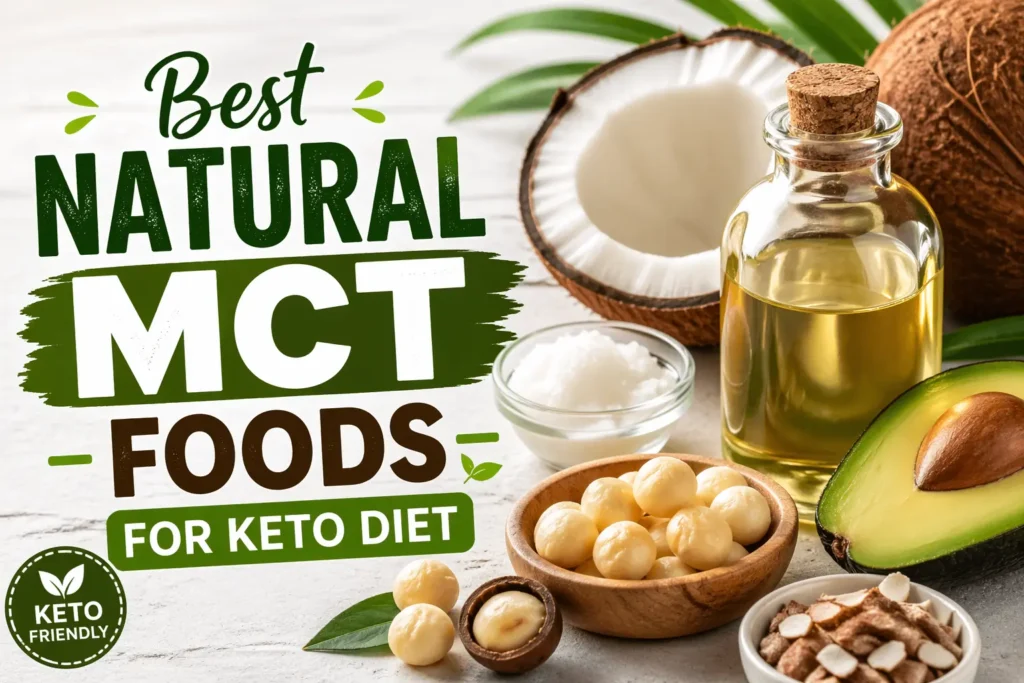
Popular among keto and low-carb diet followers, MCT foods have gained a lot of attention for their ability to support quick energy and fat-burning benefits. Medium-chain triglycerides (MCTs) are naturally found in coconut oil and dairy. These are easily absorbed by the body and can easily convert into fuel, which makes them common in health-focused diets and supplements.
MCTs are different from most fats because they are rapidly transported to the liver via the portal vein, where they are broken down into energy or ketones. This makes them potentially supportive of ketosis. They do not provide essential fatty acids such as omega-3 or omega-6.
According to some studies, MCT consumption may help increase energy expenditure and support weight management. Though the evidence is mixed and not fully definitive.
What Are MCTs?
MCTs are a kind of saturated fat. The way MCTs work in the human body is slightly different than the way other types of fats work because of the way they are constructed. MCT stands for medium chain triglyceride, which describes the length of the carbon chain within MCT.
The classification of fats is based on the number of carbon atoms they include. For example, LCTs (long-chain triglycerides) usually have 13-21 carbon atoms (in some cases 14-22) and are found in many everyday foods. In comparison, MCTs contain 6-12 carbon atoms and are present in certain specific food sources.
Because MCTs contain fewer carbon atoms than LCTs do, they get broken down at a much quicker rate. Therefore, MCTs are digested more quickly and absorbed directly into the bloodstream, rather than bypassing digestion completely, and go directly to the liver, from where they are converted into energy. This makes MCTs a fast and reliable source of fuel for your body.
MCT Types and Their Benefits
1. C6: Caproic Acid (6 Carbons)
- Best for: Making energy quickly
- Characteristics: Helps convert ketones into energy quickly. However, due to its strong taste, it may cause stomach distress, so it typically isn’t included in MCT supplements.
2. C8: Caprylic Acid (8 Carbons)
- Best for: Mental clarity and quick energy
- Characteristics: Among the best MCTs to help support ketosis, Caprylic Acid is rapidly converted into ketones and commonly used in MCT oil to provide quick energy.
3. C10: Capric Acid (10 Carbons)
- Best for: Sustained energy and metabolism support
- Characteristics: It is more affordable and commonly used as it easily breaks down compared to C8.
4. C12: Lauric Acid (12 Carbons)
- Best for: Immune support and overall health
- Characteristics: Found mainly in coconut oil, it is digested more slowly than C8 and will behave as a longer-chain fat but continue to offer all of the benefits of an MCT.
How MCTs Work in the Body?
MCTs (medium-chain triglycerides) are a type of fat that will be absorbed quickly through the digestive system and get to the liver, where they are transformed into ketones for energy use. The brain and muscles can receive immediate energy from ketones.
The quick conversion of MCT into ketones provides a rapid source of energy for the body, boosts metabolic activity, and promotes ketosis. Foods containing MCTs are beneficial for those on a ketogenic (very low-carbohydrate) diet.
Best Natural MCT Foods for Keto Diet
1. Coconut Oil
Coconut oil is one of the primary sources of MCT-rich foods as it also has considerable amounts of lauric acid, the other major medium-chain fatty acid found in the MCT’s. Coconut oil is frequently consumed by those following a keto diet and provides 8-14g of MCT per tablespoon.
This food consists predominantly of fat, while it has little protein, fiber, vitamins, or minerals. Therefore, it is important to include a variety of other foods (vegetables, lean meats) in a well-balanced meal when eating coconut oil.
2. Palm Kernel Oil
Palm kernel oil is another natural source of MCTs and has about 7-8 grams of MCTs for each tablespoon. It can be confused with palm oil; however, they differ in composition and how they’re used. Typically seen in processed foods such as margarine, shortening, and vegetable oils, palm kernel oil isn’t commonly eaten alone as a cooking oil.
The most common uses of palm kernel oil are for packaged and baked foods, due to stability and long shelf life, and it should be consumed in smaller amounts, as it contains very high levels of saturated fat.
3. Whole Coconut
Whole coconuts offer MCTs (medium-chain triglycerides), fibre, vitamins, and minerals in both the flesh and coconut milk. This is a fuller range than oils, as they provide nutrients and satiety. Including coconut in smoothies, desserts, or snacks is an easy way to incorporate MCT foods into your diet.
Unlike MCT oils refined from coconut, coconut is a whole food source of MCTs containing naturally occurring combinations of other nutrients, allowing for slower absorption and providing a steady source of energy when consumed with other foods at mealtime.
4. Grass-Fed Butter
In one serving (1 Tbsp), grass-fed butter provides up to 0.7 g of MCTs and other good fats, including butyrate, improving gut health and metabolic energy. Thus, grass-fed butter is a popular choice as an energy-dense, quick source for many people strictly adhering to a ketogenic diet. However, as compared to coconut oil, it contains less amount of MCTs.
Grass-fed butter has significant amounts of saturated fat; it is recommended that individuals who have elevated cholesterol or cardiovascular disease consume it in moderation. Eating butter in excessive amounts over time could affect the lipid levels and related issues.
5. Whole Milk
One cup of whole milk has about 8 grams of total fat, which includes about 0.7-0.8 grams of MCT foods. It also has key nutrients like calcium (300 mg), protein (8 g), and vitamins like B12 and D (if fortified). It has less MCT than coconut oil and other sources, but it still adds to the daily intake of medium-chain fats.
Aside from containing MCTs, milk also provides several additional health benefits when consumed in moderation. The calcium it contains helps build strong bones and provides nutrients when included as part of a balanced diet.
7. Greek Yogurt
Greek yogurt is an excellent source of MCT food with approximately 0.2 to 0.5 g of MCT per 100 g. It contains probiotic cultures that are beneficial to your gut health, and Greek yogurt provides about 8-10 g of protein and between 100- 120 mg of calcium.
Some studies have stated that yogurt is good for gut microbiota. If a person eats yogurt 2-3 times a week, it reduces the risk of colon cancer. And the best part about Greek yogurt is that it can be easily digested. It has more protein, less salt, fewer carbs, and less lactose (approx 3-4g per 100g) as compared to normal yogurt.
6. Cheese
Cheese naturally provides up to 0.2-0.4 grams of MCT in a small serving(roughly a shot-sized amount). It is beneficial to health and provides up to 6-7 g of protein, around 200mg of calcium, and essential vitamins like B12. It also provides other benefits like supporting bone strength, heart health, and steadier blood sugar levels.
A normal portion size of cheese is about 40-45 gm. Usually, people pair cheese with refined carbohydrates like bread or pasta. But when eaten with whole foods such as fruits, vegetables, whole grains, or used as a topping for salads and roasted vegetables, it makes meals more nutritious and balanced.
Key Benefits of MCT Foods in a Keto Diet
MCT foods are becoming more popular among people because they provide quick energy and fit well into the ketogenic diet. While in normal metabolic activity, these foods enhance the body’s fat-burning state.
- Support Ketosis: MCT foods turn into ketones quickly, helping raise ketone levels and making it easier to stay in ketosis on a low-carbohydrate diet.
- Boost Energy Levels: MCT foods provide quick energy to the body without spiking the sugar levels of the body.
- Fat-Burning: They support metabolism and help the body burn calories more effectively when carbohydrates are limited.
- Improved Mental Clarity: Ketones from MCTs act as fuel for the brain and may help improve focus and mental clarity.
- Appetite Control: Eating MCTs keep you satiated for long, reducing hunger and unnecessary snacking.
- Digestive Efficiency: MCTs are easier to digest than other types of fats and are quickly turned into energy.
- Stable Sugar Levels: MCT foods do not cause insulin spikes and may help keep energy levels steady throughout the day.
How to Add MCT Foods to Your Keto Diet?
You can add MCT foods to your daily meals in many ways:
- Coffee: To help support the ketosis and maintain steady energy levels while drinking coffee, try adding some coconut oil or ghee to your cup of Joe.
- Cooking: Replace refined oils with coconut oil when cooking, allowing you to add healthy fats into the meal you are preparing.
- Smoothies: You can add MCT foods into a smoothie that contains fruit or protein simply by adding in coconut oil.
- Snack Foods While on Keto: You can eat cheese slices or yogurt (Greek yogurt would be great!) as a snack if you get hungry between meals.
- Salad Topping: Add coconut oil to your salad to not only improve the flavor of your salad or toppings, but also to increase your consumption of healthy fats!
Natural MCT Foods vs MCT Oil
| Factor | Natural MCT foods | MCT Oil |
| Processing & purity | Minimally processed whole foods | Extracted and concentrated form |
| Nutritional value | Provide nutrients like vitamins and minerals | Contains only concentrated MCTs |
| Absorption rate | Slower, sustained energy release | Rapid absorption for quick energy |
| Primary Function | Supports daily nutrition and diet | Used for quick energy and ketosis support |
| Satiety effect | Helps increase fullness | Limited effect of appetite control |
| Digestive impact | Easier for many people | May cause discomfort if taken in high amounts |
MCT Foods Mistakes to Avoid
- Overconsumption of MCTs: Eating too many MCT foods can lead to digestive issues and excess calorie intake.
- Ignoring Total Calorie Intake: Healthy fats should be taken in a calorie limit to avoid weight gain.
- Choosing Low-Quality Sources: Using poor-quality oils or dairy can lower the benefits and may bring along unwanted additives.
Takeaway
- You can find MCTs in foods you eat every day, like coconut oil, butter, whole milk, cheese, yogurt, and palm kernel oil. The levels vary from food to food.
- Many people eat them to boost their energy, help them lose weight, and stay in ketosis, but the study is still underway.
- Because these fats are often found in foods high in saturated fat, it’s best to use them in moderation instead of eating too much.
- It is always a good idea to talk to your nutritionist or doctor before adding additional MCT- rich foods to your diet to figure out what will work best for you.
Frequently Asked Questions
1. What are the best natural foods that contain MCTs?
Coconut oil, palm kernel oil, and full-fat dairy products such as butter, yoghurt, milk, and cheese are the premier natural sources of MCTs. Coconut oil is the most concentrated source, with around 50-60% medium-chain triglycerides (MCTs), predominantly lauric acid. Coconut meat and milk include moderate quantities that can offer rapid energy and support a healthy metabolism.
2. Which is better, MCT foods or MCT oil?
MCT oil, which is composed of 90-100% MCTs, has a higher capacity than MCT food on average. It is rapidly absorbed by the body, which aids in the increase of ketone production, the provision of immediate energy, and the support of weight management. Butter or milk usually contains less than 1 g of MCTs per serving, while coconut oil provides around 50-60% MCTs. MCT oil contains a higher concentration of MCTs than MCT food, which provides nutrition.
3. Can MCTs help with weight loss?
MCT foods are easily absorbed by the body and help weight loss by enhancing metabolism, improving calorie burn, and allowing the body to use stored fat for energy. These foods are easily processed by the liver, so they are less likely to be stored as fat.
4. What’s the recommended daily intake of MCT?
Generally, for metabolic support and energy levels approx 15-30 g MCT is recommended. Beginners are advised to start with about 5 g (1 tablespoon) of the substance to build up their tolerance and avoid symptoms and problems. When your body becomes used to it gradually, you can increase the amount over time.
5. What are the side effects of taking too many MCTs?
If you eat too many MCTs too quickly, you may have digestive problems like bloating, cramps, diarrhea, nausea, or vomiting. Taking too much can also add extra calories, which may lead to unwanted weight gain over time. In some cases, very high intake may affect cholesterol levels or put extra strain on the liver.